
Car Battery Storage and Maintenance
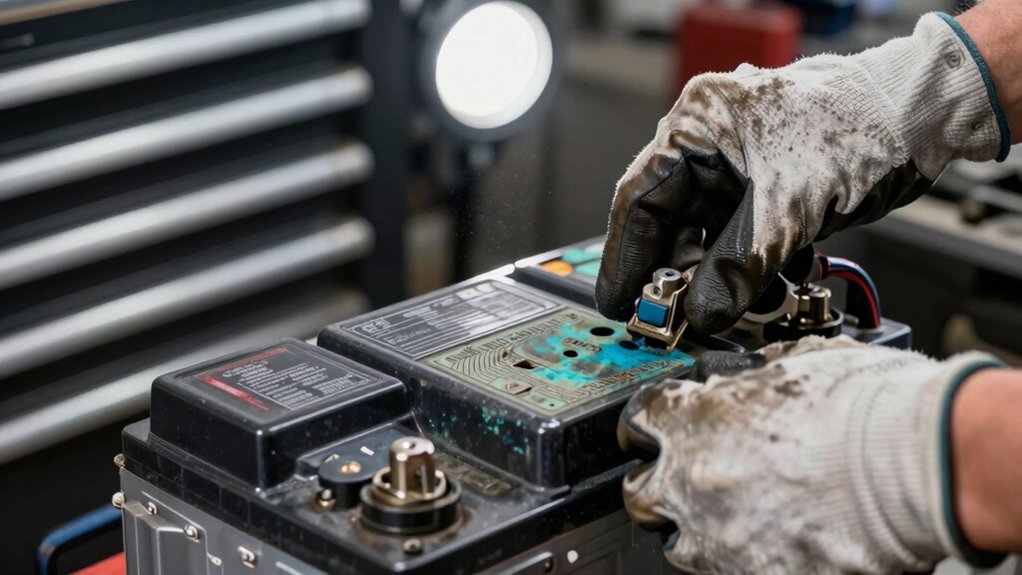
You should keep your car battery near full charge and store it in a cool, stable spot around 10–25°C to minimize capacity loss. Match charger settings to battery type (flooded, AGM, gel) and stay below recommended charge voltages: about 14.4–14.8V for flooded and 14.4–14.6V for AGM.
Check voltage every three months. Top off distilled water and specific gravity after a full charge. Avoid deep discharges, and use a maintainer or desulfating mode for long idle periods to learn more.
Quick Overview
- Store batteries at 10–25°C when possible; avoid prolonged exposure below 0°C or above 25°C to minimize capacity loss.
- Keep batteries fully charged before and during storage using a compatible maintenance/float charger matched to battery type.
- Check resting voltage every three months; check weekly for AGM. Recharge slowly if voltage falls below recommended thresholds.
- Prevent deep discharge and sulfation by recharging before voltage drops below ~12.4 V. Use a maintainer when idle.
- For flooded cells, maintain electrolyte level with distilled water. Check specific gravity after full charge and equalize every 3–6 months.
Cold Storage Temperature Range
How cold is too cold for a stored car battery? You shouldn’t rely on temperatures at or below 0°C (32°F) for regular use; performance drops and charge acceptance falls. For cold storage, aim between 10°C and 25°C when possible. Colder environments reduce self-discharge but cut usable capacity and slow chemical reactions.
| Temp Range | Effect on Capacity | Practical Note |
|---|---|---|
| 10–25°C | Baseline to slight decrease | Ideal for long-term storage |
| 0–10°C | ~20–50% capacity loss | Monitor voltage regularly |
| Severe loss; charging limited | Risk of freezing if discharged |
You’ll want a full charge before cold storage. Stabilize temperature fluctuations, and test voltage every three months.
Max Charge Voltage Limits
Wondering what voltage you should never exceed when charging a car battery? You should keep charging voltages within manufacturer limits: typically 14.4–14.8V for flooded lead‑acid and 14.4–14.6V for AGM. Higher voltages accelerate water loss, compromise seal integrity, and increase gassing. Excessive voltage also raises internal temperatures and can worsen high resistance connections into hot spots.
- Confirm charger settings match battery type before connecting.
- Monitor terminal temperature and voltage during bulk charge.
- Inspect for swelling or electrolyte loss after high-voltage events.
- Tighten and clean connections to reduce high resistance risks.
- Use a smart charger with auto‑cutoff to protect cells and seal integrity.
Stay within limits to extend life and prevent permanent damage.
Battery Sulfation Prevention Methods
To prevent sulfation, you should keep the battery fully charged before and during storage and avoid deep discharges that let sulfate crystals form on the plates. Use a smart desulfating charger when needed. Maintain proper electrolyte levels: topping with distilled water for serviceable cells, and store the battery in a warm, stable environment to slow self-discharge.
Regular voltage checks and timely recharge will catch early sulfate buildup and preserve capacity.
Regular Full Charging
Want to keep your battery from losing capacity over time? You should charge it fully before and during storage to prevent sulfation and preserve battery health. Use a compatible charger or a maintenance trickle charger that delivers a controlled, full-charge cycle; Yuasa-approved chargers are ideal.
Verify the charger’s settings match your battery type (flooded, AGM, gel) and follow storage best practices by charging to manufacturer-specified voltage. Then, disconnect or switch to a float/maintenance mode.
Check voltage every three months for lead-acid batteries and weekly for AGM. If voltage drops below recommended levels, recharge slowly to full capacity. Always avoid rapid, repeated partial charges. Complete, controlled charging minimizes sulfate buildup and keeps the battery ready for reliable service.
Avoid Deep Discharges
How can you prevent damaging sulfation from deep discharges? You avoid deep discharges by keeping the battery near full state-of-charge and using scheduled charging habits. Monitor voltage regularly and recharge when lead-acid cells drop below about 12.4 V; don’t wait until the battery is dead.
For stored batteries, implement regular full charging before and during storage so sulfate crystals don’t form on plates. Use a maintainer or slow charger to top off capacity without overcharging. Disconnect batteries from vehicle circuits to eliminate parasitic drains that cause gradual deep discharge.
If you must leave a vehicle idle, check charge monthly and perform regular full charging cycles as needed. Prompt action preserves capacity and extends battery life.
Use Desulfating Chargers
Why consider a desulfating charger? You’ll prevent and reverse early-stage sulfation by using pulse or high-frequency desulfating chargers designed for lead-acid batteries. Sulfation forms on plates during discharge or storage at less-than-full states. Desulfating chargers apply controlled pulses to break down sulfate crystals so plates regain surface area.
Use them in conjunction with regular full charging routines: fully charge before storage, then apply a desulfating cycle periodically or when voltage checks show gradual decline. Choose a model with selectable modes for flooded, AGM, or maintenance charging; follow manufacturer instructions for amperage and duration. Monitor temperature and electrolyte (where applicable) during treatment. Proper use extends capacity and reduces the need for early replacement.
Maintain Proper Electrolyte
Wondering how to keep sulfate from stealing your battery’s capacity? You’ll prevent sulfation by maintaining correct electrolyte concentration and keeping the cells topped to the manufacturer’s mark. Check specific gravity with a hydrometer after a full charge; replace distilled water only, never add acid.
If levels are low, add small amounts to avoid overfilling and reduce self-discharge risk. Use a desulfating charger periodically to break early sulfate buildup, and store batteries fully charged with a maintainer. Inspect caps and seals for leaks and follow venting safety: work in a well-ventilated area, avoid sparks, and wear eye protection.
If you see persistent sulfation or low specific gravity after treatments, replace the battery. Don’t rely on temporary fixes.
Keep Battery Warm
Want to keep your battery from losing capacity in cold weather? You should keep battery temperature stable to reduce sulfation risk. Move batteries into a frost-free area or insulated box where warm storage maintains roughly 10–25°C (50–77°F).
Use small thermostatically controlled heaters or heating pads designed for batteries; set them to prevent freezing without overheating. If you can’t fully heat the space, wrap the battery in an insulating blanket and elevate it off cold concrete with wood blocks.
Keep terminals clean and fully charged before placing in warm storage so sulfate doesn’t form on the plates. Monitor voltage monthly and use a maintainer when voltage drops. These steps will slow sulfation and preserve capacity during extended cold storage.
Periodic Equalization
How often should you equalize a lead-acid battery to prevent sulfation? You should perform periodic equalization every 3–6 months for batteries in storage or that see frequent shallow cycling.
Equalization uses a controlled overcharge at a low current to equalize cell voltages, dissolve sulfate crystals, and restore capacity. Before equalizing, fully charge and inspect electrolyte levels; top off with distilled water if needed.
Use a charger with an equalization mode or follow manufacturer voltage and duration guidelines to avoid overheating. Monitor temperature and specific gravity (if accessible) during the process.
After equalization, let the battery rest and verify resting voltage and specific gravity match expected values. Periodic equalization is an essential battery sulfation prevention step.
Frequently Asked Questions
Can I Store Batteries Connected to a Solar Trickle Charger?
Yes, you can keep batteries connected to a solar trickle charger, but you’ll follow battery maintenance and storage safety practices. Charge fully before storage. Use a regulator or float controller to prevent overcharging, and place the battery in a cool, dry spot.
Check voltage every few months; check weekly for AGM. Clean terminals, and disconnect if the controller fails or storms threaten. That keeps the battery healthy and prevents sulfation or damage.
How Long Can I Store a Fully Charged Battery Safely?
You can safely store a fully charged lead-acid battery for about 3–6 months without active charge maintenance. AGM types may last closer to 6 months if kept cool. For longer store duration, use a battery maintainer or trickle charger and check voltage every 1–3 months to prevent sulfation.
Keep batteries at 10–25°C, dry, and secure. Recharge slowly if voltage drops below recommended levels to preserve life.
Are Lithium Car Batteries Handled Differently for Storage?
Yes, you’ll handle lithium car batteries differently for storage. Lithium chemistry needs tighter control: keep state-of-charge around 40–60%, avoid full 100% or deep discharge, and maintain stable storage temperature (ideally 15–25°C).
Disconnect and isolate cells. Use a manufacturer-approved storage mode or maintainer, check voltage periodically, and avoid freezing or excessive heat. Follow manufacturer guidelines closely to prevent capacity loss, thermal issues, or safety hazards.
Can I Store Batteries Indoors With Other Household Chemicals?
Yes, but cautiously. You shouldn’t store car batteries with household chemicals because battery storage risks include acid leaks and fumes that can react with cleaners, paints, or solvents.
Keep batteries in a separate, ventilated area on a wooden shelf, away from heat and moisture. Store chemicals in their original containers, sealed and separate.
Label areas, check batteries regularly for leaks, and follow indoor chemical safety and manufacturer guidelines to minimize hazards.
Do I Need Special Disposal if a Stored Battery Leaks?
Yes, you need special disposal if a stored battery leaks. For leak safety, avoid skin or eye contact, ventilate the area, and neutralize acid with a baking soda solution. Wear gloves and goggles.
Contain contaminated materials and follow local disposal procedures for hazardous waste; don’t throw the battery in household trash. Contact your local hazardous-waste facility or recycling center for pickup or drop-off and document the disposal method.
Conclusion
You’ve learned how to keep your car battery healthy: store it within the recommended cold temperature range, don’t exceed max charge voltages, and prevent sulfation by charging fully and avoiding deep discharges.
Use desulfating chargers when needed, maintain proper electrolyte levels, keep the battery warm in cold weather, and perform periodic equalization charges. Follow these practical steps consistently, and you’ll extend battery life, improve reliability, and avoid unexpected failures on the road.