Car Carpet Deep Cleaning Steps
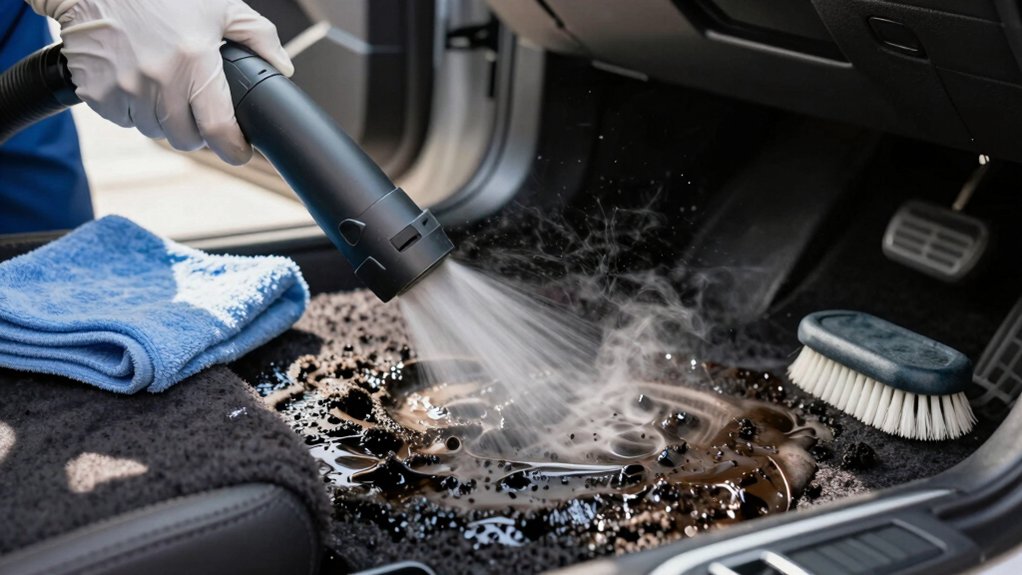
You’ll vacuum and remove loose debris. Identify fiber type (nylon, polyester, olefin, wool) and spot-test cleaners. Then pretreat stains with fiber-appropriate products and neutralizers as needed.
Low-moisture extraction or hot-water extraction follows, with towels, wet/dry vac, and air movers to control drying (2–6 hours depending on conditions). Rinse thoroughly to prevent build-up and odors. Check cushion cores for dampness and document results.
Continue for step-by-step methods, pH guidance, and a compatibility chart.
Quick Overview
- Remove loose debris, vacuum thoroughly, and lift carpets/liners for full access.
- Identify carpet fiber type and test a hidden spot with your chosen cleaner.
- Pre-treat stains with appropriate chemistry (enzyme for protein; solvent for oil) and dwell per label.
- Use low-moisture extraction or hot-water extractor; then rinse thoroughly to prevent residue.
- Dry rapidly with towels, wet/dry vac, air movers, and ventilation until fully dry to avoid mold.
Drying Time Table
When you finish extraction, expect drying to vary with conditions and technique: On a warm sunny day using proper low-moisture methods, you’ll hit 80–90% dryness in about 2–2.5 hours. Typical cases finish in 4–6 hours, and cold or rainy conditions can stretch drying to 3–5 hours or longer. You’ll monitor drying time and enforce moisture control to prevent over-wetting and mold risk. Use towels, wet/dry vacs, air movers, and sunlight strategically.
Check foam cushions for residual dampness. Below is a concise reference table to guide decisions and set expectations.
| Condition | Typical drying time | Recommended action |
|---|---|---|
| Optimal warm | 2–2.5 hours | Low-moisture extraction |
| Typical unknown | 4–6 hours | Fans + ventilation |
| Cold/rainy | 3–5+ hours | Air movers + heat |
Fiber-Type Cleaning Guide
Which fiber are you dealing with: nylon, polyester, olefin, wool, or a blend? This will determine the cleaners and methods you use. You’ll identify the fiber type first. Then choose products and a cleaning sequence that match fiber resilience and dye stability. Be methodical: test in a hidden spot, follow dwell times, and adjust agitation intensity.
- Nylon: tolerant of heat and alkaline cleaners; use stronger extraction cycles.
- Polyester: resists water-based staining; prefer low-alkaline cleaners and gentle agitation.
- Olefin: hydrophobic. Avoid surfactant build-up; rinse thoroughly after extraction.
- Wool/blends: use pH-neutral cleaners, minimal mechanical action, and cooler water.
Match extraction temperature and chemical strength to fiber specs to protect pile, color, and backing.
Stain-Removal Chemical Compatibility
Before applying anything, consult a chemical compatibility chart so you can match cleaners to your carpet fibers and avoid color loss or backing damage. Check pH ranges: use near-neutral cleaners for synthetic carpets and only acid or alkaline products when the chart and a spot-test confirm they’re safe.
Always perform a spot-test, choose fabric-safe ingredients, and have a neutralizer ready to halt reactions and protect dyes and adhesives.
Chemical Compatibility Chart
Why does chemical compatibility matter for stain removal? You need a compact chart that matches stain types to safe chemistries so you won’t damage fibers or finishes. Design columns for stain class, recommended agent, contraindications, and fabric note.
Include entries like oil/grease → solvent-based degreaser (avoid on acetate), protein (blood/food) → enzyme cleaner (don’t mix with bleach), dye/ink → oxidizer or specialized ink remover (test first), salt/mineral → acid rinse (follow with neutralizer), and pet odors → enzyme + encapsulator.
Note contact time, dilution, and PPE per product. Mark combinations to never mix: acid + bleach; ammonia + bleach. Keep the chart laminated in your kit and update with product data sheets for safe, predictable stain removal chemistry.
pH Range Importance
pH tells you whether a cleaner is acidic, neutral, or alkaline, and that directly governs what soils it attacks, how it interacts with fibers and finishes, and what residues it leaves behind. You’ll choose an alkaline surfactant/oxidizer for oils and organic soils, an acidic rinse for mineral or salt deposits, and neutral cleaners for delicate fabrics. Always observe recommended dilution, contact time, and PPE to avoid fiber damage, color loss, or harmful chemical reactions.
Understand the product’s pH range to match chemistry to the stain and substrate. Use higher pH for grease, lower pH for rust or hard-water scale, and near-neutral for dyed or natural fibers. Record labels, avoid mixing incompatible chemistries, and prioritize stain removal chemical compatibility for safe, effective outcomes.
Spot-Test Procedure
How will you know a cleaner is safe for your car’s carpet and upholstery? Begin by isolating an inconspicuous area: under a seat or inside the trunk. Document fiber color and texture. Apply a pea-sized drop of the product, blot excess, and wait the manufacturer’s recommended dwell time.
Inspect under consistent light; note any fading, dye transfer, or fiber weakening. For sensitive fibers, use a narrow-spectrum lamp to check color shifts: the informal “stain test wavelength” helps reveal subtle damage. Rinse the test spot if indicated; then dry with a white cloth.
Record results and proceed only when no change appears after 24 hours. This spot test safety routine prevents irreversible damage and ensures chemical compatibility before full application.
Fabric-Safe Ingredients
After a successful spot test, you’ll want to choose stain-removal ingredients that are safe for your car’s specific fabrics and finishes. Start by checking manufacturer labels and fabric codes. Pick products labeled fabric safe and formulated for automotive textiles.
Match pH: neutral or slightly alkaline cleaners are best for most carpets and upholstery, while strong acids or bleaches can damage dyes and backing. Use compatible cleaners for combined treatments; enzyme, solvent, and surfactant-based products should be mixed only when manufacturer guidance permits. Measure dilutions precisely and document ratios.
For visible dye transfer or delicate weaves, opt for low-strength, color-safe formulas and re-test. Rinse or extract thoroughly after treatment to remove residue, which can attract soil or alter fabric hand.
Neutralizer Usage Guidelines
Want to make sure your stain treatments stop working when they should? You’ll apply a neutralizer immediately after acid or alkaline spot cleaners to halt chemistry and protect fibers.
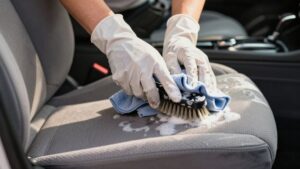
Check neutralizer compatibility: match pH range and active ingredients to the cleaner used; always perform a small test in an inconspicuous area. Use measured dilutions per product instructions; apply evenly, agitate lightly, then extract thoroughly to remove residues.
For enzyme or oxidizer treatments, select neutralizers formulated for biological or oxidative breakdown to avoid reactivating stains. Choose products that also deliver odor neutralization when treating spills; this prevents masking scents with perfumes.
Rinse and extract until rinse water runs clear. Then allow proper drying to confirm compatibility and performance.
Frequently Asked Questions
Can I Use a Household Steam Cleaner on Car Carpets?
Yes, you can use a household steam cleaner on car carpets, but choose one suited for auto use. When learning how to choose a steam cleaner, pick a compact model with controlled heat, low-moisture output, and a handheld nozzle.
Understand the differences between steam cleaning and shampooing: steam sanitizes and loosens grime with minimal water, while shampooing lifts heavy soils but leaves more moisture and needs extraction. Use short passes and dry thoroughly.
How Often Should I Deep Clean Leather-Trimmed Carpeting?
You should deep clean leather-trimmed carpeting every 6–12 months, depending on use and exposure. If you drive daily, have pets, or live in salt-prone areas, aim for every 3–6 months.
Between deep cleaning sessions, do monthly light maintenance: vacuum, spot-treat spills with pH-neutral leather-safe cleaner, and condition leather trims.
When deep cleaning, use a hot-water extractor sparingly; test products to protect leather and seams.
Will Warranties Be Affected by DIY Deep Cleaning?
Yes, warranty implications can arise from DIY deep cleaning effects. You’ll need to check your vehicle and upholstery warranty terms: using improper chemicals, aggressive machines, or causing water damage can void coverage for affected areas.
Document products and methods, test discreet spots, and follow manufacturer instructions. If unsure, get written approval from the dealer or use certified cleaners to avoid disputes and preserve warranty protection.
Can I Use Scented Air Fresheners After Cleaning?
Yes, you can use scented air fresheners after cleaning, but wait until carpets are fully dry to avoid trapping moisture and accelerating odors. Choose light, non-oil-based products and avoid aerosol overload. You’ll want a subtle scent that complements lingering odor removal rather than masking damp smells.
Place dispensers or sachets away from vents and electronics. Re-evaluate after 24–48 hours to ensure freshness without residue or adhesive buildup.
How Do I Prevent Mold During Winter Storage?
You prevent mold during winter storage by thoroughly drying carpets and upholstery before stowing the vehicle. Use a portable extractor and multiple passes. Then run a dehumidifier or desiccant packs inside the cabin.
Leave vents slightly open or use a trickle ventilator. Park in a dry, temperature-stable space, and check moisture weekly. Treat high-risk areas with an antimicrobial spray rated for fabrics to prevent mold during winter storage.
Conclusion
You’ve followed methodical steps to deep-clean your car carpet and allowed proper drying. You have matched cleaners to fiber types and tested compatibility before treating stains. Keep pH and ingredient lists in mind, and use a neutralizer when needed. Always spot-test a small area first.
Rely on product labels and the compatibility chart to avoid damage, and prioritize quicker drying methods for mildew prevention. With consistent, informed care, your carpet will stay clean and last longer.