Car Detailing Safety Symbol Reference
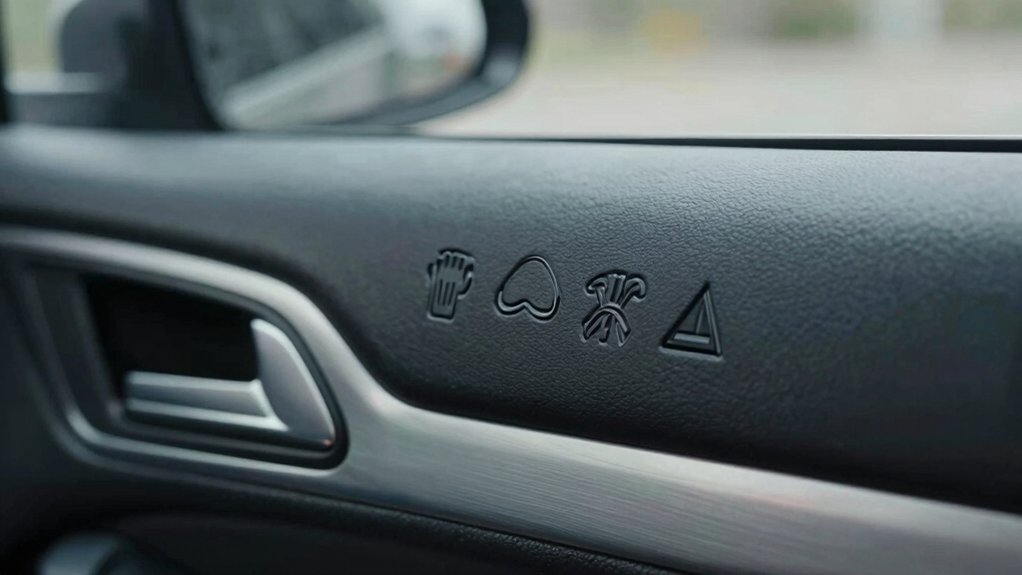
You’ll use standardized symbols to match PPE, dilutions, and temperature controls to each product and task: eye-goggle pictogram for splash risk, respirator symbol for solvent vapors or dust, and glove icon for solvents or sharp edges.
Dilutions are posted (e.g., APC 1:64, degreaser 1:16–1:32, acid cleaner ≤1:10,). Temperature icons show safe storage, max/min limits, and cold-chain ranges with numeric thresholds. Follow ANSI Z535 cues; keep logs and labels for traceability.
Learn how to implement them across bays.
Quick Overview
- Use ANSI Z535-style pictograms (eye, mask, glove, thermometer) with signal words and required-action statements for detailing hazards.
- Post goggles pictogram where chemical splash or polish mist risk exists, with don-goggles instruction and hazard brief.
- Display respirator symbol near solvent vapors or dust zones; specify mask type and fit/maintenance reminders.
- Label chemicals with dilution ratios, temperature icons, and storage limits to ensure safe handling and traceability.
- Combine pictograms in multi-hazard areas. Place signs at normal eye level for consistent staff recognition and compliance.
PPE Required per Symbol
When you see a PPE symbol in a detailing bay, it tells you exactly what protective gear to don for the specific hazard present: eye protection for chemical splashes and polish mists; gloves for solvents and sharp edges; respirators for solvent vapors or dust; and so on. You follow ANSI Z535/OSHA cues: signal word, pictogram, brief hazard statement, and required action.
Match symbol color and word to severity. Don goggles where chemical splash risk exists, and use respirators when respiratory hazards like solvent vapors or dust are present. Combine pictograms for multi-hazard zones. Use PPE consistently, and place signs at normal eye level near hazards.
| PPE | Symbol | Key Use |
|---|---|---|
| Eye protection | Goggles | Chemical splashes |
| Respirator | Mask | Respiratory hazards |
| Gloves | Gloves | Solvents/sharp edges |
Chemical Dilution Ratios Quick-reference
How concentrated should your cleaning solutions be to work safely and effectively? You’ll follow specific chemical dilution targets to control hazard exposure, maintain performance, and comply with safety signage instructions. Use measured ratios, calibrated dispensers, and batch labels.
- All-purpose cleaner: 1:64 (2 oz/gal) for light soils; adjust per label.
- Degreaser: 1:16–1:32 depending on heavy buildup; pretest on surfaces.
- Acid wheel cleaner: 1:10 max; neutralize after use and rinse.
- Sanitizer/disinfectant: follow manufacturer ppm guidelines; verify with test strips.
Record dilutions on labels matching ANSI-style safety signage. Train staff on preparation, and log batches. Verify concentrate volume and water temperature per product sheet; don’t exceed recommended concentrations.
Storage Temperature Limits
You should store detailing chemicals within their specified temperature band to preserve efficacy and safety. Note maximum and minimum temperature warnings; respect temperature-dependent shelf life and cold-chain requirements for sensitive formulations.
Use clear labels and symbols indicating hot/cold limits and handling instructions so staff can act immediately.
Safe Storage Temperatures
Why should you control storage temperatures for detailing chemicals? You must manage storage safety to prevent degradation, pressure build-up, phase changes, and accelerated reactions. Store products within manufacturer-specified ranges; document limits on labels and inventory records.
Use temperature icons on containers and storage racks to indicate allowable bands at a glance, aligned with ANSI Z535 clarity principles. Monitor with calibrated sensors and log data; set alarms for excursions. Segregate temperature-sensitive items from heat sources, direct sunlight, and HVAC drafts.
For cold-sensitive materials, use insulated cabinets or heated enclosures. For heat-sensitive items, use ventilated, shaded storage. Train staff to interpret temperature icons and respond to alerts. Review limits quarterly and after supplier or formulation changes to maintain compliance.
Maximum Temperature Warnings
When should a detailing product never exceed a specified temperature? You must treat the stated maximum temperature as an absolute control parameter for storage and transport to prevent chemical degradation, volatilization, pressure build-up, or container failure. Labeling should display clear warning thresholds in degrees (°C and °F) alongside a concise symbol per ANSI guidance.
You’ll implement administrative controls: inventory rotation, temperature monitoring, and alarm setpoints that trigger spill-containment and isolation procedures before thresholds are breached. Engineering controls include insulated storage, ventilation, and pressure-relief-rated secondary containment sized to the product’s worst-case vapor pressure.
Train staff to read symbols and respond to threshold alerts. Document incidents and adjust controls if repeated excursions indicate inadequate margin between ambient conditions and the product’s maximum temperature limit.
Minimum Temperature Limits
After setting absolute maximum-temperature controls, you must also specify and enforce minimum storage temperatures to prevent freezing, phase separation, viscosity changes, or crystallization that can impair performance or safety. You’ll define a clear minimum temperature for each product based on formulation data, manufacturer specs, and accelerated low-temperature testing.
Label containers and storage areas with the minimum temperature value and include it in your storage guidelines and safety data sheets. Use thermostatted storage, alarms, and routine temperature logs to maintain compliance. If temperature excursions occur, follow documented assessment and remediation steps before reuse.
Train personnel on recognizing cold-damage indicators and on corrective handling. Consistent application of minimum temperature controls preserves product integrity, reduces malfunction risk, and maintains worker and environmental safety.
Temperature-Dependent Shelf Life
Storage temperature limits directly determine a product’s usable shelf life. You must define and control them based on formulation stability data, accelerated aging studies, and manufacturer recommendations. You’ll document a temperature range and maximum exposure durations that preserve active components, viscosity, pH, and fragrance integrity.
Use stability matrices to model shelf dynamics and determine expiration dating under specified conditions. Label products with storage limits and handling cues to support safe handling during transport and in-bay storage. Implement monitoring: data loggers, spot checks; and corrective actions for excursions: quarantine, test, or discard.
Train staff on interpreting limits and on chain-of-custody for temperature-sensitive batches. Retain stability study records to justify shelf life and to support regulatory or warranty claims.
Cold Chain Handling
Cold-chain handling sets explicit temperature limits and exposure durations you must enforce to preserve formulation stability, prevent degradation, and guarantee product performance. You’ll define target storage ranges, maximum excursion times, and acceptable recovery procedures for each formulation; then document them on handling protocols.
Implement calibrated sensors, data loggers, and alarm thresholds to verify temp control continuously. During transport, use validated packaging, conditioned cold packs, and insulated containers sized to maintain setpoints through worst-case transit.
Train personnel on cold chain integrity procedures: load sequencing, door management, and corrective actions for excursions. Audit logs routinely, run preventive maintenance on refrigeration, and include lot-level traceability so you can quarantine and evaluate any suspect material promptly to protect product efficacy.
Temperature Labeling Symbols
Maintaining defined temperature limits for labeled products builds on your cold-chain procedures by specifying the pictograms and numeric ranges staff must see and act on. You’ll apply temperature labeling to indicate storage ranges (e.g., -20°C to 0°C, 2°C to 8°C, not above 25°C) and use standardized pictograms showing thermometers, snowflake, or sun icons per ANSI/ISO cues.
Labels combine numeric limits with unit clarity and placement critical for legibility at handling points. This reinforces hazard recognition by linking thermal limits to product stability, flammability, or biodegradation. Implement minimum text, high-contrast color, and symbol size to meet visibility criteria. Train staff to verify labels before storage decisions and log deviations for corrective action and traceability.
Frequently Asked Questions
What Symbol Indicates Flammable Materials in Detailing Products?
The symbol is a flame pictogram within a red diamond (GHS) or a flame icon with red/orange accent for flammable labeling. You’ll use it on detailing product containers to show flammable materials.
You must ensure label compliance with GHS/ANSI criteria: clear flame pictogram size, signal word (Danger/Warning), hazard statements, and legible placement. Follow local regulations and ANSI/ISO sizing, color, and visibility requirements to maintain conformity and worker safety.
How Far From a Hazard Should a Symbol Be Placed?
Place the symbol so it’s legible at the intended viewing distance; typically 30–40% of sign area and readable from the operator’s normal approach. Follow distance guidelines: position signs within the normal field of view, near the hazard, and mounted at eye level or per placement standards for the environment.
For detailing bays, keep symbols visible from bay entry. Lightly emphasize visibility and ensure no obstructions block sight lines.
Are Pictograms Compliant Across Different Countries?
Yes, pictograms can be compliant across countries when you follow harmonized compliance standards (ANSI Z535, ISO 3864, GHS) and apply cross border labeling principles. You’ll need to use standardized symbols, specified surrounds, sizes, and colors. Additionally, verify legal references for each market.
You should also document conformity, test legibility at intended distances, and revise designs for any national deviations or additional local requirements before deployment.
Can Symbols Replace Written Safety Instructions Entirely?
No, you can’t replace written safety instructions entirely. You should use symbols as part of a two word discussion and comprehensive safety labeling system. Symbols communicate quickly but lack detail on procedures, limits, and legal requirements.
Combine clear pictograms with concise text, signal words, and training so workers know actions, PPE, exposure limits, and emergency steps. Follow ANSI Z535 and applicable regulations to ensure symbols supplement, not substitute, written instructions.
Who Verifies Symbol Accuracy on Supplier Labels?
You verify symbol accuracy on supplier labels through your quality and safety teams, often supported by third-party testing labs. You’ll use verification processes that check labeling accuracy against standards and ensure regulatory alignment (ANSI, ISO, OSHA). You’ll also document findings.
You’ll schedule compliance audits to confirm ongoing conformity and require corrective actions from suppliers for nonconformities. Records of tests, approvals, and audit outcomes maintain traceability and accountability.
Conclusion
You’ve now got the key safety symbols and limits for handling detailing chemicals and temperature-sensitive supplies. Use the PPE icons to select gloves, goggles, or respirators before you mix or apply any product. Follow the dilution quick-reference to avoid overconcentration.
Keep products within their safe storage temperatures; observe maximum/minimum warnings and maintain cold-chain protocols for items with shortened temperature-dependent shelf life. Label containers clearly to prevent misuse and degradation.