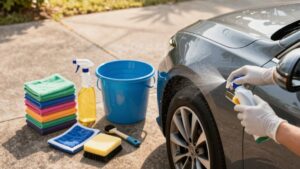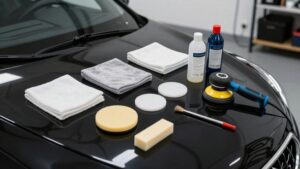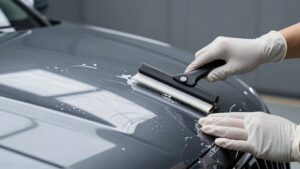
Car Wash and Protection Log Template
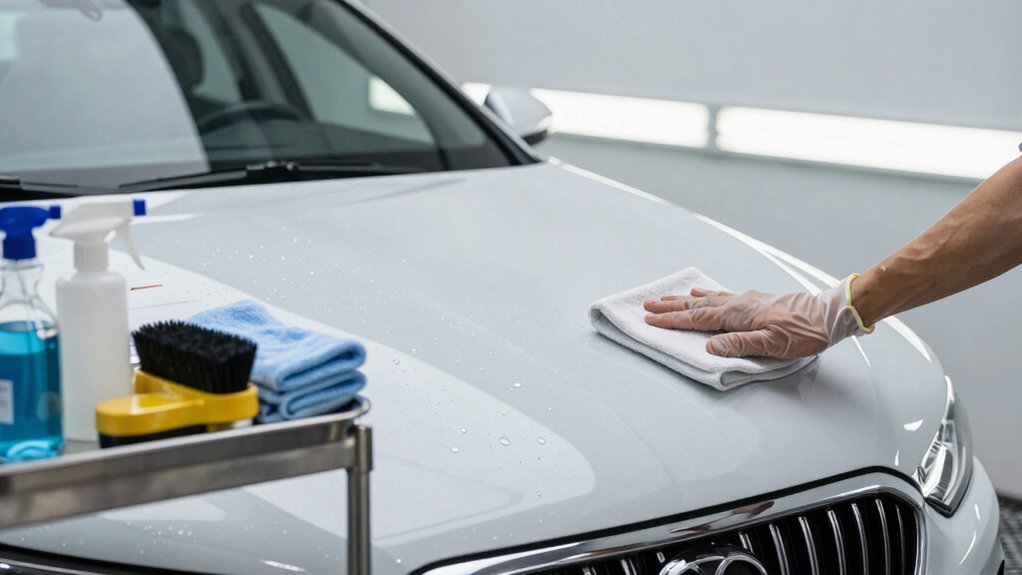
You’ll get a compact, auditable log template that tracks wash frequency, towel lifecycle, water quality, drying sequence, and corrective actions. Use the wash-frequency matrix to set intervals for coastal, winter, garage, and urban conditions.
Inspect and rotate microfiber towels, label bins, and log laundering counts. Record pre-rinse temperature, DI/mineral-free rinse conductivity, spot treatments, and post-inspection photos. Document corrective maintenance, chemicals, concentrations, operators, and timestamps: continue for step-by-step procedures and sample entries.
Quick Overview
- Include wash frequency entries (date, location, driving conditions) and recommended intervals for coastal, winter, garage-kept, and urban vehicles.
- Track microfiber towel inventory, condition, task assignment, wash cycles, issuance/return, and retirement dates.
- Log water quality metrics (DI conductivity, TDS, flow rates) and setpoints for spot-free final rinses.
- Record spot-removal actions: chemical name, concentration, contact time, operator initials, and before/after photos.
- Document drying procedure (sequence, towel type). Immediate spot treatments, preventive maintenance, and corrective-action history should also be recorded.
Wash Frequency Matrix
Why does wash frequency matter? You need a process-driven schedule to prevent corrosion, paint etching, and bonded contaminants. Match frequency to exposure: Coastal, salted roads, or high-pollution zones demand rapid turnaround. Garage-kept or seasonal parking allows longer intervals. Follow this concise decision flow.
| Scenario | Action |
|---|---|
| Coastal/High-Risk | Wash every 7–10 days; undercarriage flush |
| Winter salt exposure | Wash within 3–5 days or immediately after salted roads |
| Garage-kept/Light use | Wash every 21–30 days; inspect seals |
| Urban/High pollution | Wash weekly; use iron decontaminant |
Implement checks: Document date, driving conditions, and add-ons (wheel cleaner, touchless undercarriage). For dark vehicle maintenance, increase frequency. This is necessary so contaminants don’t show or bond.
Use Microfiber Towel Checklist
How often do you inspect and rotate your microfiber towels to keep them contaminant-free and effective? You’ll follow a strict checklist usage routine to prevent marring and cross-contamination. Inspect towels before each shift, segregate by task, and document condition.
Check for embedded grit, stains, and fabric breakdown; retire compromised towels. Rotate towels after defined cycles; launder with low-heat, non-bleach detergents. Label storage bins by task (drying, polishing, interior) and track issuance/return. Record towel lifecycle, wash count, and disposal date in the log.
You’ll enforce this microfiber towel checklist usage to maintain surface safety and consistent finish quality. Additionally, you will ensure traceable towel maintenance records within the protection log.
Water Spot Prevention Steps
Before you start the final rinse, check and record the pre-rinse temperature to ensure optimal spot prevention. Rinse with mineral-free or deionized water and remove any soft water spots immediately. Then dry surfaces using clean microfiber towels.
Follow this sequence consistently to minimize mineral deposits and ensure repeatable, verifiable results.
Pre-Rinse Temperature Check
Start by checking the pre-rinse water temperature with a calibrated thermometer at the spray manifold, so you can prevent water spots caused by hard-water mineral deposition and rapid evaporation. You’ll record pre rinse temperature before each service cycle, noting ambient conditions and elapsed time since manifold activation.
If rinse water temperature deviates from the target range, tag the run, adjust heater/mixing valves, and remeasure within 30 seconds. Log thermostat setpoint, measured value, operator initials, and corrective action. Use a simple checklist entry: measured temp, target range, adjustment made, retest value.
Maintain calibration records for the thermometer and schedule monthly verification. This process-driven check minimizes surface drying differentials that promote mineral deposition and visible spotting.
Mineral-Free Rinse Water
When you need to prevent water spots, use a verified mineral-free rinse system (deionized, reverse-osmosis, or DI mixed-bed) at the final rinse. Document setpoints, flow rates, and conductivity/TDS readings for every cycle. Record operator initials, time, and any corrective actions when readings exceed the target conductivity threshold so you can quickly isolate source water, flush lines, or adjust the treatment unit.
You’ll log target conductivity, actual reading, rinse pressure, and temp for rinse optimization and traceability. If conductivity drifts, follow a defined corrective sequence: verify sample location, purge lines, check pre-treatment media, perform resin/regeneration or membrane maintenance, and retest. Note parts replaced, service technician, and elapsed downtime. Keep records centralized for trend analysis and preventive maintenance scheduling.
Soft Water Spot Removal
Why would soft water still leave spots on vehicles? You’ll inspect for dissolved solids, salts, or carryover from RO/regeneration cycles. Test rinse water conductivity and total dissolved solids; document values in the log. If readings exceed thresholds, flush lines, regenerate softener, or service RO membranes.
Use targeted spot removal: apply a controlled acidic deionizing spray or dilute vinegar solution, agitate with a soft pad, then rinse with verified low-TDS soft water. Record chemical used, concentration, contact time, and operator initials.
Implement post-treatment water spot removal checks: visual inspection under neutral light, repeat conductivity reading, and photographic documentation. Log corrective action and schedule preventive maintenance to prevent recurrence.
Drying With Microfiber
Grab a clean, low-pile microfiber towel and work methodically across the vehicle, blotting and gently squeegeeing panels to remove residual water before it can mineralize into spots. You’ll follow a systematic drying technique: start roof-to-hood-to-trunk and then move down each side, finishing with mirrors and glass.
Use overlapping passes, apply light pressure, and rotate towels to avoid redepositing contaminants. For seams and crevices, fold the towel into an edge and blot rather than wipe. Track towel usage and replace when saturated.
Microfiber maintenance is critical: launder towels separately with mild detergent, avoid fabric softeners, and air-dry or tumble low. Inspect towels for embedded grit before use to prevent micro-scratches; document towel condition in your log.
Use of Deionized Water
After drying with clean microfiber, prevent water spots by using deionized (DI) water for final rinses and spot-free flushes. Its lack of dissolved minerals stops mineral deposits from forming as the surface dries. You’ll flush panels with DI water after the main rinse cycle; use calibrated pressure and nozzle distance to avoid sheeting failures.
Monitor DI tank conductivity and log values each shift. Replace resin or regenerate when conductivity exceeds spec. Integrate DI usage into the wash frequency matrix so vehicles receiving protection coats get DI final rinses consistently. Record batch ID, operator, and time in the protection log.
Verify spot-free performance visually and via random swab tests. Then adjust rinse volumes or DI maintenance cadence based on trends.
Immediate Spot Treatment
How quickly you act determines whether a water spot becomes a permanent etch. Treat visible spots immediately by blotting excess moisture with a clean, lint-free microfiber. Then, apply a DI-water mist to dissolve remaining mineral deposits before they dry.
Next, inspect the area for residue or etching using directional light. If deposits persist, repeat DI mist and blotting until the surface feels smooth. For treated zones, document product, time, and technician initials in the log.
If you observe compromised protection: bead failure or patchy coverage, note possible causes such as improper sealant application or accidental over spray from adjacent operations. Schedule corrective reapplication and flag the vehicle for follow-up inspection.
Record corrective actions and confirmation photos for accountability.
Frequently Asked Questions
How Do I Document Vehicle Damage Incidents and Evidence?
You document damage by recording vehicle details, incident records, and a clear timeline. You photograph all damage from multiple angles and note location within the facility. Additionally, you collect operator statements while gathering evidence like equipment logs.
You file standardized forms and attach SDS or maintenance records if relevant. Furthermore, you flag root-cause indicators and enable Reporting anonymously for witnesses. You route reports to supervisors and retain signed manager review to close the incident.
What Preventive Maintenance Schedule Should I Follow for Tunnel Equipment?
You should implement a weekly preventive maintenance schedule for tunnel equipment. You’ll perform weekly inspections, document findings in facility records, and log preventive maintenance tasks. Include SDS access and proper chemical storage checks during each inspection.
Link documentation incidents to anonymous reporting for operator feedback. Track repairs, parts replacement, and calibration; schedule monthly deeper audits with equipment-specific checklists to prevent failures and ensure compliance.
Where Should Chemical Safety Data Sheets (SDS) Be Stored Onsite?
Store SDS storage copies in centralized onsite safety folders at multiple accessible locations: main office, maintenance shop, chemical storage room, and each tunnel prep area. Keep digital versions on a shared server and mobile device access for supervisors and floor staff.
Update folders after every chemical change and training. Label folders clearly, index contents, and assign responsibility for regular audits to ensure compliance and rapid retrieval during incidents.
How Do I Report Incidents Anonymously Within the Facility?
You can report incidents anonymously by using a designated anonymous reporting channel: online form, drop-box, or hotline. Ensure the process preserves incident anonymity: no names, optional contact field, and secure submission routing to safety management.
Follow a standardized form capturing date, time, location, hazard details, and witnesses. Confirm receipt via anonymous tracking number. Require management to log, investigate, and document corrective actions while protecting reporter identity.
What Records Are Required for Weekly Facility Operations Inspections?
You need weekly facility inspections records covering exterior areas, vacuum systems, parking/driveways, tunnel operations (prep room, hoses, guns, signage, lighting, track, rollers, conveyors), pit/manhole status, blower/back room motors, prep tanks, hydrominders, eductors, flow jets, air/water trees, hydraulic motors, and chemical storage/PPE checks.
Use standardized record keeping forms, timestamped entries, operator/manager signatures, noted defects, corrective actions, priority levels, and follow-up verification to close issues.
Conclusion
Keep this log handy and follow it every wash to keep finishes flawless. Use the wash frequency matrix to schedule cleanings; check microfiber condition before each job. Follow water spot prevention and pre-rinse temperature steps. Rinse with mineral-free or deionized water and spot-treat immediately.
Dry methodically with clean microfiber using controlled passes. Track anomalies and corrective actions in the log so you can refine processes and prevent recurring defects.