Convertible Soft Top Cleaning and Protection Basics
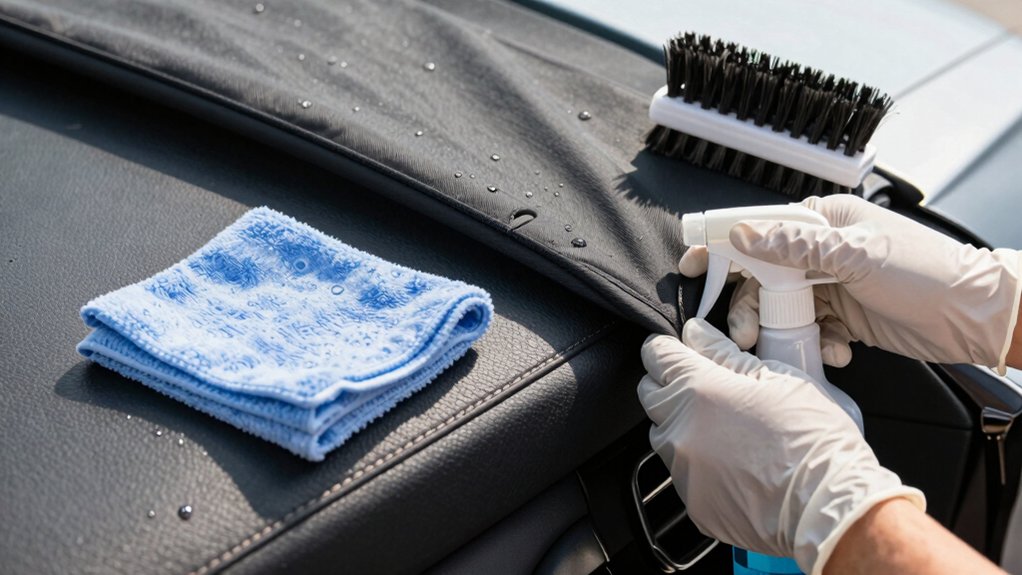
Treat your convertible top like painted trim: clean regularly with a mild, non‑detergent cleaner and cool water. Rinse well and dry in shade to avoid dye bleed and mildew. Check seams and folds for powdery spots or musty odors. Use a gentle mildew treatment after testing a hidden area.
Reapply water‑repellent coatings based on exposure; more often for outdoor parking and rain, annually for garage-kept cars. Use UV protectants to slow fading. Continue for full care guidance.
Quick Overview
- Inspect the top for mildew, seams, and UV-fade before cleaning to target problem areas and avoid surprises.
- Use a mild, non-detergent cleaner with cool water and a soft brush; rinse thoroughly and avoid hot water or harsh solvents.
- Remove mildew with diluted vinegar or a commercial mildew remover. Test a hidden area first for dyefastness.
- After cleaning and full shade drying, apply a light, manufacturer-recommended water-repellent/protectant to restore repellence and color.
- Reapply protectant on a schedule based on UV rating and exposure: annual for low exposure; more often for frequent sun or rain.
Fabric Top UV Ratings
How resistant is your fabric top to sunlight, and what does that mean for maintenance? You need clear UV ratings to predict fabric fade and plan care. Lower ratings mean faster color loss and more frequent protectant reapplication; higher ratings slow degradation but do not eliminate it. Check product labels and test in an inconspicuous spot.
| UV Rating | Practical Effect |
|---|---|
| Low | Rapid fabric fade; monthly protectant |
| Moderate | Gradual fade; reapply every few months |
| High | Slower fade; reapply after washing |
| Professional | Best resistance; inspect quarterly |
Choose fabric-specific UV protectants, follow manufacturer instructions, and track exposure. Regular checks and timely reapplications preserve color and prevent premature material breakdown.
Water-repellent Treatment Intervals
After you’ve assessed UV resistance and set a protectant schedule, plan water-repellent treatments based on exposure and fabric type. You’ll reapply repellents more often if you park outdoors, drive in rain frequently, or use a porous fabric.
Check bead-up after drying; loss of beading signals treatment is due. Keep records of application dates and conditions to optimize intervals and extend top coat durability.
- Reapply every 3–6 months for high exposure
- Reapply every 6–12 months for moderate exposure
- Reapply annually for garage-kept or low-exposure tops
- Test small areas before full application
- Use manufacturer-recommended products for water repellent maintenance
Follow label dwell times; avoid over-application, and allow full cure before folding the top.
Mildew Removal and Dyes
You’ll first learn to spot mildew by looking for powdery, musty-smelling patches and subtle dark discoloration that often starts in shaded seams and folds. Use gentle, non-detergent cleaners and diluted vinegar or a manufacturer-recommended mildew remover. Test a hidden area first to avoid damage or dye loss.
I’ll also cover safe stain-lifting methods. You will learn how to prevent dye transfer from clothing or interiors and how to protect the fabric afterward to keep mildew from returning.
Identifying Mildew Stains
Where should you look first when checking for mildew on a soft top? Inspect seams, collars, creases, and areas that stay damp longest. Mildew favors shaded folds and near windows. You’ll distinguish mildew vs cleaner residue by texture and scent: mildew appears as fuzzy, powdery growth with a musty odor, while cleaner residue feels slick or chalky without organic smell.
Use top care sensing; press a dry microfiber to suspect spots and note staining transfer or dampness. Check color changes: black, green, or brown speckles that smear slightly when moistened indicate mildew or dye bleed. Also, examine the underside and headliner edges where moisture pools.
Document locations and severity before any wet work so you can plan full-top treatment rather than risky spot cleaning.
Safe Cleaning Solutions
Wondering how to tackle mildew or dye transfer without harming the fabric? Use a mild, non-detergent cleaner and cool water, working across the entire top rather than spot-treating.
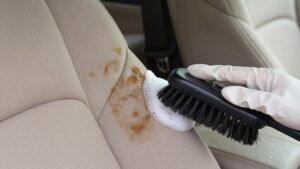
For mildew, apply a diluted cleaner, gently agitate with a soft-bristle brush, then rinse thoroughly until no residue remains. For dye transfer, perform colorfast testing on an inconspicuous area before treating. If dye bleeds, stop and consult a pro.
Avoid hot water, harsh solvents, or abrasive brushes that damage fibers or backing. If the original fabric is discontinued, consider approved fabric substitutes only after verifying compatibility and performing colorfast testing.
Always dry completely in shade, then apply a light protectant coat. Don’t risk shortcuts that cause irreversible staining or structural harm.
Dye Transfer Prevention
How do you prevent dye transfer and tackle mildew without harming your convertible top? You should inspect the fabric for color bleeding and surface mold before any wet work. For dye transfer prevention, avoid rubbing dyed materials against the top and wash suspect clothing separately. Use pH-neutral cleaners and cool water to minimize color migration.
For mildew removal, brush loose spores away dry. Then apply a mild mildew-specific cleaner designed for convertible tops, working evenly across the whole surface. Rinse thoroughly to remove all residue; trapped cleaner can encourage redeposition. Dry completely in shade to prevent recurrences.
After cleaning, apply a light protectant spray to reinforce water repellency and UV resistance. Repeat routine inspections to catch dye transfer or mildew early.
Stain Removal Techniques
When you spot stains from mildew or dyes, act promptly to limit permanent damage: brush away dry spores first. Then treat the whole panel with a mild, pH‑neutral mildew or dye‑safe cleaner rather than spot‑treating; this helps you avoid bright or dark halos. You’ll rinse thoroughly, agitate gently with a soft brush or foam applicator, and repeat if necessary until staining lightens.
For dye transfer, use products labeled safe for convertible tops and work the entire fabric area to keep color uniform. After cleaning, flush all residues with clean water and dry with microfiber towels. Regular fabric maintenance reduces recurrence: inspect often, remove contaminants before they set, and clean only when dirty to preserve the top’s fibers.
Protecting Fabric Tops
Facing mildew or dye transfer on a fabric top? You should act promptly: mildew weakens fibers and accelerates fabric aging, while dye transfer can permanently stain.
Start by assessing the entire top; never spot-clean to avoid bright spots. Use a mild, non-detergent cleaner and soft brush, working evenly across the surface. Rinse thoroughly to remove all residues, then air-dry in shade above 40°F.
For mildew, apply a manufacturer-approved mildew remover; agitate gently, rinse, and repeat only if necessary. For dye transfer, use a dedicated stain remover compatible with your top material and test a hidden area first.
Once clean and dry, apply a light, even protectant formulated for convertible tops to restore color, repel contaminants, and slow fabric aging.
Frequently Asked Questions
Can I Machine Wash Removable Convertible Tops?
No, you shouldn’t machine wash removable convertible tops. You’ll risk fabric damage, seam stress, fading, and hardware failure. Hand-washing with mild soap and gentle agitation is safer. Use a soft brush, thorough rinsing, and microfiber drying. Then apply protectant after drying.
For care conversations, cover two word discussion idea1 and two word discussion idea2 to compare methods and long-term effects. This way, you’ll choose the safest cleaning routine.
Will Protectants Affect My Rear-Window Clarity?
Yes, protectants can affect your rear window clarity if you apply them carelessly. Protectant myths claim they’ll always haze or fog windows; that’s false if you spray lightly and avoid direct contact.
Use a fine mist, keep product off vinyl or glass seams, and wipe any overspray immediately with a microfiber. Test on a small area first. Allow 15–30 minutes drying between coats, and you’ll preserve clarity and protect the top.
How Do I Prevent Creases When Folding the Top?
Fold the top carefully to prevent crease folding by keeping the fabric mobile and supported. You’ll clean and dry the top first; then apply a light protectant to restore top fabric elasticity so it bends smoothly.
Guide folds along original seams. Avoid sharp bends and use soft supports or padding in tight corners.
Store the top partially open briefly to let treated fabric settle. Then close fully to maintain smooth contours.
Can Leather Headliners Be Cleaned the Same Way?
No, leather headliners need different cleaning methods than fabric convertible tops. You should use leather-specific cleaners and conditioners. Test a hidden area first and avoid soaking or aggressive scrubbing.
Lightly vacuum with a soft brush. Apply a pH-balanced leather cleaner with a microfiber or foam pad, gently blot and wipe, then condition sparingly to restore suppleness. Keep products designed for automotive leather and follow manufacturer instructions precisely.
Are Automotive Pressure Washers Safe for Tops?
No, you shouldn’t use automotive pressure washers on auto soft tops. They risk damaging fabric, seams, and seals. For cleaning safety, stick to a strong gentle water jet or hose spray, soft brushes, and mild cleaners.
You’ll rinse thoroughly; avoid high pressure or hot water. Dry with microfiber towels. This preserves material integrity, prevents pilling and leaks, and keeps seals and stitching intact for long-term protection.
Conclusion
You’ve learned how to read UV ratings, reapply water-repellent treatments on schedule, and spot mildew versus dye transfer so you’re not treating the wrong problem.
Use mild, fabric-safe cleaners and test solutions in an inconspicuous spot before scrubbing. Remove stains promptly with targeted techniques and avoid harsh chemicals that strip coatings.
Finish with a manufacturer-approved protectant and store the top dry and shaded to extend life and maintain appearance.