Decontamination Workflow Checklist
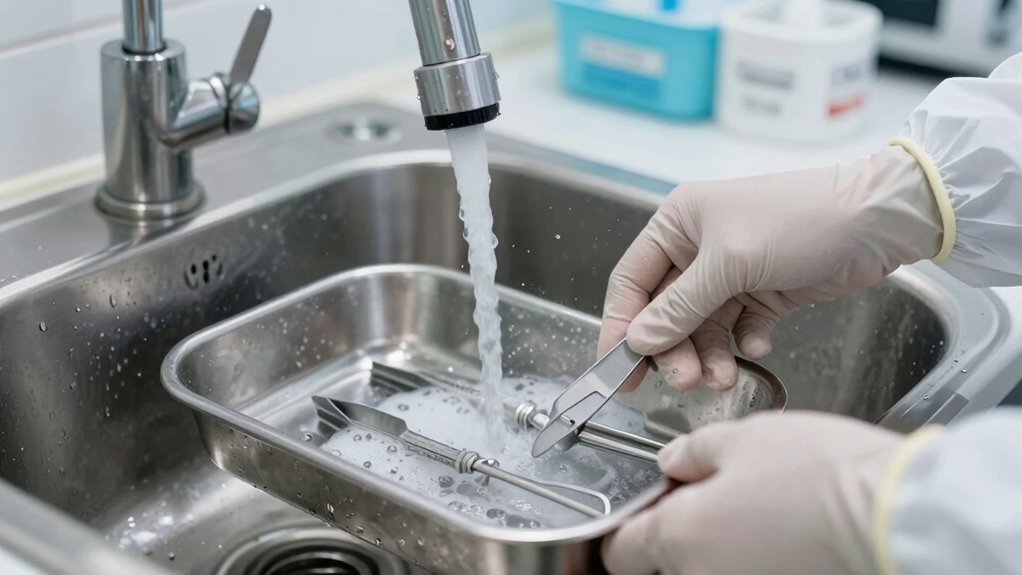
You’ll follow a clear decontamination workflow: select gravity cycles for unwrapped solids or pre‑vacuum for wrapped/porous loads. Place chemical and biological indicators in the densest area or lumens. Run a Bowie‑Dick daily before the first vacuum cycle and position the test pack flat and centered.
Log cycle parameters, operator, and results. Quarantine and stop use on failures. Escalate repeated issues to engineering. Follow retention and training policies and continue for detailed procedures and corrective steps.
Quick Overview
- Define cycle parameters for each load type: gravity 121–132°C for unwrapped; pre-vacuum 132–134°C for wrapped/porous.
- Place chemical and biological indicators inside the most enclosed lumen or center of dense packs and between tray layers.
- Run and document a daily Bowie-Dick test before the first vacuum cycle. Inspect indicator placement and acceptance criteria.
- Validate cycles with physical monitors, temperature mapping, BIs, and PCDs. Log results and retain records per policy.
- Quarantine loads and stop sterilizer use on failures. Perform corrective actions, escalate recurring issues, and retrain staff.
Autoclave Cycle Parameters
Autoclave cycle parameters define the steam temperature, chamber pressure, and exposure time you must meet to achieve reliable sterilization. Follow the specified settings for gravity, pre-vacuum, and specialized cycles (liquids, textiles, prions) and validate each configuration before routine use. You’ll select gravity (121–132°C) for unwrapped solids. Pre-vacuum (132–134°C) is for wrapped/porous loads, and specialized cycles are for liquids or prions.
Validate with physical monitors, temperature mapping, BIs, and PCDs. Log results and reject loads that read as non-sterile. Handle disposable items as biohazard waste if contamination prevents reprocessing. Follow drying-time validations and manufacturer cycle specs to prevent false passes and ensure consistent penetration and inactivation.
| Parameter | Typical Range |
|---|---|
| Temp | 121–134°C |
| Pressure | 15–30 psi |
Sterilization Indicator Placement Guide
Where should you place sterilization indicators to ensure each load is truly processed? You’ll place indicators where sterilant penetration is least likely and where failure would be critical. Follow campus policies and device instructions. Balance thoroughness with energy efficiency by minimizing repeat cycles through correct placement.
- Place indicators inside the most enclosed lumen or fold of each instrument pack.
- Position at the center of large or dense loads where steam or vapor reach is delayed.
- Insert in trays beneath stacked items and between layers of wrapped sets.
- Place one indicator near the chamber door and one at the distal chamber quadrant for duty verification.
- Use biological indicators per protocol for high-risk loads and retain records per campus policies.
Document locations and results immediately to support traceability.
Cycle Bowie-Dick Test Frequency
You’ll run a Bowie-Dick test daily before the first vacuum-assisted sterilization cycle to verify steam penetration and air removal. Place the indicator pack in the designated chamber location, record the result in the log, and retain the tape or printout with cycle documentation.
If a test fails, stop operations. Follow your corrective action checklist, and document all troubleshooting steps and outcomes.
Frequency Of Bowie-Dick
How often should you run a Bowie-Dick test to confirm consistent air removal and steam penetration in your sterilizer? You should run a Bowie-Dick test at the start of every operational day before processing items, after any sterilizer maintenance or repair, and whenever you suspect a vacuum or steam penetration issue.
Follow bowie dick basics: use manufacturer-recommended test packs, record results, and act immediately on failures. Don’t rely on autoclave myths that a single weekly or random check is enough. If your facility runs multiple cycles per day, consider additional tests after prolonged idle periods or abnormal load changes.
Document each test, label failed runs, quarantine affected loads, and perform corrective maintenance before returning the unit to service.
Daily Test Requirements
When should you run a Bowie-Dick test each day? You’ll run it at the start of the first scheduled sterilization cycle after daily cleaning is complete and the sterilizer has reached operating temperature.
Perform the test after routine surface scrubbing, equipment checks, and any maintenance that could affect chamber air removal. Document time, operator, and test result immediately in the log. If the test fails, stop all sterilization activities; troubleshoot according to protocol, re-clean affected surfaces, and repeat the Bowie-Dick test. Only resume production after a passing result.
Maintain a clear schedule so tests aren’t skipped between shifts. Keep records for audit and quality review to verify consistent cycle performance and regulatory compliance.
Indicator Pack Placement
After you complete your daily Bowie-Dick test as described, place the indicator pack flat and centered on the lowest shelf of the sterilizer chamber where air removal is most challenging. You’ll position the pack so the chemical indicator faces upward, unobstructed by trays or instruments.
Maintain consistent indicator placement each cycle to ensure comparable results and rapid detection of vacuum or steam penetration failures. Integrate this step into your routine workflow sequencing immediately after chamber setup and before loading sterilization loads. Use only manufacturer-approved packs and avoid stacking or tilting.
Run the cycle promptly and inspect the indicator against acceptance criteria on completion. If the indicator fails, halt use of the sterilizer, troubleshoot per protocol, and repeat the test after corrective action.
Documentation And Records
Consistency in recordkeeping guarantees you can verify Bowie-Dick test frequency and trace sterilizer performance over time. You log each test date, cycle ID, operator, and results immediately after completion. Use standardized forms or digital logs to enforce documentation practices and timestamp entries.
Retain raw data, test packs, and any chemical indicator readouts according to your facility records retention schedule. Label storage with clear retention periods and disposal dates. Conduct routine audits of logs to confirm compliance and detect trends.
Ensure access controls prevent unauthorized edits but allow reviewers to append observations. Back up electronic records offsite and keep paper copies secure. Train staff on required entries, sign-off procedures, and corrective note conventions for transparency and accountability.
Action For Failures
How should you respond if a Bowie-Dick cycle fails? You stop using the sterilizer for patient items, isolate the load, and document the event immediately. Conduct a failure analysis: check pack configuration, preconditioning, chamber vacuum, printer/tape records, and chemical indicator placement.
Repeat a Bowie-Dick test after corrective adjustments. If it fails again, escalate to biomedical engineeringefor mechanical inspection and service. Record each corrective action and result in logbooks and digital records.
Review the frequency of Bowie-Dick testing and incorporate findings into process optimization measures. Adjust testing intervals, preventive maintenance schedules, and SOPs as indicated. Communicate outcomes to supervisory staff and retain documentation for regulatory review and continuous improvement.
Staff Training Schedule
Why test Bowie-Dick cycles on a regular schedule? You ensure vacuum steam sterilizers purge air and penetrate loads consistently. Establish a staff training schedule that mandates daily Bowie-Dick tests for routine loads; immediate testing after maintenance or power interruptions; and weekly review sessions documenting results.
Train operators to run, read, and record cycle indicators, interpret failures, and perform immediate corrective actions per the Action For Failures protocol. Use competency checklists, hands-on demonstrations, and refresher drills to maintain proficiency. Integrate testing records into workflow optimization metrics to spot trends and reduce downtime.
Assign responsibility; set clear timelines for retraining after anomalies; and audit adherence monthly. You’ll keep sterilization reliable and compliant.
Frequently Asked Questions
How Do I Dispose of Contaminated PPE Safely?
You should seal contaminated PPE in labeled, leak-proof bags, disinfect the exterior, and place them into designated waste containers for disposal PPE.
Don’t compact bags; transport them in sealed, decontaminated carriers to the approved waste facility. Maintain waste tracking by recording bag IDs, contents, disposal time, and chain of custody.
Follow facility protocols for final treatment or incineration, and document completion to ensure regulatory compliance and traceability.
When Should Mop Heads Be Replaced?
You should replace mop heads when they show visible soil, odor, fraying, or reduced cleaning effectiveness. Follow facility mop head replacement and disposal timing policies. After cleaning high-risk or contaminated areas, remove and bag the mop head immediately. Disinfect the handle, and replace it with a clean one.
For routine use, schedule replacement based on frequency of use and manufacturer guidance. Document replacements and dispose of used mop heads as contaminated waste.
Which Surfaces Need Hourly Disinfection?
You need to disinfect high-touch surfaces hourly: door knobs, frames, handles, light switches, elevator buttons, hand railings, shared equipment (keyboards, mice, phones), and work surfaces. Use strict surface selection to prioritize items with frequent hand contact and high traffic.
Set disinfection frequency to hourly for those items; document each cleaning, use appropriate PPE, and switch wipes per surface to prevent cross contamination while maintaining chain-of-custody records for waste.
How Do I Document Chain-Of-Custody for Waste?
You document chain-of-custody for waste by recording each transfer in document control records and using waste tracking forms. Label sealed bags/containers with unique IDs, contents, date/time, origin, and handler signatures.
Log transfers, transport vehicle, and storage location. Obtain recipient signatures at each handoff. Retain records per policy, link tracking IDs to disposal receipts, and audit routinely to verify completeness and compliance with regulatory and internal document control requirements.
What PPE Is Required for Chemical Disinfectants?
You need PPE selection based on disinfectant compatibility and hazard. Wear chemical-resistant gloves, apron or coveralls, splash goggles or face shield, and boots. Use a respirator when products emit harmful vapors; follow MSDS.
Ensure gloves and fabrics resist the disinfectant. Replace damaged gear and perform hand hygiene after removal. Train staff on donning/doffing, compatibility charts, and spill procedures to maintain safety and compliance.
Conclusion
You’ve now got a clear, procedural roadmap for maintaining autoclave integrity and staff readiness. Follow cycle parameters, place indicators and Bowie-Dick tests exactly as specified, and run daily checks without exception. Log every cycle, test, and corrective action immediately.
If a failure occurs, stop use; quarantine loads, investigate cause, and document corrective steps. Keep staff training current and records auditable so you’ll ensure consistent sterilization and regulatory compliance every day.