Degreaser Dilution for Engine Bay Cleaning
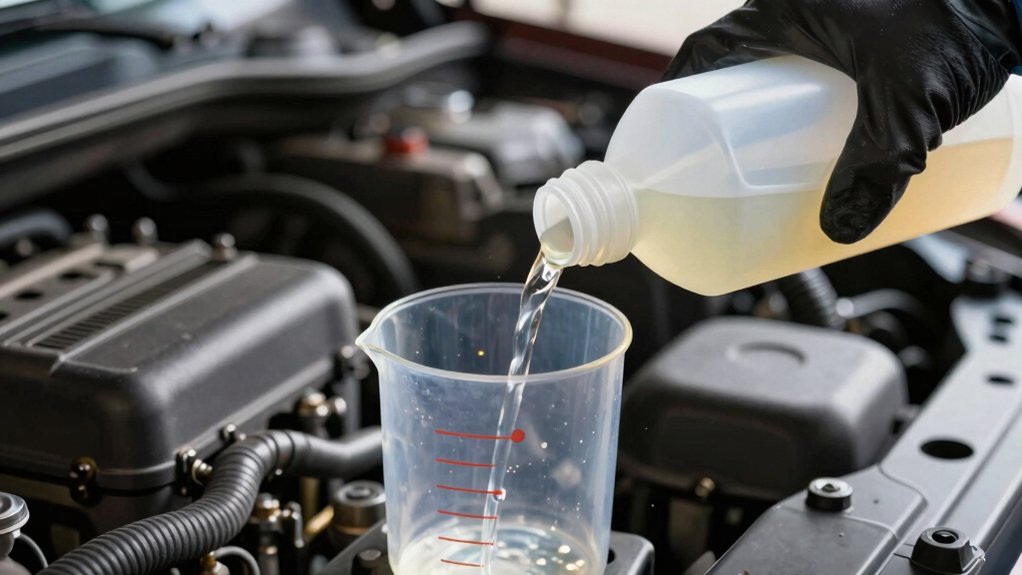
Use the mildest effective dilution and work on a cool-to-warm engine: Start conservatively (e.g., 30:1 for light cleaners, 10:1 for general-purpose; avoid 1:1 on paint/aluminum) and favor multiple light passes over one aggressive soak.
Check product pH and temperature limits. Alkaline formulas remove grease but can etch aluminum, rubber, and coatings. Do not clean hot alloy parts. Protect electricals; rinse promptly with low-angle pressure and dry thoroughly. Follow labels for safe aluminum-compatible options if you want more guidance.
Quick Overview
- Start with conservative dilutions (e.g., 30:1 for mild cleaners, 10:1 for stronger formulas) and increase strength only if needed.
- Avoid 1:1 mixes on painted surfaces; use multiple light passes rather than an aggressive single application.
- Check product pH and label for aluminum compatibility. Alkaline formulas can damage paint, rubber, and aluminum.
- Apply degreaser to cool-to-warm engines. Protect electrical connectors, then rinse promptly with low-angle, low-pressure water.
- Dry thoroughly with compressed air and lint-free towels. Inspect seals, and record dilution and results for future refinements.
Dilution Ratios Comparison Table
How do these dilution ratios compare in practice? You’ll match engine bay ratios to soil level and product compatibility, favoring conservative mixes first. Use light passes, spot-test, and avoid drying on painted or aluminum parts.
| Product | Typical Engine Ratio | Use Notes |
|---|---|---|
| Super Clean | 3:1 (standard) | Fast grease removal; foam helps; avoid 1:1 on paint |
| Simple Green | 30:1 (start) | Economical; strengthen to 10:1 or full for heavy oil |
| Koch/Chemie | 10:1 | Foam-friendly; dwell then agitate |
| Zep/Specialty | 1:1–4:1 | 1:1 for very heavy grime; dilute for lighter dirt |
Follow manufacturer directions. Rinse promptly, and prioritize multiple light applications over one aggressive mix.
pH Range & Temp Limits
Because degreasers vary widely in alkalinity, you should check pH before use and match it to materials and temperature limits to avoid damage. You’ll measure the pH range on the product label or with test strips. Alkaline cleaners (high pH) cut grease but can etch coatings, rubber, and painted surfaces. Observe temperature limits: hot engines amplify chemical activity and risk. Work on a cool-to-warm engine and avoid extremes.
- Confirm manufacturer pH range and select milder dilutions for sensitive materials.
- Stay within stated temperature limits to prevent accelerated corrosion or solvent vaporization.
- Use lower concentration when operating near upper temperature limits.
- Rinse promptly and neutralize if pH exceeds safe thresholds for components.
Avoid Aluminum on Hot Engines
Don’t clean aluminum components while the engine’s hot, because heat makes aluminum more reactive and increases the risk of warping. Cool the surface first; protect electrical connections, and choose degreasers labeled safe for aluminum to avoid chemical attack.
Prioritize multiple light applications over aggressive concentrations to reduce thermal and chemical stress.
Aluminum Reacts To Heat
Why would you reach for aluminum tools or brushes on a hot engine? You shouldn’t. Aluminum safety matters because heat effects change the metal’s behavior. When engine temperatures are elevated, aluminum softens slightly and loses some structural rigidity; that increases the chance of deformation, gouging, or fracturing under mechanical contact.
You risk creating burrs or removing protective coatings, which accelerates corrosion and compromises components. Work only when the engine has cooled to a safe temperature and use non-reactive tools: plastic, nylon, or stainless steel rated for contact with aluminum surfaces. Be deliberate: monitor surface temperature, avoid hard scrubbing on warm alloy parts, and follow manufacturer procedures.
Prioritize controlled, cooler conditions to maintain component integrity and prevent unintended damage.
Risk Of Warping Aluminum
Heat-softened aluminum is much more susceptible to permanent deformation, so you should avoid using metal tools or aggressive brushing on a hot engine where warping can occur. When you clean, allow adequate engine bay cooling so components return to ambient temperature before applying degreaser or mechanical action.
Aluminum safety demands low-impact tools: nylon brushes, soft cloths, and conservative dilutions to limit thermal shock from cold water. If you must work sooner, mist surfaces lightly and let them equilibrate. Do not blast high-pressure cold water onto warm heads or intake plenum.
Inspect fasteners and thin castings visually for signs of stress after cleaning. Prioritize staged, gentle cleaning passes over forceful scraping to preserve tolerances and avoid distortions that can create leaks or misalignment.
Protect Electrical Connections
Electrical connectors are vulnerable when you clean a hot engine, so you should protect them before applying degreaser or cold water. You’ll first identify exposed plugs, sensors, and harness junctions that might suffer thermal shock or corrosion.
Use a targeted protective coating: silicone dielectric grease on terminals and removable tape or shrink tubing over housings to limit moisture migration and prevent shorting. Avoid spraying high-pressure water directly at sealed connectors; instead, direct flow away and use low-pressure rinses.
If aluminum components are hot, don’t apply cold water or wet coatings that can cause warping. Wait until temperatures moderate. After cleaning and drying, inspect seals and reapply a light protective coating to deter future moisture migration and preserve electrical reliability.
Cool Surface Before Cleaning
Have you let the engine cool to ambient temperature before you spray or pour water on it? You should: thermal shock from cold water on hot components can warp aluminum, crack composite parts, and compromise seals. Confirm a cool surface by feeling (with care) or using an infrared thermometer; don’t guess.
Perform a targeted pre wash with low-pressure water or foam to remove loose debris once surfaces are cool. Avoid blasting hot metal; wait until gauges and touch readings match ambient. Cooling also prevents rapid evaporative concentration of degreaser, which can increase corrosion risk.
Plan your workflow so degreaser application and agitation occur only after the bay reaches safe temperature. Safety-first timing reduces material damage and improves cleaning consistency.
Use Aluminum-Safe Degreasers
Once the bay has cooled and you’ve removed loose grime, choose a degreaser that’s labeled safe for aluminum: alkaline or citrus-based products can etch or discolor aluminum if they’re too strong or left to dry on the metal.
You should inspect component temperatures and labels before mixing. Aluminum safe products reduce chemical reactions that accelerate on warm metal. Prioritize degreaser selection by pH, active ingredients, and manufacturer guidance. Use milder dilutions where aluminum is exposed, and perform a small compatibility test on an inconspicuous area.
Apply, monitor dwell time closely, and avoid letting residues dry. If heavy soiling demands stronger chemistry, opt for mechanical agitation instead of increasing concentration. Record your dilution and outcome to refine future aluminum-safe choices.
Rinse And Dry Thoroughly
Why rinse immediately and dry thoroughly? You’ll prevent chemical etching, residue buildup, and corrosion, especially on aluminum components, by flushing degreaser from engine bays before it dries. Rinse with low-angle pressure to remove loosened soils. Avoid blasting hot aluminum, which can warp or pit.
After rinsing, use compressed air, lint-free towels, and a blower to evacuate trapped water from crevices, connectors, and harnesses. Match your drying method to dilution strategies: stronger mixes require faster, more complete drying to limit dwell damage; milder dilutions reduce but don’t eliminate risk. Work systematically from top to bottom while checking sensor housings and electrical terminations. Finish with a visual inspection, and only run the engine once you’re confident all critical areas are dry.
Frequently Asked Questions
Can Degreasers Harm Electrical Connectors or Sensors?
Yes, degreasers can harm connectors and sensors if you don’t use degreaser safety practices. You should avoid soaking exposed electronics, mask sensitive connectors, and use milder dilutions or foam to limit contact.
Harsh chemicals and trapped residue accelerate electrical corrosion and cause failures. Rinse carefully, dry fully, and test circuits after cleaning. When in doubt, use targeted spot cleaning and protective sprays rated for electronics.
How Long Should a Degreaser Dwell Before Rinsing?
You should let the degreaser dwell about 2–5 minutes before rinsing. Adjust dwell time based on dilution ratio and soil: stronger mixes (4:1 to 1:1) can work in 2–3 minutes; weaker mixes (10:1 to 20:1) may need 4–5 minutes.
Avoid letting it dry; keep surfaces wet. If sensitive components exist, shorten dwell, rinse thoroughly, and agitate stubborn spots. Always follow product instructions for safety.
Can I Use a Foam Cannon in the Engine Bay?
Yes, you can use a foam cannon in the engine bay, but you’ll need caution. You should use appropriate degreasers and conservative dilution to avoid electrical risk and component damage.
Foam helps control water, dwell time, and agitation. However, avoid soaking sensitive electronics, fuse boxes, and air intakes.
Mask electrical parts, use a low pressure rinse, and prefer multiple light passes over a single heavy application for safer, effective cleaning.
Is Rinsing With a Pressure Washer Safe for Wiring?
Yes, rinsing with a pressure washer can be safe if you control pressure and technique. You’ll minimize engine bay risks by keeping distance: use wide spray and low PSI. Avoid direct jets at connectors, sensors, and exposed wiring. Cover sensitive components to further reduce risks.
Water intrusion risks drop when you pre-cover electrical parts, let degreaser dwell, rinse briefly, and dry thoroughly. When unsure, opt for a gentle rinse or hand-wipe to be safer.
Do Biodegradable Degreasers Need Different Dilution?
Yes, biodegradable degreasers can need different biodegradable dilution for engine bay safety. You should follow manufacturer dilutions; however, you often use milder mixes (e.g., 10:1–20:1) compared with harsher synthetics. Test on sensitive components first.
Because biodegradables can be less aggressive, you may need stronger mixes for heavy grease. Still, prefer multiple light applications, dwell and agitate, and avoid soaking electrical connectors to preserve engine bay safety.
Conclusion
When cleaning an engine bay, prioritize proper dilution and safety. Use manufacturer-recommended ratios, check pH and temperature limits, and avoid applying alkaline degreasers to hot aluminum. Heat accelerates chemical attack and can warp components. Always cool the engine, protect electrical connections, and choose aluminum-safe products when needed.
Rinse thoroughly and dry completely to remove residues that can corrode or short circuits. Following these steps minimizes damage and keeps the engine bay safe and reliable.