Drying a Car Without Water Spots
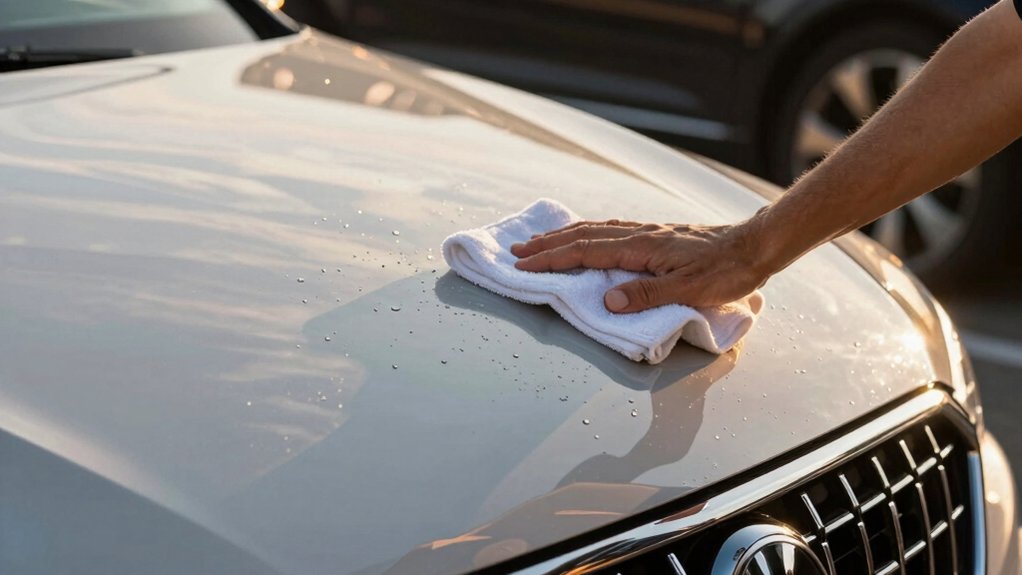
You can dry your car spot-free by working section-by-section in shade, keeping panel temps 60–80°F and ambient 50–75°F. Avoid direct sun or temps above 85°F. Use deionized or treated final rinse water ≤25 ppm and warm—not hot—water to prevent mineral concentration.
Blot with a 500–600 GSM microfiber or 300–400 GSM for faster passes. Finish within 30 minutes, and pause to cool panels above 80°F. Follow these steps and you’ll learn the full process.
Quick Overview
- Rinse and final-rinse with treated water ≤25 ppm (deionized) to minimize mineral deposits that form spots.
- Work in shade with panel temperatures 60–80°F and ambient 50–75°F to avoid rapid evaporation and spotting.
- Dry section-by-section (roof, hood, trunk, sides) within 30 minutes using blotting motions to stop droplets from drying.
- Use 500–600 GSM microfiber for balanced absorbency; heavier GSM is recommended for large vehicles or heavy water.
- If panels exceed 80–85°F or ambient >95°F, pause, cool, or mist with deionized water before drying.
Water Spot Formation Thresholds
Why do water spots form so reliably after a wash? You’ll see them when water hardness and evaporation rate combine to concentrate minerals on warm panels. Hard water (TDS >40 ppm) leaves deposits that etch paint; especially if panels exceed 140°F or ambient tops 95°F. You must prevent droplets from drying naturally. Immediate drying cuts risk drastically.
Use deionized rinse or dry sections methodically from roof downward so evaporation doesn’t outpace your work. Heat, minerals, and time multiply damage. Cool shade and quick blotting are your controls. Maintain sealants or ceramic coatings to reduce adhesion. Measure TDS to confirm safe rinse levels and treat final rinse water to ≤25 ppm for near-zero spot probability.
| Factor | Impact |
|---|---|
| TDS/water hardness | Mineral deposits |
| Evaporation rate | Concentration/etching |
Microfiber Towel GSM Guide
How much does towel GSM matter when you’re aiming for a spot-free finish? You should pick microfiber gsm appropriate to the job: higher GSM holds more water but can be slower to wring; lower GSM is quicker but needs more passes. Choose drying towels that match paint condition and drying technique.
- 300–400 GSM: lightweight, fast-drying, good for quick passes
- 500–600 GSM: balanced absorbency and manageability for most cars
- 700–900 GSM: plush, high-capacity for large vehicles or heavy water
- Waffle weave (medium GSM): fast pickup, low friction on paint
- Twist-loop (higher GSM): superior for ceramic or treated surfaces
Match towel GSM to your blotting and sectioning method to minimize passes and reduce spotting risk.
Recommended Drying Temperatures
You’ll get the best results when you dry in a controlled ambient range: roughly 50–75°F. This ensures that water won’t evaporate too quickly or linger long enough to leave spots. Aim for panel temperatures slightly cooler than direct skin warmth. Use warm (not hot) water or towels if needed, and never dry in direct sunlight.
If the car’s been in the heat, let panels cool to that optimal range before starting. This helps to prevent rapid evaporation and etching.
Ideal Ambient Range
When should you dry the car to minimize water spots? Dry when the ideal ambient temperature sits between 50°F and 75°F (10°C to 24°C). In that range, evaporation is moderate; water won’t bead and concentrate minerals quickly, nor will it linger cold enough to freeze or allow contaminants to settle.
Avoid direct midday sun above 85°F; rapid drying increases mineral residue and makes water spot formation likely. Likewise, don’t dry below 40°F, where reduced evaporation leaves water pooled and promotes streaking. Also, watch humidity: aim for relative humidity under 70% so towels and drying aids work effectively.
Plan washes and drying during these windows. Work methodically section by section, and complete drying within thirty minutes to prevent nascent water spots.
Optimal Panel Temperatures
Now that you’ve picked the right time and conditions, check each panel’s surface temperature before drying. You want optimal panel temperatures between about 60–80°F (15–27°C) so water won’t evaporate too quickly or cling stubbornly. Use a non-contact infrared thermometer for uniform readings; don’t rely on touch, which leads to incorrect wording about “warm enough.”
If panels exceed the range, wait or cool them. If they’re below it, allow gentle warming to avoid trapping moisture. Record temperatures section-by-section and prioritize cooler areas first to prevent runoff onto dry zones. This temperature guidance ensures predictable drying behavior, reduces spot risk, and directs your sequence: roof, hood, trunk, then sides and crevices for a controlled, spot-free finish.
Avoid Direct Sunlight
Why dry out of direct sunlight? You’ll avoid rapid evaporation that leaves mineral deposits bonding to paint. Sunlight speeds surface temperature and water evaporation unevenly, producing tiny spots before you can towel them away.
Prioritize sunlight avoidance by selecting a shade setup: park under a tree, carport, or portable canopy that keeps panels cool and drying times consistent.
Work methodically: section the car, start at the roof, and use high-quality microfiber towels with blotting motions so you don’t chase evaporating beads. Check panel temperatures by touch; if they feel warm, relocate to better shade. A consistent shade setup reduces the need to rush, prevents Type II spotting from fast drying, and gives drying aids time to lubricate surfaces. This delivers a controlled, spot-free finish.
Use Warm, Not Hot
Keeping the car out of direct sun helps control surface temperature. You should take the same care with the water and drying environment: use warm, not hot, water and towels. You’ll preserve the paint and clear coat by avoiding temperature extremes that accelerate drying and trap minerals. Aim for water you’d call comfortably warm to the wrist and towels that feel like a warm touch, not heated.
Hot surfaces plus hot towels promote premature evaporation, leaving mineral deposits and streaks. For methodical results, test one panel: warm rinse, blot with a quality microfiber, then move on. These discussion ideas keep you deliberate: control temperature, limit rapid drying, and maintain a steady, blotting-based routine to prevent spots.
Cool Down Before Drying
Want the paint at the right temperature before you dry it? You should let the car cool down until panel temperatures drop to a moderate range: roughly 60–80°F (15–27°C) is ideal. Cooling prevents rapid evaporation that leaves minerals behind and reduces the risk of heat-induced streaking or spot formation.
Work in shaded areas or wait after driving to let heat dissipate. Measure panel temperatures with an infrared gun if you want precision. Do not dry while surfaces feel warm to the touch. When panels reach the target range, proceed methodically section by section, starting high and moving downward.
Cooling first protects clear coat integrity, improves drying aid performance, and gives microfiber towels the best chance to leave a spotless finish.
Monitor Surface Heat
After the car has cooled into the 60–80°F range, check panel temperatures with an infrared gun or a contact thermometer before you start drying. Aim to keep surfaces within that band to prevent rapid evaporation and mineral spotting.
You’ll continue monitoring heat as you work; measuring roof, hood, glass, and lower panels to confirm uniform surface cooling. If any area reads above 80°F, pause and let it equilibrate in shade or use a misting spray of deionized water to lower temperature gently. Avoid drying hot panels because rapid evaporation concentrates minerals and causes spots.
Track readings methodically, record trouble spots, and resume drying only when panels sit steadily in the target band. This practice lowers spot risk and improves final appearance.
Frequently Asked Questions
Can I Dry a Car in Direct Sunlight Without Spotting?
No, drying in direct sun almost guarantees water spots because heat speeds evaporation and leaves minerals behind. You should use microfiber drying towels and a blotting method. Compare this method with air-blowing for crevices to decide what’s best.
Work systematically from roof down; use drying aids or deionized water when possible. Finish with a blower for tight areas. That meticulous approach minimizes spotting and protects your paint.
Are Paper Towels Safe for Spot-Free Drying?
No, you shouldn’t rely on paper towels for spot-free drying. Paper towels lack the absorbency and softness of quality drying towels; they can leave lint and streaks and increase abrasion risk.
Use plush microfiber or waffle weave drying towels and blot excess water rather than dragging. For crevices, employ a blower. Consider a drying aid or deionized rinse to minimize mineral deposits that cause water spotting.
How Often Should Drying Towels Be Washed?
You should wash drying towels after every 3–5 uses, or immediately if they’re visibly soiled. Establish a towel frequency routine: rotate towels so each set gets washed before fibers trap grit.
Use a gentle detergent, no fabric softener, and warm water. Air-dry or tumble low. Inspect for embedded debris and replace towels once absorbency or pile degrades.
Washing towels routinely prevents scratches and preserves drying performance.
Can Car Wax Prevent Water Spots Entirely?
No, wax won’t prevent water spots entirely. You’ll reduce spotting because wax adds a slick barrier. However, wax residue can trap minerals and still allow etching if water is mineral-rich or left too long.
You should combine wax with drying aids and proper technique: blot and section-dry, use DI rinse or blowers for crevices, and remove excess wax residue during maintenance to minimize spots and protect the finish.
Is a Leaf Blower Better Than a Microfiber Towel?
A leaf blower isn’t universally better than a microfiber towel; you should use both. A leaf blower excels at ejecting water from crevices, trim, and between panels without contact. A microfiber towel absorbs surface moisture, prevents streaks, and protects paint when you blot systematically.
Start with the blower for tight spots. Then follow with quality microfiber towels for horizontal and vertical surfaces, finishing section by section for spot-free results.
Conclusion
You’ve learned the key steps to dry your car without water spots: act before minerals bake on, use high-GSM microfiber, and pick the right temperatures.
Dry in the ideal ambient and panel ranges. Avoid direct sun, and use warm—not hot—water or air. Let panels cool if they’re too hot, and monitor surface heat as you work.
Follow this methodical routine every time, and you’ll prevent water spots reliably and efficiently.