Dual Action Polisher Basics
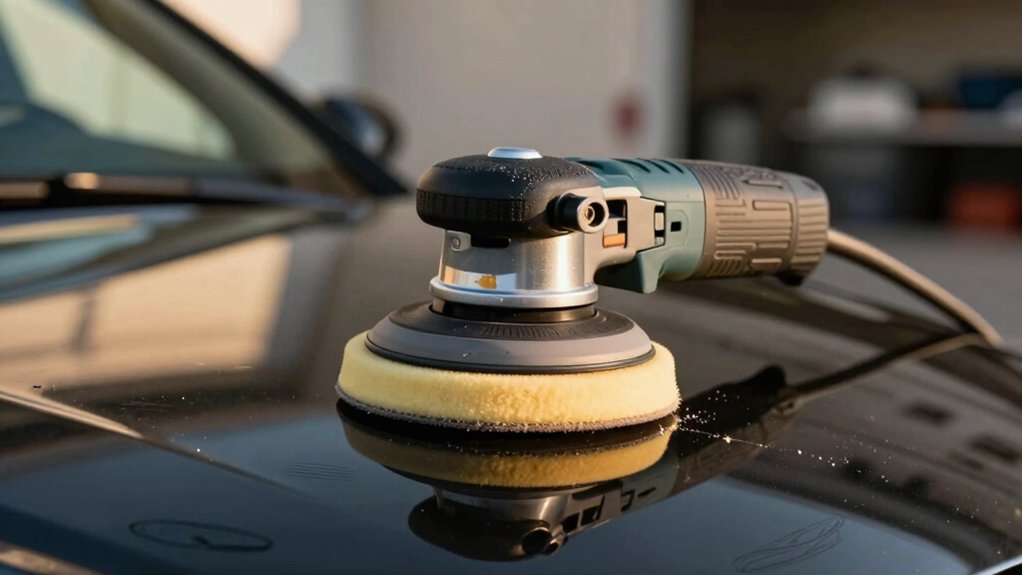
A dual-action polisher gives you controlled correction by matching orbital throw, RPM, and pad type to the task. Use higher speeds and firmer pads for heavy compounding; lower speeds and softer pads for finishing. Watch throw limits and motor load: larger throws remove more material and generate heat, so reduce pressure and time.
Match backing plate size, attachment type, and thread pattern to your pad and spindle. Pick plate flex for cut versus conforming. Keep going, and you’ll learn setup, limits, and maintenance.
Quick Overview
- Match pad type and orbital throw to the task: large throw and aggressive pads for cutting; small throw and soft pads for finishing.
- Start with speed first: choose rpm appropriate for throw and pad to control heat. Then adjust pressure and technique.
- Monitor pad temperature and motor load to avoid burnishing, reduced pad life, or swirl marks.
- Use the correct backing plate size, attachment type, and thread pattern for secure, concentric mounting.
- Select plate material/flex based on contour and cut needs. Maintain and inspect plates regularly.
Pad Speed Comparison
How fast should you run a dual action polisher? You’ll match pad type, speed range, and product to control pad durability and heat management. Use lower speeds for soft pads and finishes. Raise speed for cutting with firmer microfiber pads while monitoring temperature. Balance arm speed and pressure to avoid pad burnishing and reduced lifespan.
| Task | Typical Speed Range | Pad Choice |
|---|---|---|
| Heavy compounding | 5+ (higher) | Firm microfiber |
| Polishing | 4 (moderate) | Medium foam/microfiber |
| Waxing | 3–4 (lower) | Soft foam |
| Cleaner-wax | 4–6 (variable) | Medium foam |
| Fine finishing | 3 (low) | Very soft foam |
Adjust technique before rpm to preserve pads and control heat.
Orbital Throw & RPM Limits
Curious what “orbital throw” really changes? You’ll find throw and rpm limits determine cutting vs finishing performance. Larger orbital throw increases pad excursion, improving cut but raising heat and torque; smaller throw favors finish and control.
Respect rpm limits to avoid pad wobble and overheating bearings.
- Larger orbital throw = greater material removal per pass
- Smaller orbital throw = finer finish, less risk of swirl
- Stay within manufacturer rpm limits for each throw size
- Higher rpm with large throw increases heat; reduce pressure and time
- Monitor motor load and pad temperature to prevent damage
You’ll choose throw and rpm combination based on correction needed, surface sensitivity, and tool capability, not by brute force.
Backing Plate Compatibility
Check backing plate compatibility before you mount a pad: choose the right diameter for coverage and machine balance. Confirm pad attachment type (hook-and-loop vs. PSA), and match the thread pattern to your polisher spindle.
Consider plate flex and cushioning; stiffer plates give more cut. Softer or floating plates reduce heat and conform to contours. Also, verify material compatibility with your pads and compounds to avoid premature wear or solvent damage.
Backing Plate Sizes
Which backing plate size suits your dual action polisher depends on the pad diameter and the job you’re doing. You’ll choose backing plate sizes to match pad diameter for stability, heat distribution, and reachable surface area.
Smaller plates (e.g., 3–4″) give precise control on edges and contours; larger plates (5–6–7″) cover flats faster and reduce working time. Match thread pattern and arbor to ensure secure mounting without adapters.
Consider pad stiffness: softer pads benefit from slightly larger plates to spread pressure. Firm cutting pads perform better on exact-size plates.
Don’t force oversized plates into tight panels or undersized plates on broad panels; both reduce efficiency. Be deliberate: size selection affects finish quality, compound use, and operator fatigue.
Pad Attachment Types
Pad attachment types determine how securely your pad mates to the backing plate and whether different pads or plates will fit your dual action polisher. You’ll commonly see hook-and-loop (Velcro), threaded, and adhesive-backed systems; each has distinct compatibility and performance trade-offs.
You’ll choose pad types based on task: foam and microfiber pads usually use hook-and-loop for quick swaps. Heavy-duty wool sometimes uses adhesive or threaded mounts for stronger retention.
Check backing plate diameter and material compatibility to avoid imbalance. For safe operation, follow safety tips: inspect attachment before each use, replace worn pads, and ensure full contact to prevent wobble. Use correct torque on threaded plates and avoid adhesives on hot surfaces to prevent failure and surface damage.
Thread Pattern Matching
Thread pattern matching ensures your backing plate threads securely onto the polisher spindle, preventing wobble or detachment during use. You check thread type (M10, M8, 5/16-24 etc.), pitch, and direction against the tool specification before purchase or replacement.
Proper engagement length and clean threads reduce play that causes vibration, uneven pad wear, and elevated noise levels. Use thread gauges or manufacturer charts to confirm fit; don’t force mismatched plates. After mounting, torque to spec and spin at low speed to confirm concentricity.
Regular pad maintenance includes inspecting the backing plate face and threads for debris, corrosion, or damage that can alter fit. Replace any plate with stripped threads to maintain safety and performance.
Flex And Cushioning
When selecting a backing plate, consider how its flex and cushioning affect pad contact and correction. Too stiff a plate concentrates pressure and can cause uneven polishing; too soft a plate reduces cutting efficiency and control. You’ll evaluate plates by flex testing: apply measured pressure at multiple radii while observing pad deformation and edge lift.
Track how the pad maintains surface contact during oscillation and rotation. Use cushioning comparison between plates of varying durometers to quantify energy absorption, heat transfer, and tactile feedback. Choose a plate that balances support and compliance for your pad type and compound aggressiveness.
Remember compatibility with pad thickness and machine swing. A mismatch changes leverage, vibration, and final finish consistency.
Material Compatibility
After you’ve assessed flex and cushioning, check backing plate materials to match pad type, compound aggressiveness, and machine swing. You’ll select plastic, composite, or aluminum plates based on pad materials: foam pads pair well with softer plastic or composite plates for compliance. Microfiber and wool pads need firmer aluminum plates to maintain shape under load.
Match plate diameter to pad size to avoid edge lift and heat concentration. Consider threaded arbor compatibility and machine-specific flange tolerances to prevent imbalance. For aggressive compounds, choose rigid plates that resist deflection; for finishing, use flexible plates to follow contours.
Follow manufacturer care considerations: clean plates after use, inspect hook-and-loop surfaces, replace worn plates, and torque mounting hardware to spec to prevent failure.
Frequently Asked Questions
How Often Should I Replace Polishing Pads?
You should replace polishing pads when they show wear or performance drops. Typical pad longevity is 10–30 uses depending on compound, material, and care; so set a replacement cadence of every 10–20 sessions for aggressive work and 20–30 for light polishing.
Inspect pads for glazing, torn foam, embedded grit, or uneven contact after each job. Clean and store pads properly to maximize life, and replace immediately if contamination risks surface damage.
Can I Use a DA Polisher on Matte Finishes?
Yes, you can use a DA polisher on matte finishes, but you’ve got to be careful. Matte finish compatibility depends on low heat and minimal polishing action. So, use soft microfiber or dedicated matte pads and gentle compounds.
Pad selection tips: choose non-cutting, low-friction pads; keep speed low; avoid heavy pressure; and test in an inconspicuous area. Finish with light brushing or matte-specific sealant to preserve texture.
What Safety Gear Is Recommended During Polishing?
You should wear appropriate safety gear: nitrile gloves, safety goggles, a respirator (P2/P3) for dust and VOCs, hearing protection, and a long-sleeve coverall to protect skin and clothes.
Tie back hair and avoid loose jewelry. Use anti-slip footwear and keep polishing treadmills or work platforms stable and clear. Check electrical connections; use RCD protection and ensure good ventilation to minimize inhalation and heat-related risks while you polish.
How Do I Store Compounds and Pads Long-Term?
Store compounds sealed in cool, dark, dry places. Keep containers upright and wipe rims before resealing to prevent contamination.
For pads, follow pad maintenance: clean pads after each use with pad comb and mild detergent, rinse thoroughly, spin-dry, and air-dry flat. Rotate pads to avoid permanent deformation and store them in dust-free bins or sealed bags labeled by type.
Check shelf-life and discard expired compounds to maintain performance.
Can a DA Polisher Remove Deep Scratches?
Yes, a DA polisher can remove some deep scratches, but it’s limited. You’ll need aggressive compound and correct pad replacement to a cutting pad. Additionally, you must be patient with multiple passes using crosshatch motions and controlled speed.
Deep gouges that penetrate clear coat or primer usually require wet sanding, filler, or panel repair. Always test on an inconspicuous area, work gradually, and stop if you see heat build-up or thinning paint.
Conclusion
You’ve covered the essentials: match pad speed and orbital throw to the task, respect RPM limits, and use the right backing plate size and thread pattern. Check plate compatibility and attachment type before mounting pads. Consider flex and cushioning for contouring without overheating.
Choose pad materials suited to the surface and compound. When everything’s matched — speed, plate, pad, and material — you’ll get efficient, safe polishing with consistent results.