
Foam Pad Vs Microfiber Pad Difference
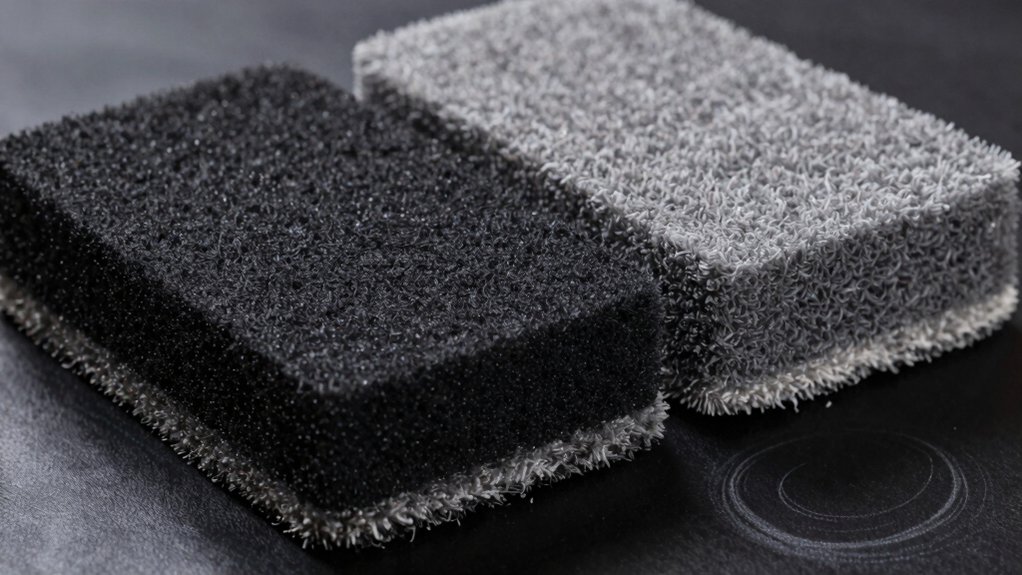
You’ll pick a microfiber pad when you need fast, aggressive correction and more cut. Microfiber sits medium‑firm, handles heavy oxidation, and pairs well with DA machines for speed.
Choose foam when you want controlled polishing, smoother finishes, and safer heat management. Soft foam is for finishing, medium is for polishing, and firm is for cutting. Match pad to paint hardness, machine type, and defect level. Switch when clogging or heat shows, and keep testing to confirm results if you want more detail.
Quick Overview
- Foam pads range from soft to firm: soft for finishing, medium for polishing, and firm for cutting; while microfiber sits medium-firm between medium and firm.
- Microfiber pads are more aggressive, delivering faster cutting and heavy-oxidation removal than equivalent foam pads.
- Foam pads give cleaner, glossier finishes for polish and coating prep. Microfiber risks slight increased haze if overused.
- Dual-action machines pair well with foam or microfiber with center holes; rotary tools need firmer foam or microfiber cores for heat control.
- Validate pad choice with practical cut tests, monitoring cut rate, finish haze, and heat. Switch pads if clogging or overheating occurs.
Pad Material Hardness Chart
Wondering which pad hardness suits your job? You’ll match pad material to paint hardness by using hardness testing protocols and hands-on feel. Foam pads come in soft, medium, and firm variants: soft for finishing, medium for polishing, and firm for cutting. Microfiber pads sit medium-firm and deliver higher aggression for heavy correction; they pair best with DA machines.
Use hardness testing (durometer or practical cut tests) to confirm pad selection against clear coat response, heat buildup, and polish loading. Track results: cut rate, finish haze, and temperature. Replace or switch pads when clogging or heat impairs performance.
| Pad Material | Typical Hardness |
|---|---|
| Foam – Finishing | Soft |
| Foam – Polishing | Medium |
| Foam – Cutting | Firm |
| Microfiber | Medium-Firm |
Pad Compatibility Quick Checklist
Having matched pad hardness to paint using durometers and cut tests, you now need a quick checklist to pick the right pad for each task and machine. Use this to verify pad compatibility fast and confidently when choosing foam vs microfiber.
- Match machine type: dual-action favors foam or microfiber with center holes. Rotary needs firmer foam or dedicated microfiber cores for heat control.
- Match paint hardness: hard paints benefit from microfiber cutting. Soft paints favor firmer foam cutting or softer foam finishing.
- Match defect level: heavy oxidation leads to microfiber cutting. Light swirl removal is best achieved with finishing foam or microfiber finishing pad.
- Match workflow and coatings: choose foam for finishing and coating prep. Pick microfiber when speed and aggressive correction are priorities.
Follow the checklist to avoid overcutting and overheating.
Battery Safety and Storage
When you use cordless polishers, follow proper charging practices and recommended storage temperatures to protect battery life and performance. You’ll want clear routines for long-term battery care, transport and shipping rules, and safe disposal methods to avoid damage or regulatory issues.
Stick to manufacturer specs; keep cells cool and dry. Label batteries for service or recycling.
Proper Charging Practices
How should you charge and store polisher batteries to maximize life and safety? Charge batteries with manufacturer-approved chargers that match battery chemistry and voltage. Smart chargers prevent overcharge and support battery safety. Charge at recommended rates; avoid fast-charge unless specified and stop when the charger indicates full.
Don’t let cells sit fully depleted. Recharge at about 20–40% to prolong cycles. Store batteries in a cool, dry, ventilated area away from direct heat or conductive materials. Treat them like precision components; this is similar to choosing pad material hardness for specific tasks.
Remove batteries from tools for long-term storage and use protective caps or cases. Inspect cells for swelling, leaks, or damage before charging. Dispose of compromised units per local regulations.
Recommended Storage Temperatures
After you’ve followed proper charging practices and removed batteries from tools for storage, store cells at a partial state of charge—typically around 40%—and keep them in a cool, dry location where temperature stays stable between 15°C and 25°C (59°F–77°F).
You should avoid garages or vehicles where extremes occur. Use insulated bins or foam organizers to prevent physical contact and allow airflow. Monitor storage temperature with a simple thermometer or smart sensor and log readings if you manage multiple packs.
Stability reduces chemical stress; spikes above recommended ranges accelerate capacity loss and have a measurable impact on longevity. For short-term storage under a month, you can accept minor fluctuations; however, for predictable preservation, maintain the specified storage temperature window for best performance retention.
Long-Term Battery Care
Because batteries degrade faster under stress, you should prioritize stable, cool storage and proper charge levels to extend long-term life and reduce safety risks. Store batteries at about 40–60% state of charge in a cool, dry place away from direct sunlight and pads or polishes that could off-gas. This minimizes chemical stress and reduces the risk of pad wear from degraded tools.
Label batteries with purchase and top-up dates; cycle them periodically per manufacturer guidance; and avoid full discharges or prolonged full charges. Use chargers with battery-specific profiles and temperature compensation to ensure charging safety. Inspect cells before use for swelling or leakage; retire compromised units immediately.
Treat batteries as serviceable components in your kit, not disposable extras.
Transport and Shipping Rules
Where should you store and transport batteries to keep them safe and compliant? You should keep batteries in original packaging or insulated containers, terminals taped, and separated to prevent short circuits.
Shipments must comply with carrier rules for battery type, capacity, and labeling; include MSDS and declare hazardous goods when required.
In your shop, store batteries upright on non-conductive shelving, away from polishing chemicals and extreme temperatures that could affect pad material or alter adhesive backings. Use secondary containment for leaks and a dedicated, ventilated shipping area to control risks.
Train staff on handling, emergency response, and documentation. Follow recycling and carrier pickup schedules to minimize on-site storage time and maintain operational readiness without compromising cutting power tools or pad inventory.
Safe Disposal Methods
You’ve stored and prepared batteries correctly for shipping. Now handle end-of-life batteries with the same attention to safety and documentation: keep batteries in their original packaging or in insulated containers with terminals taped. Segregate chemistries and sizes, and label containers clearly for recycling or hazardous-waste pickup.
When disposing, follow local regulations and vendor take-back programs; use certified drop-off points or scheduled hazardous waste collections. Inspect cells for swelling or damage and quarantine compromised units in non-conductive, fire-resistant containers. Log serials, chemistry, and condition for chain-of-custody records.
Never mix lithium with alkaline or NiMH streams. Use dedicated transport cases and trained couriers for bulk returns. These steps ensure safe disposal, reduce fire risk, and keep you compliant with hazardous waste requirements.
Frequently Asked Questions
Are Microfiber Pads Safe on Ceramic-Coated Surfaces?
Yes, you can use microfiber on ceramic-coated surfaces, but you’ll need to manage microfiber compatibility and technique. You’ll work cautiously at lower speeds, light pressure, and short passes to avoid excess heat that can stress the coating.
For final stages, consider foam safety by switching to softer foam pads for finishing or inspection. Test a small area first, keep polish/residue minimal, and monitor heat buildup for consistent, safe results.
How Often Should I Replace Foam Pads With Regular Use?
You should replace foam pads every 6–12 months with regular use. Though heavy weekly use or aggressive compounds shorten that pad lifecycle to 3–6 months, check for torn edges, compression, glazing, or loss of responsiveness; those signs mean immediate replacement.
Rotate pads to extend life. Clean after each session per manufacturer, and record replacement frequency so your replacement frequency matches your workflow and maintains consistent results.
Can Microfiber Pads Cause Swirl Marks on Dark Paint?
Yes, microfiber pads can cause swirl marks on dark paint. You’ll face microfiber hazards like increased heat, aggressive bite, and fiber residue that raise dark paint risks.
Use lower speeds, proper polishing technique, and appropriate polish abrasives. Run shorter passes, keep pads clean, and consider foam finishing pads for final passes. Inspect frequently under bright light. Back off if you see hazing or micro-marring forming.
Are There Eco-Friendly Foam or Microfiber Pad Options?
Yes, you can choose eco friendly alternatives made from sustainable materials. Look for foam and microfiber pads with recycled foam cores, plant-based polymers, or OEKO-TEX-certified textiles.
Pick pads designed for durability and low-dust formulations so you’ll waste less and clean less often. For technique, use lower heat speeds and center-hole designs to extend pad life.
Inspect manufacturer specs for recyclability and repairable components before buying.
Do Pad Conditioners Affect Cutting or Finishing Performance?
Yes, pad conditioning alters cutting and finishing. When you use pad conditioning, you prolong pad life, reduce glazing, and maintain consistent cut by removing buildup; that preserves cutting power.
For finishing impact, conditioned pads lay polish evenly, lower haze, and boost gloss. Apply a light spray or break-in technique, work at low speed to seat fibers, and recondition during long sessions for predictable, repeatable results.
Conclusion
You’ve seen how pad materials, compatibility, and battery care affect performance and safety. Choose the right foam or microfiber hardness for your tool and surface, follow the compatibility checklist, and keep batteries stored and charged per the recommended temperatures and practices.
Transport, ship, and dispose of batteries using regulated methods. By following these product-focused, technique-driven steps, you’ll extend pad life, maintain consistent results, and reduce safety risks during use, storage, and transit.