How to Choose Polishing Pad Type
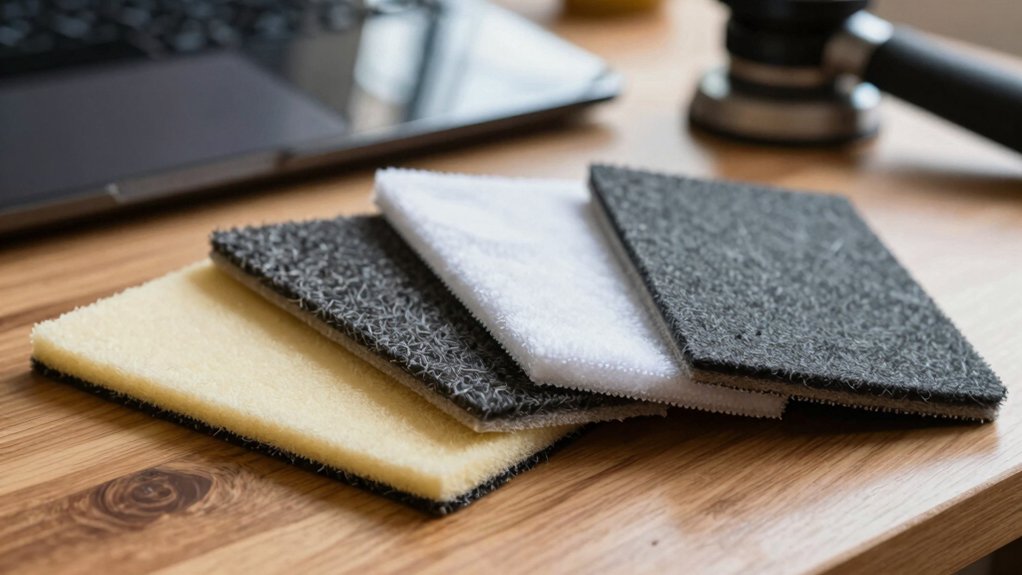
Pick pad diameter, firmness and attachment to match the job: Use 3–3.5″ soft pads for spot work and tight contours. Use 5–6.5″ medium pads for balanced full-panel correction. Use 8″ hard pads for high-coverage production; watch heat.
Choose durometer by cut need: Soft for finishing, medium for polishing, hard for cutting. Match backing plate diameter, thread pattern and max RPM to your polisher. Inspect fit and wear before use. Keep learning how each combo affects finish.
Quick Overview
- Match pad diameter to the job: small (3–3.5″) for spots/tight contours; mid (5–6.5″) for panels; 8″ for large-area speed.
- Choose durometer by desired aggressiveness: soft for finishing; medium for polishing; hard for cutting.
- Pick pad material by finish goal: foam for balanced cut/finish; microfiber/plush for heavy cut or low-marring finish.
- Ensure backing plate/thread compatibility and RPM ratings to avoid wobble, heat, or unsafe operation.
- Use conical or flexible pads on edges and contoured areas to maintain contact and reduce overload.
Pad Diameter Comparison
How big should your pad be for a job? You pick pad diameter to match coverage, tool, and detail. Larger diameters speed coverage but change aggressiveness by tool type: on rotary they cut harder; on DA they deflect more.
Small pads (3–3.5″) focus on tight spots and headlights. Mid sizes (5–6.5″) give the best balance for full panels. An 8″ pad suits high-production work but risks heat.
| Size range | Use case | Notes |
|---|---|---|
| 3–3.5″ | Spot repair, tight contours | High focus, precise |
| 5–6.5″ | Panels, general polishing | Versatile, efficient |
| 8″ | Large panels, speed work | Max coverage, heat risk |
Choose conical RO/DA pads when you need edge flex for contoured surfaces.
Pad Material Durometer Chart
Want to match pad firmness to your correction needs? Use a durometer chart to pick the right pad material hardness for each task. A durometer measures shore hardness; lower values mean softer, more conforming pads. Higher values give firmer, more aggressive cutting.
- Soft (Shore A 20–40): finishing foam or plush microfiber — conforms to contours, minimizes micro-marring. It is ideal for glazes and sealants.
- Medium (Shore A 41–60): polishing foam or blended microfiber — provides a balanced cut and finish for swirl removal and light defects.
- Hard (Shore A 61–80+): cutting foam or wool-backed systems — maximizes abrasion for heavy oxidation and deep scratches.
Consult manufacturer durometer specs for pad material consistency. Match this to tool speed and paint softness.
Backing Plate Compatibility Limits
When choosing pads, you’ll need to match the backing plate diameter and thread pattern to your polisher so the pad seats securely. Check the plate’s maximum RPM rating, attachment system (hook-and-loop vs. proprietary), and whether the plate material and flexibility suit the pad type and paint contour.
Ignoring these limits risks pad wobble, premature wear, or surface damage.
Backing Plate Diameter Match
Why does backing plate diameter matter? It determines pad attachment stability and effective cutting radius. Mismatched sizes change rotational dynamics and can cause uneven pressure, heat, or pad breakup. You’ll select a backing plate diameter that matches pad manufacturer specs to maintain pad attachment integrity and tool balance.
Check pad center hole and hook‑and‑loop destination dimensions. Small deviations reduce contact area and can invalidate lubricant compatibility recommendations from pad makers. Larger plates increase leverage and aggressiveness; smaller plates confine contact and reduce heat spread.
Also, respect color coding from manufacturers: color often signals pad size/intended use, not just cut level. Pairing the correct diameter preserves expected performance. Always test on a small panel before full‑job application.
Thread Pattern Compatibility
How does the thread pattern on your backing plate affect pad compatibility and safety? You must match pad center holes and adapter threads precisely to guarantee secure attachment. Manufacturers use varied stud sizes and pitches; mismatches reduce thread pattern compatibility and can let pads wobble or detach.
Check both the backing plate attachment compatibility and the pad’s insert or adapter before mounting. Use OEM plates or verified adapters when switching brands, and inspect threads for wear, cross-threading, or debris that degrade grip.
When using hook-and-loop pads with threaded adapters, confirm the adapter’s retention system seats flush to avoid eccentric loading. Proper thread engagement and torque prevent pad glazing, vibration, and safety hazards: so verify specs and test at low speed after every change.
Maximum RPM Rating
What RPM limit should you trust for a backing plate? You’ll match backing plate maximum rpm to the tool and pad combination, not guess. Check the plate’s stamped or spec-sheet rating and never exceed it: centrifugal forces and pad imbalance amplify at higher speeds.
Consider two word discussion ideas like “structural fatigue” and “thermal buildup” when assessing limits. For DA and orbital tools, backing plates typically tolerate lower maximum rpm than rotary units; verify manufacturer guidance for both the plate and the polisher.
Inspect plates regularly for cracks, loose inserts, or deformations that reduce safe rpm. If you need higher speed, upgrade to a plate rated above the tool’s top speed rather than pushing an underspecified plate.
Pad Attachment System
Pad attachment systems determine which backing plates, pads, and tools you can safely combine. Always match the pad’s attachment type and diameter to the plate’s mounting method and rpm rating. You’ll encounter hook-and-loop, PSA adhesive, or threaded systems; each limits compatible pad thickness, center-hole patterns, and usable rpm.
Verify backing plate compatibility with pad diameter. Oversized pads can overhang plates, increasing vibration and reducing centering. Check plate material and stiffness against pad weight to avoid centrifugal deformation at high rpm. Use manufacturer-specified adapters only when they maintain concentricity and balance.
For DA and rotary tools, confirm that the pad attachment and plate interface tolerate declared torque and orbital motion. Proper matching prevents pad slippage, premature wear, and unsafe operation.
Material And Flexibility
Why does the backing plate material and its flexibility matter? You rely on the plate to transmit torque, conform to surfaces, and protect pad integrity. Choose a plate whose material durability matches abrasive load and pad type: rigid plates excel with wool and heavy cutting foam, while softer polymer plates suit finishing foam and delicate clear coats.
Check the flexibility range. Too stiff causes edge digging; too soft reduces cutting efficiency and heat dissipation. Also confirm diameter and attachment stiffness for your polisher. Gear-driven orbitals tolerate stiffer plates; DA tools prefer controlled compliance.
Inspect plate thickness, ribbing, and durometer ratings to predict long-term wear. Match plate, pad, and tool to minimize chatter, extend pad life, and ensure consistent correction.
Frequently Asked Questions
What Pad Cleans up Best After Heavy Compounding?
Wool pads clean up best after heavy cutting because they remove thick compound quickly and lift residue from deep correction. You’ll get maximum cutting and fast compound release, especially with synthetic or blended wool that balances aggressiveness and maintenance.
For dust containment, pair wool with a microfiber finishing pass or use foam finishing pads afterward; that traps remaining particles and reduces airborne dust while restoring gloss and minimizing cleanup time.
Can Pads Be Machine-Washed Without Losing Performance?
Yes, you can machine-wash many pads, but follow washing guidance to preserve pad longevity. Use a gentle cycle, cool water, and mild detergent. Skip fabric softeners; place pads in a mesh bag to protect fibers and backing.
Air-dry flat away from heat; never tumble-dry. Wool and microfiber benefit most from careful washing. Dense cutting foams tolerate it but may degrade faster. Inspect pads before reuse for clogging or deformation.
Do Pad Colors Indicate the Same Cut Across Brands?
No, pad colors don’t guarantee the same cut across brands. Color meaning varies by manufacturer; therefore, you can’t rely on brand consistency alone. You should compare pad specs (material, density, cell size) and test on your paint.
Use manufacturer charts and sample corrections to match cut and finish. Label your own pads after testing to ensure repeatable results. Prioritize performance data over color cues.
How Often Should Pads Be Replaced With Regular Use?
You should replace pads based on wear and performance. With regular use, pad replacement frequency is typically every 6–12 months for foam and microfiber; 3–9 months for wool depending on workload and maintenance.
Inspect for torn edges, glazing, compressed cells, or reduced cut. Test performance regularly. Clean after each session, dry fully, and rotate pads to extend life. Replace immediately if you notice micro-marring or inconsistent correction.
Are Microfiber Pads Safe on Ceramic Coatings?
Yes, microfiber safety on ceramic coatings is generally good when you use the right pad and technique. You’ll avoid excessive heat and pressure. Choose a finishing or light cutting microfiber and test in an inconspicuous area.
For coating compatibility, prefer low-abrasion microfiber pads and controlled speed on a DA polisher to prevent coating removal. Clean pads thoroughly to prevent contamination and monitor results. Stop if coating dulling appears.
Conclusion
You’ve now got the essentials to pick the right polishing pad: match diameter to your tool and backing plate, verify thread pattern and maximum RPM, and choose attachment systems that fit.
Use the material durometer chart to balance aggressiveness and finish. Confirm plate compatibility limits and flexibility for contours. Doing these checks prevents damage, guarantees safety, and delivers consistent finishes.
Stay practical: measure, compare specs, and test on scrap before committing.