How to Clean Brake Dust From Wheels
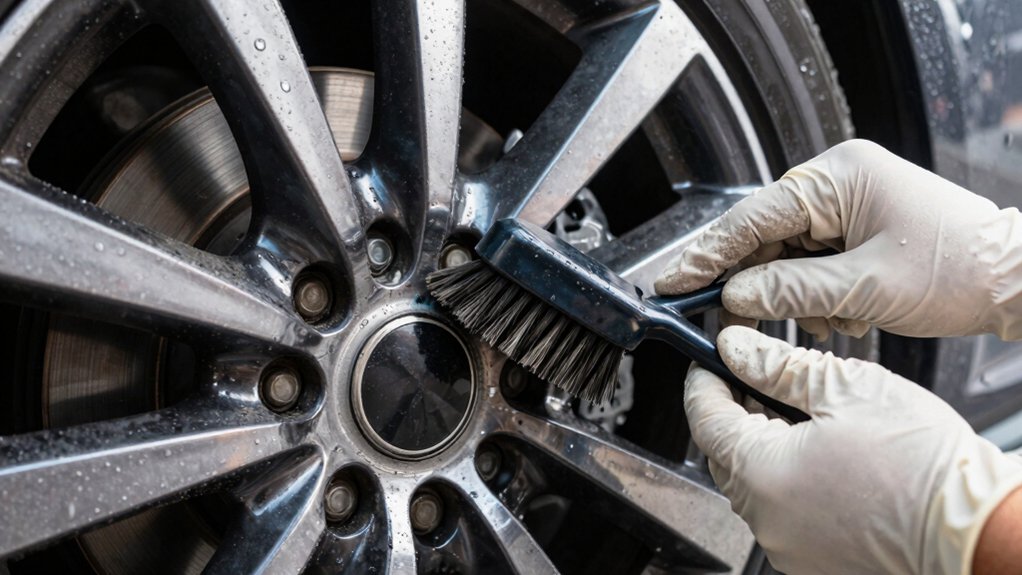
Start by rinsing wheels cool (50–85°F) and testing a small area. Match cleaner pH to the dust: start neutral; use mild acid for ferrous deposits; then neutralize and rinse. Use soft microfiber and nylon brushes. Avoid heat, abrasives, and high pressure.
Verify product compatibility with the wheel finish (clearcoat, powder, paint, chrome, anodized) and note results. Rinse, dry, and apply a pH-neutral sealant. Keep following steps to learn specific cleaners and tool choices.
Quick Overview
- Identify wheel finish and heat sensitivity before cleaning to choose compatible products and avoid damage.
- Start with a neutral-pH cleaner; move to mildly acidic iron-remover for ferrous deposits when needed.
- Spray cleaner, let dwell 2–5 minutes, gently agitate with soft brushes, then rinse thoroughly.
- Work with wheel surface temperatures between 50°F–85°F (10°C–30°C) and use lukewarm water.
- Neutralize acidic cleaners, dry with microfiber, and apply a pH-neutral protective coating for easier future cleaning.
Brake Dust pH Chart
Why does pH matter for brake-dust removal? You’ll use the pH chart to match cleaner strength to dust type and avoid damage. Start neutral; move acidic for ferrous deposits. Then neutralize and rinse.
| Cleaner pH | Target Brake Dust | Action/Outcome |
|---|---|---|
| 7 Neutral | Light ceramic/organic | Safe starter; dissolves mild iron |
| 4–6 Acidic | Semi-metallic, rusted iron | Rapid iron removal; dilute and cool wheels |
| 8–11 Alkaline | Oils/grease (not dust) | Degrease only; avoid on metal dust |
Procedure: Test spot, apply per label, dwell 2–5 minutes, agitate if needed. Neutralize after acidic use; rinse. Use pH strips to verify.
Brake Cleaner Compatibility List
How will you match a cleaner to your wheels and brake dust? You’ll assess wheel material, finish, and dust severity. Then, select a product with verified brake cleaner compatibility. Test in an inconspicuous area, follow dwell times, rinse thoroughly, and repeat only if needed.
- Aluminum/alloy: Use pH-balanced or mild alkaline cleaners; avoid strong acids.
- Painted/coated wheels: Choose non-etching, pH-neutral formulas labeled for clear coats.
- Chrome/stainless: Use non-abrasive, low-alkaline cleaners; buff with microfiber.
- Aftermarket high-temp or ceramic: Verify label for heat safe finishes and increased chemical resistance.
Document results and keep a reference chart for each wheel set to ensure consistent, safe routines.
Heat-Sensitive Wheel Finishes
Check the wheel finish for heat-sensitive materials like painted, powder-coated, or clear-coated surfaces before you start cleaning. Use low-heat, pH-neutral cleaners, soft nylon brushes or microfibers, and stay below recommended safe temperatures to avoid finish damage.
After cleaning, apply a protective coating or sealant to restore protection and reduce future brake-dust baking.
Identify Heat-Sensitive Finishes
Want to avoid damaging delicate wheel finishes? Inspect visually and by touch to identify heat-sensitive finishes: clear-coated, powder-coated, painted, chromed, and anodized surfaces often have different heat transfer properties and varying coating compatibility with cleaning methods.
Start by checking manufacturer labels or wheel stamps for material and finish codes. Perform a small spot test in an inconspicuous area using minimal heat and a mild cleaner to confirm resistance. Note color changes, softening, or gloss loss within minutes; these indicate low thermal tolerance.
Record findings and mark wheels that require low-temperature procedures. Document coating compatibility before using chemical or mechanical methods. Treat identified heat-sensitive wheels with controlled temperatures and minimal agitation to prevent irreversible damage.
Recommended Low-Heat Cleaners
Which cleaners should you reach for when wheel finishes won’t tolerate heat or aggressive chemistry? Use pH-neutral, low-foaming formulas rated safe for clear coats and anodized surfaces. Apply diluted dish detergent solutions for light contamination; they’re gentle, degreasing, and compatible with most finishes. Avoid concentrated acids or alkalines.
For spot treatment, select gel or compound cleaners that cling without running. They limit dwell and reduce rinse temperature exposure. You can supplement with vetted DIY methods like diluted vinegar solutions only when properly neutralized and rinsed. Cheap sprays marketed for delicate wheels are acceptable if labeled pH-neutral.
Always test an inconspicuous area. Apply with a soft nylon brush, allow brief contact, agitate, then rinse thoroughly. Dry with a microfiber towel to inspect results.
Safe Cleaning Temperatures
After choosing low-heat, pH-neutral cleaners for delicate finishes, you should control water and ambient temperatures during cleaning to prevent coating damage.
Work when wheel surface temperature is between 50°F and 85°F (10°C–30°C); that’s the safe temps band for most clear coats and powder finishes. Measure surface temp with an infrared thermometer rather than guessing. Use lukewarm water only; avoid hot washes that can soften sealants or activate unwanted chemical reactions.
Let wheels cool after driving. Brake heat raises surface temps beyond safe limits. Set your cleaning gear aside if temperatures exceed the range, or wait for cooler conditions. Record temperature and outcome for each session to refine your procedure and protect heat-sensitive wheel finishes.
Soft Tools And Techniques
Use only soft, non-abrasive tools and gentle techniques when cleaning heat-sensitive wheel finishes to prevent scratching, stripping seals, or inducing thermal stress. Inspect the finish for decals, layered clear coats, or matte treatments before you begin.
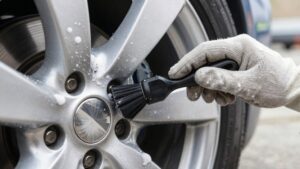
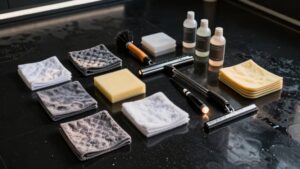
Select soft tools: microfiber mitts, foam applicators, and nylon brushes with ultra-soft bristles. Mix a pH-neutral cleaner per manufacturer specs; avoid acids or strong alkalines. Apply cleaner, allow specified contact time, then use gentle agitation to mobilize brake dust—short, overlapping strokes rather than aggressive scrubbing.
Rinse thoroughly with low-pressure water to remove residues. Dry with a clean microfiber towel using blot-and-pull motions to avoid recontamination. Reinspect for remaining deposits and repeat targeted, low-impact passes until the finish is uniformly clean.
Protective Coatings Aftercleaning
Want to prolong the life of a heat-sensitive wheel finish? After cleaning brake dust, cool the wheel fully before touching the surface. Inspect for etching or residue; rinse thoroughly to remove cleaner traces that can react with coatings.
Use pH-neutral, non-abrasive products for protective coatings application: ceramic or polymer sealants work best on heat-sensitive alloys. Apply thin, even layers with a microfiber applicator. Allow recommended cure time between coats. Buff lightly with a clean microfiber to remove excess.
For aftercare, avoid high-temperature exposures (track use) for 24–48 hours and rinse contaminants promptly. Reapply protective coatings every 6–12 months depending on use. Maintain records of products and dates to track coating performance over time.
Frequently Asked Questions
How Often Should I Clean Wheels to Prevent Brake Dust Buildup?
You should clean wheels every 1–2 weeks for typical driving to prevent brake dust buildup. Increase frequency to weekly if you brake hard, drive in city traffic, or use performance pads.
For wheel maintenance, inspect weekly. Rinse during each wash, apply pH-balanced cleaner as needed, and use mechanical agitation for stubborn deposits. Seal rims with a protective coating monthly to reduce adhesion and simplify future cleaning.
Can Brake Dust Damage Tire Sidewalls or Rubber Components?
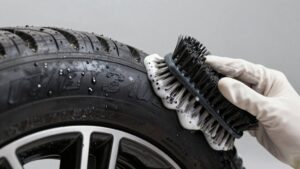
Yes, brake dust effects can harm rubber if left unchecked. You should inspect tire sidewalls regularly for embedded metallic particles and surface discoloration. If you find deposits, remove them promptly with a mild, non-acidic cleaner and soft brush. Rinse thoroughly, then dry.
Repeated exposure increases tire sidewalls risk by accelerating ozone and UV breakdown. Schedule cleaning intervals to limit contact and prevent premature rubber degradation.
Are There Wheel-Safe Sealants That Repel Brake Dust?
Yes, you can use wheel sealants that act as a dust repellent. You’ll select pH-balanced, wheel-specific sealants or ceramic coatings labeled safe for rims.
Apply after thorough cleaning and decontamination, following manufacturer cure times. Buff excess and allow full cure. Reapply every few months or after heavy braking exposure.
These products reduce brake dust adhesion, simplify maintenance, and preserve clear coats when used per instructions.
Can I Use Household Oven Cleaner on Wheels in a Pinch?
You shouldn’t use oven cleaner; its safety warnings matter. Its caustic chemicals pose wheel cleaning hazards and can damage clear coats and aluminum. If you must, dilute heavily, test an inconspicuous spot, and wear gloves and eye protection. Avoid painted areas and rinse thoroughly within minutes.
Prefer pH-balanced or mechanical cleaners first. For stubborn deposits, use targeted agitation with nylon brushes and repeat safer cleaner applications rather than relying on oven cleaner.
Does Brake Dust Pose Any Health Risks During Cleaning?
Yes, brake dust can pose health risks if you inhale it. You should assume dust exposure contains metallic particles and brake-pad residues that can cause respiratory irritation. With repeated exposure, these can worsen lung conditions.
Wear an N95 or better respirator, eye protection, and gloves. Avoid dry brushing or blowing dust. Use wet methods, vacuum with HEPA filtration, or apply cleaner to minimize airborne particles and exposure time.
Conclusion
You’ve learned how brake dust pH and cleaner compatibility affect wheel care. You have also learned how to spot heat-sensitive finishes and which low-heat cleaners and tools to use. When cleaning, work at safe temperatures; use soft brushes and microfiber; and follow manufacturer guidance.
Rinse thoroughly and dry to prevent residue. Finish with a protective coating suited to your wheel’s chemistry to minimize future fallout and make ongoing maintenance faster and safer.