How to Clean Car Leather Seats Safely
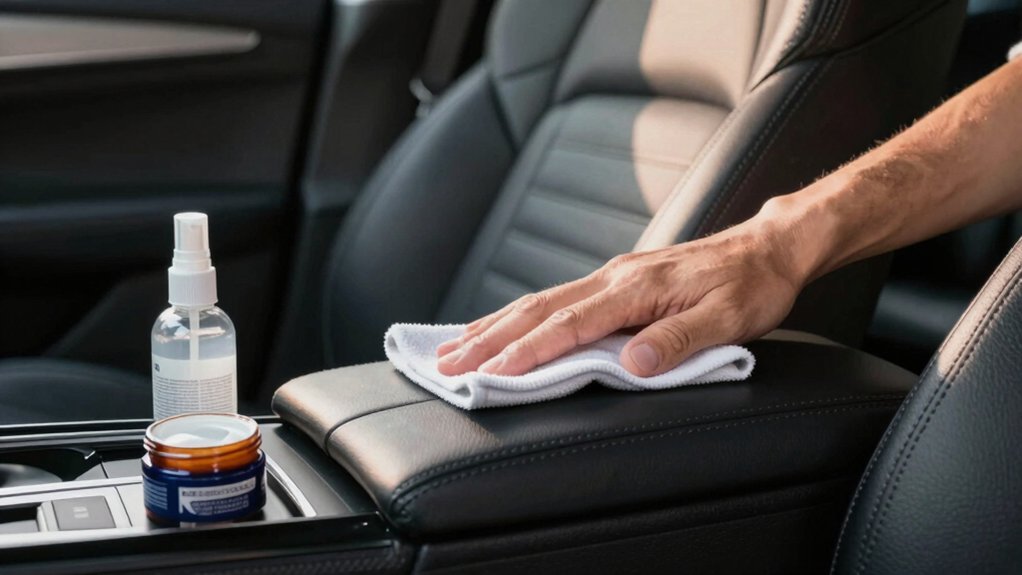
Use a pH-balanced, silicone-free leather cleaner (aim for pH 5–5.5). Vacuum seats, then lightly agitate small sections with a soft brush or microfiber dampened with cleaner. Wipe away residue and let air dry. Avoid products listing dimethicone, cyclopentasiloxane or “-cone/-siloxane” ingredients to prevent waxy films that trap dirt and block conditioners.
Finish with a quality leather conditioner to restore oils and protect tanning agents. Keep products stored cool. Keep going to learn step-by-step tips.
Quick Overview
- Vacuum seams and surface first to remove grit that can scratch leather during cleaning.
- Use a pH-balanced leather cleaner (around pH 5–5.5) to protect tanning and finish.
- Avoid silicone-containing products (dimethicone, -cone, -siloxane) that leave waxy films.
- Apply cleaner sparingly with a soft brush or microfiber. Then, blot away residue with a clean towel.
- Condition after cleaning with a leather conditioner to restore lipids and prevent drying.
pH-Safe Cleaner Chart
Wondering which leather cleaner won’t strip your seats? You want pH considerations front and center: aim for cleaners in the 5–5.5 range to protect tanning agents. Then follow with leather conditioning. Pick a pH-balanced product for routine use; reserve higher-pH options for spot work and patch-test first.
| Product | pH note |
|---|---|
| Chemical Guys | pH-balanced, safe |
| Lexol Cleaner | 5.0–6.0, ideal 5–5.5 |
| Leather Honey | pH-balanced, gentle |
| Meguiar’s Gold Class | ~7, test first |
| Meguiar’s APC | ~12.4, avoid |
Procedure: vacuum, test product, apply lightly with brush, wipe with microfiber. Then apply conditioner and allow at least one hour to dry before use.
Leather pH and Temperature Limits
How does pH and temperature affect your leather’s longevity? You’ll protect seats by keeping cleaners near neutral pH (around 4–7) and avoiding extremes that strip oils. Temperatures above 100°F or below freezing stress hide and finishes. Clean at moderate temps.
- Use pH-balanced leather cleaner for regular maintenance; not an unrelated topic like fabric or cosmetic use products.
- Test cleaner on a hidden seam to confirm safe pH and colorfastness.
- Avoid hot water or steam; mild warm water (under 100°F) is okay for dampening.
- Condition after cleaning to restore lipids lost by alkaline or heat exposure.
- Store products in stable temperatures to preserve formulation and prevent accelerated breakdown.
Follow these limits, and you’ll extend leather life without guesswork.
Avoid Cleaners With Silicones
Don’t use cleaners with silicones on car leather because they can build a slick, hard-to-remove film that traps dirt and interferes with conditioners. Check ingredient lists for words like “dimethicone,” “cyclopentasiloxane,” or any “-cone” or “-siloxane” entries and avoid those formulas.
Instead, pick pH-balanced, silicone-free cleaners and follow with a Vitamin E–rich conditioner to prevent long-term drying and premature cracking.
Why Avoid Silicones
Why should you skip cleaners with silicones? Choose silicone free cleaning so you don’t lock in unwanted residuess When you use silicone-based products, they leave a thin, shiny film that attracts dirt and makes future cleaning harder. You’ll also mask the leather’s true condition; hiding wear that needs attention.
Avoiding silicone exposure risks preserves product performance: conditionersspenetrate better and adhesives or stitching aren’t compromised by slippery residues. For routine work, spray cleaner on your brush or towel, agitate in small sections, and wipe away thoroughly with fresh microfiber.
If you suspect past silicone use, deep-clean with a pH-balanced cleaner. Then condition to restore moisture. That procedural approach keeps seats manageable and extends the life of your leather.
How Silicones Harm Leather
If you’ve been using silicone-based cleaners, you’ll want to stop and correct the habit because silicones leave an invisible, waxy film that traps dirt, dulls leather’s natural texture, and makes future cleanings harder. Stop application, test alternatives, and remove any silicone residue promptly.
Silicone risks include blocked pores that prevent conditioners from penetrating; this creates dry spots and accelerated cracking. Because of leather incompatibility, silicones can also alter dye adhesion, causing blotchy wear and uneven shine.
Procedure: vacuum, then use a pH-balanced cleaner and a soft-bristled brush to lift the waxy layer. Follow with repeated damp microfiber wipes until residue is gone. Finish with a proper leather conditioner so moisture restores and protective bonds form without silicone interference.
Identifying Silicone Ingredients
Wondering what to look for on a label? Scan ingredient lists for words like “dimethicone,” “cyclopentasiloxane,” “siloxane,” “trimethylsiloxy,” or anything ending in “-cone” or “-siloxane.” If the label lists proprietary blends, check the manufacturer’s SDS or website for clarity. When identifying ingredients, prioritize full ingredient disclosure; avoid products that bury components under vague terms like “fragrance” without breakdown.
Test small sections if you’re unsure, but rely on clear labeling first. For shopping, filter for silicone free options in product descriptions or use search terms such as “silicone-free” or “no siloxanes.” Keep a short checklist while you compare cleaners so you don’t accidentally pick a silicone-containing product.
Safe Silicone-Free Alternatives
Looking for a silicone-free cleaner? Choose products labeled safe silicone free; these won’t leave slick residues that trap dirt or interfere with conditioners. First, test any alternative gel cleaners on an inconspicuous seam for colorfastness and absorption.
Apply sparingly: dispense gel onto a soft-bristle brush or microfiber, work in small sections using circular, crosshatch strokes, then wipe immediately with a damp microfiber to remove lifted grime. For stubborn spots, repeat once; avoid over-saturating. Rinse your towel surface frequently to prevent re-depositing residue.
After cleaning, let leather air-dry fully before applying a pH-balanced conditioner. Keep a dedicated silicone-free gel and microfiber set in your kit to prevent contamination from silicone-based sprays or polishes.
Long-Term Effects Prevention
Because silicones leave a slick, hard-to-remove film that attracts grime and interferes with conditioners, avoid cleaners that list dimethicone, cyclopentasiloxane, or other silicone compounds on the label. Check ingredient lists before buying and pick pH-balanced, silicone-free cleaners to prevent buildup that masks wear and accelerates surface breakdown.
For long term effects prevention strategies, rotate gentle cleaners with a dedicated leather conditioner so you’re not layering incompatible products. Test new products on an inconspicuous patch, wait 24 hours, then inspect for tackiness or residue. If you spot silicone residue, remove it with a mild, solvent-free cleaner and follow with conditioner.
Keep records of products and intervals so you can track what preserves suppleness and what causes premature cracking.
Frequently Asked Questions
How Often Should I Condition Leather Seats?
You should condition leather seats every 3–6 months as your baseline. Increase conditioning frequency to every 2–3 months for older, sun-exposed, or heavily used seats. For new or lightly used interiors, every 6 months preserves factory oils.
Build this into your leather maintenance routine: clean first, allow full drying, apply a pH-safe conditioner in small sections with circular motions, then air-dry or gently buff for even protection.
Can Pet Hair Damage Leather Surfaces?
Yes, pet hair can harm leather surfaces if you ignore pet hair risks. You should remove hair promptly using a soft brush or vacuum with a brush attachment to avoid abrasion.
Don’t scrub aggressively; respect leather care limits by using a pH-balanced cleaner and conditioning afterward. For stubborn hair, use a damp microfiber towel or specialized pet-hair remover. Then dry and condition to restore moisture and prevent cracking.
Is Steam Cleaning Safe for Leather Seats?
Yes, but cautiously. You’ll prioritize safe cleaning and assess steam safety before use: test on a hidden patch, use a low-heat/nozzle setting, and keep the steamer several inches away to avoid over-wetting.
Work small sections; follow immediately with a damp microfiber to lift residue, then dry thoroughly. Don’t use steam on cracked, fragile, or unfinished leather. In those cases, stick to pH-balanced cleaners and conditioners.
How Do I Treat Ink or Dye Stains?
You’ll treat ink stain removal by acting fast: blot excess with a microfiber; don’t rub. Test a leather cleaner on a hidden spot. Then apply sparingly with a soft brush in small sections.
For stubborn dye stain treatment, use isopropyl alcohol on a towel—dab gently; then follow with a pH-balanced leather cleaner. Rinse with a damp microfiber, dry fully, and finish by applying a leather conditioner to restore moisture and protect.
Can Sunshades Prevent Leather Fading?
Yes, sunshades substantially boost sunshade effectiveness and provide leather fading protection. You’ll install a reflective windshield sunshade and side-window shades to cut UV and heat. This reduces sun-driven drying and color loss.
Use sunshades with high UV-block ratings, park shaded when possible, and combine with a sunscreen-containing leather conditioner every few months. Inspect seats for early fading and replace shades when they lose reflectivity to maintain protection.
Conclusion
You’ve got the basics to keep leather seats safe and lasting longer. Stick to pH-safe cleaners and room-temperature water. Skip products with silicones and check ingredient lists for dimethicone, cyclomethicone, or “siloxane.”
Use leather-specific, silicone-free conditioners and test any product on a hidden spot first. Clean gently with soft cloths; avoid heat or excessive moisture. Recondition periodically. Doing this prevents drying, staining, and premature wear so your seats stay smooth and durable.