How to Clean Rubber Floor Mats
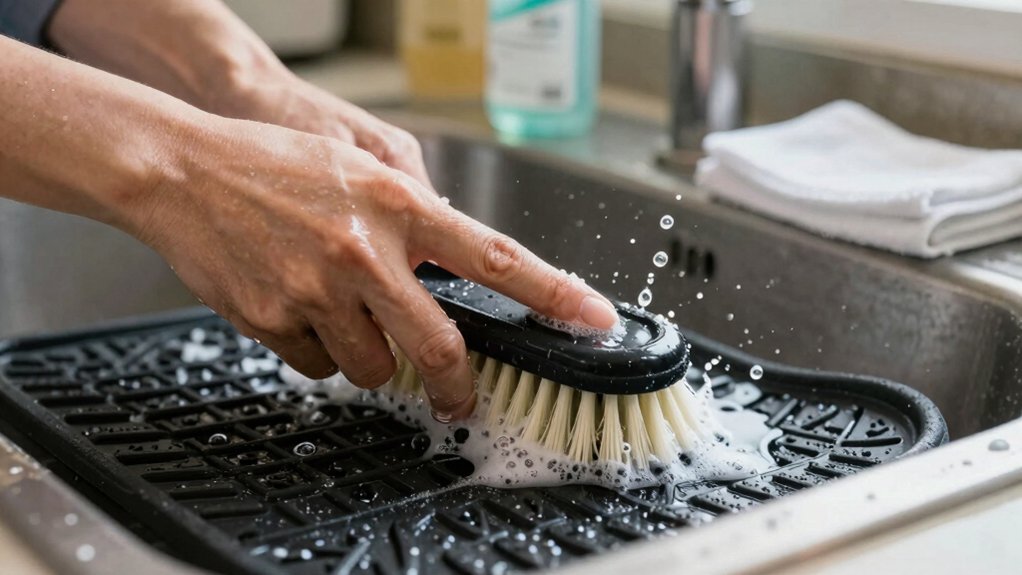
You should start by shaking and hosing the mats to remove loose grit. Then scrub deep treads and drain holes with a stiff brush so water flows freely. Match brush intensity to the mat’s rubber hardness to avoid damage.
Use a pH-neutral cleaner (about 6–8) or mild alkaline up to 10. Rinse thoroughly and neutralize any residue to near pH 7. Air-dry. Follow these steps and you’ll preserve grip, flexibility, and service life while learning more practical tips.
Quick Overview
- Remove loose grit and debris. Then use a stiff brush and multiple passes to clean deep treads thoroughly.
- Keep drain holes clear and rinse frequently to speed water removal and prevent standing water.
- Match brush stiffness and drying heat to the mat’s rubber durometer to avoid abrasion or cracking.
- Use pH-neutral cleaners (around 6–8). Avoid strong acids or high-alkaline solutions without dilution and prompt rinsing.
- Neutralize residual cleaner if rinse water pH is outside ~6.5–8.5. Then finish with a fresh water rinse and air dry.
Tread Depth & Drain Holes
How do tread depth and drain holes affect cleaning and safety? You’ll find deeper tread depth traps grit, but improves traction; it requires more vigorous brushing and rinsing to reach the base. Drain holes speed water removal and reduce slip risk. Make sure they’re clear during rinsing.
| Feature | Impact on Cleaning | Impact on Safety |
|---|---|---|
| Deep tread depth | Needs multiple passes with stiff brush | Boosts grip when clean |
| Drain holes | Prevent standing water, ease drying | Reduce hydroplaning on mat surface |
| Reversible tread | Flip to extend service life | Maintains consistent traction |
Use a hose and repeated rinses to clear grit (dry 84/wet 79). Keep drain holes unobstructed to preserve NFSI-rated traction.
Rubber Durometer & Tolerances
Tread depth and drain hole design influence how mats feel and perform, but the rubber’s durometer and manufacturing tolerances determine how that material responds to cleaning, wear, and temperature. You’ll check durometer hardness to choose agitation intensity and drying conditions. Softer rubber tolerates lighter brushes and lower heat, while harder compounds resist abrasion but may crack if over-agitated. Tolerances affect fit and edge sealing around drain holes and grooves.
- Measure rubber durometer to set brush stiffness and cleaning solution contact time.
- Verify tolerances and tread depth to avoid over-scrubbing edges or clogging drain holes.
- Use pH testing methods; respect safe pH range, avoid acidic cleaner risks, and note alkaline cleaner effects. Neutralizing afterwash as needed.
Cleaning Solution pH Limits
Keep your cleaning solutions within a safe pH range: typically around neutral (pH 6–8) to protect rubber from softening or cracking. Strong acids can etch and degrade the compound. High-alkaline cleaners strip oils and cause brittleness. Therefore, test products first using pH strips or a meter.
After cleaning, rinse thoroughly. Use a mild neutralizing rinse if needed to restore a safe surface pH before drying.
Safe pH Range
Wondering what pH range is safe for cleaning rubber mats? Aim for mildly acidic to mildly alkaline: roughly pH 5 to 9. That window cleans effectively without compromising rubber flexibility or finish.
pH-neutral cleaners (around 7) are safest for routine use; they balance odor neutralization and won’t change a mat’s absorbency rate or cause hardening. Avoid strongly acidic or basic solutions; they can dry, crack, or discolor rubber over time.
When mixing homemade solutions, keep concentrations low. Diluted dish soap or a mild vinegar mix stays close to neutral. Always test a small, hidden area first, rinse thoroughly after cleaning, and dry completely. Staying within pH 5–9 preserves performance and extends mat life.
Acidic Cleaner Risks
You already know to stay near neutral for regular cleaning, but going below pH 5 can cause real damage to rubber mats. You should avoid acidic cleaners, those with low pH, that can strip protective additives, embrittle rubber, and accelerate cracking. Short exposures may seem fine; however, repeated use increases material breakdown and shortens mat lifespan.
Acidic residues also raise a corrosion risk for any metal grommets, clips, or vehicle surfaces the mats touch. Therefore, rinse thoroughly if acidity is suspected. When choosing a product, check labels for pH information or stick with pH-neutral, rubber-safe formulas. If you accidentally use an acidic solution, neutralize with plenty of water and mild soap. Then inspect mats for early signs of deterioration.
Alkaline Cleaner Effects
How alkaline can a cleaner be before it harms rubber mats? You should avoid strongly caustic solutions. Mild alkaline cleaner formulas (pH up to about 10–11) usually clean oils and road grime without damaging rubber if rinsed promptly. Stronger alkalinity can swell, soften, or strip protective additives; this can lead to cracking or surface tackiness over time.
Balance cleaning power and material safety by choosing pH-neutral to mildly alkaline products and diluting concentrated cleaners per label directions. Remember alkaline vs acidic interactions: acids can dry and crack rubber, while high alkalinity can swell and weaken it. After using any alkaline cleaner, rinse thoroughly and inspect mats for changes in texture or color before applying conditioners or reinstalling them.
pH Testing Methods
Anyone handling rubber floor mat cleaners should test solution pH before use. Keeping cleaners at pH-neutral to mildly alkaline levels (roughly 7–10) minimizes the risk of swelling, drying, or long-term damage. You should verify pH with reliable methods: commercial strips, handheld meters, or simple DIY pH test kits.
Calibrate meters regularly and store strips dry. Ignore common pH testing myths that claim “a drop on the mat” or color alone gives safe assurance; those aren’t precise enough for routine maintenance. Test each mixed batch and after dilution. If pH falls outside 7–10, adjust concentration or switch product.
Record results so you can track what works for specific mat types and avoid cumulative chemical stress.
Neutralizing Afterwash
Why neutralize after washing? You’ll protect rubber by ensuring a neutral afterwash that stops residual cleaners from continuing to break down polymers or attract dirt. After rinsing, test the mat surface or rinse water with simple pH test methods: strips or a meter to confirm you’re near pH 7.
If readings are acidic (below 6.5) or alkaline (above 8.5), neutralize quickly: dilute a mild baking soda solution for acids or a little distilled white vinegar for alkali. Rinse thoroughly, then re-test. Work in small batches and avoid over-application. Neutralization is corrective, not decorative.
Finish with a final clean water rinse and air dry. A properly neutral afterwash safeguards flexibility, color, and grip of rubber mats.
Frequently Asked Questions
How Often Should I Deep-Clean My Rubber Floor Mats?
You should deep-clean your mats every 3–6 months, adjusting the deep cleaning cadence based on use and environment. If you drive in mud, salt, or heavy traffic, increase maintenance frequency to monthly or bi-monthly.
Inspect mats regularly; if they smell, show embedded grime, or lose flexibility, deep-clean sooner. Between deep cleans, perform routine rinsing and quick scrubs to keep mats functional and extend their service life.
Can I Put Rubber Mats in the Washing Machine?
You generally shouldn’t; can washing rubber mats in a machine damage them, warp backing, or ruin your washer. For rubber mats care, remove debris, hose and scrub with mild soap, rinse thoroughly, and air dry.
If a machine’s owner’s manual explicitly permits it and mats are small, use a gentle cold cycle without spin and no detergent. Otherwise, stick to hand cleaning for safety and longevity.
How Do I Remove Oil or Grease Stains From Rubber Mats?
You remove oil stains and grease stains by first blotting excess. Then rinse the mat. Apply a rubber-safe degreaser or mild dish soap mixed with warm water; let it soak a few minutes. After that, scrub with a stiff brush into grooves.
Rinse thoroughly and repeat if needed. Then dry with a microfiber towel and air-dry. For stubborn spots, use a paste of baking soda and water or a commercial rubber-safe cleaner before scrubbing.
Will Sunlight Cause My Rubber Mats to Fade or Crack?
Yes, prolonged sunlight effects can cause fading and cracking. You should avoid leaving rubber mats in direct sun for long periods. UV exposure breaks down rubber polymers, dries oils, and accelerates color loss.
Store mats shaded, air-dry after cleaning out of direct sunlight, and apply a silicone-free, water-based rubber protectant periodically to restore flexibility and reduce UV damage. Regular maintenance extends mat life and appearance.
Are Rubber Mat Protectants Safe for Vehicle Interiors?
Yes, rubber mat protectants can be safe for vehicle interior safety when you choose water-based, silicone-free products made for automotive rubber. You’ll avoid slippery residues that create driving hazards by following label directions, applying sparingly, and wiping off excess.
Test on a small area first. Let mats fully dry before reinstalling, and keep protectants away from pedals and textured grip zones to maintain traction and longevity.
Conclusion
You’ve learned how tread depth, drain holes, and rubber durometer affect cleaning. You also understand why pH matters. Stick to cleaners within the safe pH range, avoid strong acids that etch or bleaches that soften, and be cautious with high-alkaline solutions that can harden or craze rubber.
Test pH before use and neutralize after washing when needed. Regular inspection and using recommended tolerances will keep mats functional and extend their service life.