
How to Dispose of Used Motor Oil Properly
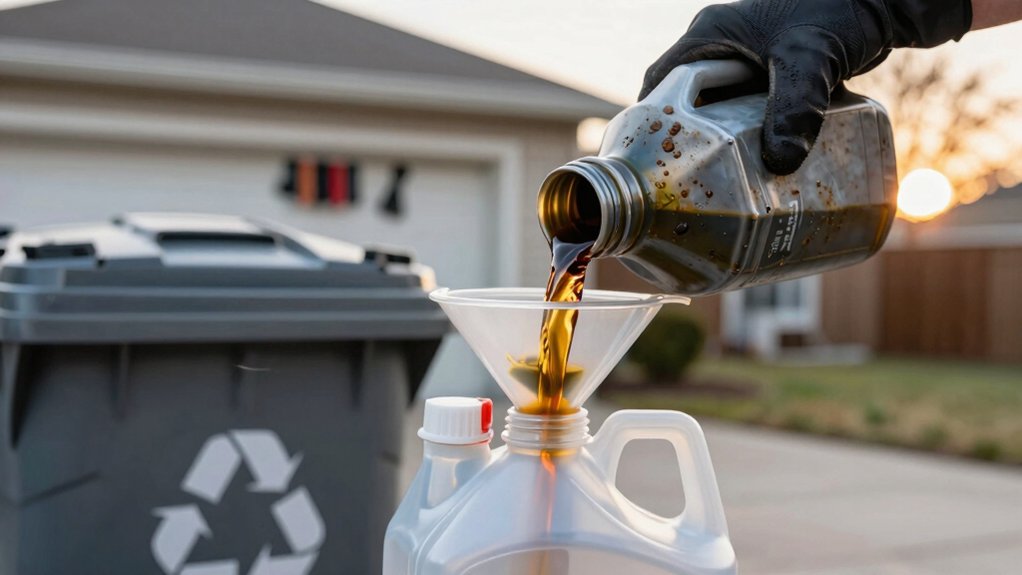
You should store used motor oil in sturdy, compatible containers kept upright on an impervious surface. Never pour it down drains, onto soil, or into unpermitted pits. Keep lids sealed except when adding or removing oil. Tighten caps hand-tight plus a quarter turn, and label containers “Used Oil.”
Use secondary containment or leak-proof liners. Inspect seals daily, and transport promptly to an approved collection center with receipts. Follow local acceptance rules and keep records. Continue for practical handling and transport tips.
Quick Overview
- Store used motor oil in sturdy, compatible, labeled containers marked “Used Oil,” and keep lids tightly closed except when adding or removing oil.
- Keep containers upright on impervious surfaces inside secondary containment or with leak-proof liners to prevent spills and contamination.
- Never mix oil with solvents, antifreeze, gasoline, or hazardous wastes. Do not dispose in drains, soil, or unpermitted impoundments.
- Transport used oil promptly to an authorized collection center or recycling facility, following local acceptance rules and labeling requirements.
- Keep receipts and records of transfers for retention timelines. Store transfer records and receipts per local/40 CFR Part 279 and state rules.
Motor Oil Disposal Timeline
How long can you keep used motor oil before you must move or process it? You must follow storage timelines: transfer facilities hold oil up to 35 days unless you meet processor/re-refiner standards for longer. Keep containers labeled “Used Oil” in good condition, closed, and off impervious surfaces.
Drain filters within 24 hours into used oil containers. Maintain three-year shipment records. Don’t store in lagoons, pits, or unpermitted impoundments; manage spills immediately. Treat mixtures with hazardous wastes differently. Avoid mixing unused fuel or automotive batteries with used oil.
If you run mobile secondary containment, empty it within 24 hours and store inside on an impermeable surface. Transport personal quantities promptly to collection centers; comply with local acceptance rules.
| Item | Limit/Action |
|---|---|
| Transfer storage | 35 days |
| Filters drain | 24 hours |
| Records | 3 years |
| Containment empty | 24 hours |
Accepted Collection Sites List
Where can you take your used oil? Use only approved accepted sites to stay compliant with hazardous rules and local regulations. Follow facility procedures when delivering oil and keep records if required.
- Automotive service centers that offer used-oil recycling
- Municipal household hazardous waste (HHW) collection events
- Licensed recycling centers and processors
- Authorized retail drop-off programs (e.g., parts stores)
- Certified hauler transfer stations accepting small generators
Before you go, confirm the site accepts your container type and quantity limits. Do not mix oil with solvents or hazardous wastes; that triggers different hazardous rules and disposal paths. Hand over sealed, labeled containers to site staff, obtain a receipt, and keep documentation per regulatory timelines.
Container Sealing and Labeling
Choose sturdy, compatible containers and keep them upright to prevent spills. Screw caps tight and use leak-proof liners or secondary containment so you meet storage requirements.
Clearly label each container “Used Oil” and check seals regularly.
Choose Proper Containers
Use clearly marked, leak-proof containers labeled “Used Oil” and keep them closed except when you’re adding or removing oil. Select containers designed for petroleum products; don’t repurpose an unused container for food or water, and never accept or store containers with mislabeled contents.
Inspect containers for rust, dents, cracks and replace defective units immediately. Choose rigid, tight-sealing drums or approved jerry cans with secure closures and venting if required. Place containers on impervious surfaces and inside secondary containment where feasible.
Affix durable labels showing generator name, start date, and “Used Oil.” Keep lids closed between transfers and log additions to track volumes. When filling, avoid overfilling; leave headspace to prevent spills during transport. Follow local regulations for container standards and replacement.
Seal Caps Tightly
Why seal caps tightly? You must secure caps to maintain sealed caps and prevent spills during storage and transport. Inspect threads and gaskets for damage before closing; replace defective caps.
Tighten until hand-tight plus a quarter turn with a suitable tool if specified by the container manufacturer. Keep containers closed except when adding or removing used oil to comply with storage requirements. After sealing, label the container “Used Oil” clearly and record the date and contents nearby for tracking.
Check sealed caps daily for signs of seepage, odor, or residue; address any defects immediately and transfer oil if container integrity is compromised. These steps support leak prevention, regulatory compliance, and safe handling until recycling or authorized pickup.
Use Leak-Proof Liners
How will you prevent drips and leaks during storage and transport? Use leak-proof liners inside portable containers and drums before you add used oil. Cut liners to fit, seat them fully, and secure with the lid or a clamp to eliminate gaps.
Inspect liners for punctures or seams before each use and replace any compromised liner immediately. As a routine, document liner installation and condition as part of your spill prevention measures. When transferring oil, keep containers closed except while filling; funnel directly into lined containers to minimize splashes.
For transport, double-bag or place lined drums on secondary containment pallets to catch accidental releases. Follow facility policies and regulatory storage requirements to maintain compliance and reduce environmental risk.
Label Contents Clearly
After lining and sealing containers to prevent leaks, label each container and tank clearly as “Used Oil.” Include the date filled, generator name or ID, and maximum capacity where practicable. You will follow labeling requirements that support tracking, regulatory inspections, and safe handling.
Use durable, weatherproof labels or permanent markers; place labels on visible, flat surfaces. Update dates when you add oil and strike through prior dates to maintain an accurate log. Record container integrity checks alongside label updates so corrosion, dents, or compromised seals are documented and addressed.
If you transfer oil to a different receptacle, relabel immediately and note the transfer in your records. Keep label records accessible during transport and for the three-year retention period required for shipments.
Store Upright Securely
Where should you place and seal used-oil containers? Place them upright on an impervious surface, inside a well-ventilated, covered area away from drains and stormwater. Seal each container tightly except when adding or removing oil to prevent spills and evaporation.
Inspect lids, gaskets, and closures for damage and repair or replace defective parts immediately to maintain storage compliance.
Label each container with clear regulatory labeling: “Used Oil,” date started, and generator identity if required. Keep containers in good condition, free of rust or leaks, and use secondary containment like berms or trays where required. Document inspections and corrective actions so you can demonstrate compliance during audits or inspections.
Transport Safely Labeled
Why seal and label used-oil containers tightly before transport? You must prevent leaks, protect handlers, and meet regulatory expectations. Inspect lids, gaskets, and closures; replace damaged parts. Use sturdy, compatible containers and secure caps so they remain closed except when adding or removing oil.
Follow labeling requirements: mark containers “Used Oil” clearly. Include generator name, contact, and date if required by your jurisdiction. Adhere to labeling standards that match 40 CFR Part 279 and any state rules. Use durable, legible labels resistant to oil and weather. Affix labels to the container body, not the cap. Ensure secondary containment is labeled when used.
Before loading, confirm seals, labels, and shipping documentation comply with transporter and Hazardous Materials Regulations.
Frequently Asked Questions
Can Used Oil Mixed With Brake Fluid Be Recycled Safely?
No, you shouldn’t recycle used oil mixed with brake fluid. You’ll treat the mixture as contaminated and possibly hazardous. So, don’t send it to used-oil recyclers.
Follow procedures: stop mixing, segregate fluids, label containers, and contact an authorized hauler or collection site. Keep records, use secondary containment, and clean spills promptly. For compliance, consult RCRA/Part 279 rules and local regulations before transport or disposal.
Do Small Businesses Need an EPA ID to Transport Used Oil?
Yes, if you transport used oil off-site for recycling, you generally need an EPA ID. For small business regulations, register under Part 279 and obtain an EPA identification number before offloading to facilities.
Follow storage, labeling, containment, and transport standards. Keep shipment records for three years and comply with applicable state permits. If you qualify as a very small quantity generator or use authorized haulers, confirm state-specific exemptions first.
Are Oil Filters Hazardous if Cold-Drained Instead of Hot-Drained?
Yes, if you cold-drain oil filters, they can be considered hazardous; you shouldn’t assume non-hazardous status. For compliant oil filter disposal, follow hot drain procedures: puncture, crush, or dismantle while hot so filters are excluded from RCRA.
Document methods, store labeled containers, and send filters to authorized recyclers. Avoid mixing with listed hazardous wastes. If contaminated, manage as hazardous. Keep records proving hot-drain vs cold-drain practices.
Can Used Oil Be Burned in Home Furnaces or Boilers?
You generally shouldn’t burn used oil in home furnaces or boilers unless the unit’s approved and local rules allow it. For safe burning, confirm your appliance is designed for used oil, follow manufacturer instructions, and check local/state regulations and permitting.
Maintain proper used oil disposal records. Use approved collection or haulers if burning isn’t permitted. Never mix used oil with solvents or hazardous wastes to avoid creating hazardous material.
What Records Must Haulers Keep and for How Long?
You must keep shipment records (logs or invoices) documenting pickup, quantity, origin, and destination. Retain them for three years to guarantee records retention and hauler compliance.
Maintain EPA identification numbers, manifests if applicable, and cleanup/incident reports. Store records accessible for inspection and organized chronologically. Update records after every transfer, and keep copies of transporter permits and correspondence demonstrating corrective actions to prove ongoing hauler compliance.
Conclusion
You’ve learned the timeline for keeping used motor oil and where to take it. You have also learned how to package and transport it safely. Follow these steps: Choose a compatible, sealable container; transfer oil without spills; cap tightly and use a leak-proof liner. Label the container with contents and date; store upright in a secure spot; and take it promptly to an accepted collection site.
Doing this keeps you compliant, prevents contamination, and avoids fines.