How to Label and Store Detailing Chemicals
You’ll label and store detailing chemicals by flash point, hazard class, and use-by date to reduce ignition, exposure, and regulatory risk. Segregate Class IA/IB/IC flammables in red-coded, ventilated cabinets with bonding/grounding during transfers.
Use yellow for oxidizers, blue for toxic, green for low-hazard; mark manufacturer expiry and open-date use-by limits. Rotate stock FIFO, and track storage temperatures and compatibility. Keep SDSs accessible, document audits and disposals, and follow local regs: continue for specific charts, colors, and timelines.
Quick Overview
- Identify flash points from SDSs and separate flammable (flash
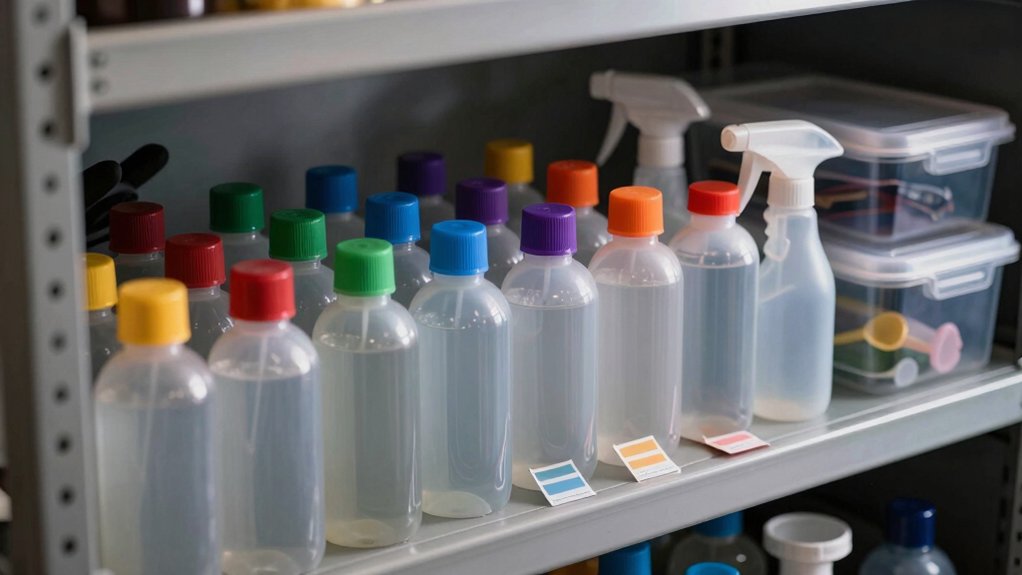
- Apply a consistent color code (red=flammable, yellow=oxidizer, blue=toxic, green=low hazard) on all containers and storage locations.
- Label each container with product name, lot, receipt date, opening date, and manufacturer expiration or post-opening use-by date.
- Store chemicals in ventilated, locked cabinets with bonding/grounding for transfers; secondary containment; and segregation by compatibility.
- Maintain inventory logs, conduct routine audits, rotate stock FIFO, and document disposals per SDS and regulations.
Flammability Flashpoint Chart
How hot can a detailing chemical get before it becomes a fire risk? You must treat flash point as the critical threshold: below 100°F (37.8°C) liquids are flammable, and above are combustible. Use flammability classification to prioritize controls, ventilation, and storage distance from heat. Inspect SDSs for flash point and GHS category; then segregate Class IA/IB/IC from lower classes.
Temperature management, bonding/grounding during transfers, and locked, ventilated storage reduce ignition risk. Monitor storage temps. Note ethanol’s ~16.6°C flash point means room conditions can create dangerous vapor. Use inventory controls and FIFO to avoid aged, more volatile mixtures. Apply regulatory storage spacing and secondary containment to remain compliant and minimize fire exposure.
| Hazard class | Key control |
|---|---|
| IA/IB/IC | Bonding/grounding |
| II/III | Ventilation |
| Storage | Temp control |
| Transfer | Spill containment |
Labeling Color Codes Guide
After you identify flash points and separate flammable classes, apply a consistent color-code scheme so anyone handling products can instantly recognize hazard and storage rules. You’ll use labeling color to mark risk categories, storage location, and handling instructions. Keep codes simple, documented, and included on SDS racks. Train staff to follow color codes and audit compliance regularly.
- Red: high flammability/flammable storage; keep in approved cabinet and away from ignition sources.
- Yellow: reactive or oxidizing agents; separate from organics and store in ventilated area.
- Blue: health hazard or toxic; use PPE and restrict access.
- Green: low hazard/approved for general storage; track date and monitor for degradation.
Consistent color coding reduces errors, speeds response, and supports regulatory inspections.
Shelf-Life and Disposal Limits
Check manufacturer expiration dates first and mark opened containers with use-by dates so you’re not relying on guesses when stability is compromised. Track how storage temperature and incompatible pairings accelerate degradation. Remove products that show separation, odor changes, or label-recommended limits.
Follow regulatory disposal rules for expired or contaminated chemicals and document the actions you take.
Manufacturer Expiration Dates
Because detailing chemicals can degrade or change properties over time, you should treat manufacturer expiration dates as compliance and safety triggers rather than suggestions. You must record the manufacturer expiration on each container and integrate labeling use by dates into your inventory system.
When a product reaches its manufacturer expiration, remove it from active service, segregate it, and follow SDS and local disposal rules. Inspect labels regularly for legibility and cross-check dates against receipt and opening records.
Don’t rely on scent or appearance to judge viability; subtle chemical breakdown can create hazards or reduce efficacy. Maintain documented procedures for expired-product handling, staff training, and disposal documentation to meet regulatory requirements and to minimize risk of contamination, equipment damage, and liability.
Open Container Lifespans
When you open a container, its usable life shortens. You must treat that moment as the start of a controlled shelf-life: record the opening date, note any manufacturer guidance for post-opening use, and label the container with a “use by” date tied to either the manufacturer expiration or a predetermined open-container limit.
After opening, apply lifespan considerations. Mark labeling use by dates clearly using a labeling color codes guide and log manufacturer expiration dates alongside open dates. Consult a flammability flashpoint chart before storing flammable contents. Track chemical compatibility limits to avoid cross-contamination and document shelf life and disposal limits in your inventory.
Maintain records showing storage temperature effects risks without rehashing temperature rules. Follow safe disposal timeframes and regulatory protocols when limits are reached.
Storage Temperature Effects
How does temperature affect a product’s usable life and your disposal obligations? You must control storage temperature to limit effects on stability; extremes accelerate breakdown, phase separation, or microbial growth. Follow manufacturer expiration dates and apply labeling use by dates when you open containers.
Use a labeling color codes guide to flag items near shelf life and disposal limits. Track open container lifespans and rotate stock first-in, first-out. Document safe disposal timeframes for products exceeding shelf life or showing instability. Store within recommended ranges; avoid freezing or excessive heat and keep SDSs accessible for guidance.
Don’t rely on guesswork: record temperatures, inspect products regularly, and dispose per regulations when labels or stability indicate loss of efficacy or increased hazard.
Chemical Compatibility Limits
Although chemicals may look stable on the shelf, you must treat compatibility limits and shelf-life as active safety controls. Incompatible mixtures, expired products, or those stored outside recommended conditions can change chemically, increase hazards, or fail to perform. Inspect product labels and SDSs to confirm chemical compatibility before co-storage or transfer; segregate acids, bases, oxidizers, and flammables.
Track open container lifespans; some concentrates degrade quickly once exposed to air or moisture. Mark containers with the open date. Follow manufacturer shelf-life and disposal limits; don’t rely on smell or appearance to judge safety. Remove and dispose of suspect products per local regulations.
Implement routine audits, inventory rotation, and documented disposal actions to maintain compliance and minimize risk.
Labeling Use-By Dates
Why should you label use-by dates on detailing chemicals? You’ll reduce risk of degraded performance, chemical instability, and regulatory noncompliance by marking receipt or opening dates and clear use-by deadlines.
Implement labeling workflows that require dating at receipt/opening, recording shelf-life from the SDS, and revisiting labels during inspections. Use durable labels, legible ink, and placement on primary containers.
Integrate expiration reminders into inventory checks or digital logs so personnel act before products fail. Remove or segregate items that reach their use-by date, and document disposal actions per regulation.
These steps keep treatments effective, prevent unsafe mixtures, and demonstrate due diligence during audits. Consistent dating and reminders cut liability and maintain operational integrity.
Safe Disposal Timeframes
When should you remove or dispose of a detailing chemical to prevent performance failures or regulatory breaches? You must track safe disposal timeframes clearly on labels and inventory records, using manufacture dates and opened dates. Follow SDS guidance and product-specific shelf-life; if none, apply conservative limits based on chemistry.
Note open container lifespans: Many water-based cleaners and dressings degrade within 6 to 12 months once opened. Solvents and sealants often last longer but still require inspection.
Implement FIFO rotation, inspect for separation, odor, color change, or clogged dispensers, and quarantine suspect items immediately. Dispose per local hazardous-waste rules; never pour unknown or concentrated products down drains. Document disposals to demonstrate compliance and reduce liability.
Frequently Asked Questions
Can I Store Detailing Chemicals Near Battery Chargers?
You shouldn’t store detailing chemicals near chargers. Chargers can spark or heat, raising ignition and fume risks. You’ll violate safe storing near chargers and ventilation requirements if you keep chemicals nearby.
Instead, place chemicals in a locked, well-ventilated, climate-controlled cabinet at least 50 feet from heat sources. Separate incompatible products, use secondary containment, and inspect regularly. That keeps fumes controlled, reduces fire risk, and supports regulatory compliance.
How Do I Document Product Recalls for Inventory?
You document recalls by flagging affected SKUs, isolating product, and updating inventory documentation immediately. Record lot numbers, quantities, supplier, receipt dates, and SDS references. Note quarantine location and disposal or return actions.
Notify staff and regulatory contacts; keep timestamped audit trails, and retain samples if required. Run periodic reconciliation to confirm removal. Then update inventory controls and corrective actions to prevent recurrence. Maintain records for compliance and inspections.
Are Travel-Size Sample Bottles Allowed in Cabinets?
Yes, you can store travel size sample bottles in cabinets, but you’ll need to manage risks. Label each travel size sample bottle clearly; keep them in their original containers when possible. Store upright in a locked, climate-controlled cabinet away from heat sources.
Use secondary containment for leaks, separate incompatible chemicals, and inspect regularly for damage. Follow FIFO and disposal rules for expired or compromised samples to stay compliant.
Can I Mix Small Amounts for a Custom Blend?
Yes, you can mix small amounts to create custom blends, but you’ll need to ensure labeling and storage meet safety compliance.
Test compatibility first. Mix in a ventilated area, and keep quantities minimal. Clearly label blends with ingredients, date, hazards, and SDS reference. Store upright in sealed, climate-controlled secondary containers, and segregate incompatibles.
Inspect regularly. Use FIFO, and dispose of unused or unstable blends per regulations to reduce risk.
What PPE Should Be Stored With Chemical Cabinets?
You should store gloves, goggles, aprons, respirators, and spill kits with chemical cabinet labeling on or near the cabinet so PPE storage is clear and compliant. Keep disposable nitrile gloves, chemical splash goggles, a chemical-resistant apron, NIOSH-approved respirators with spare cartridges, and absorbent pads in a sealed bin.
Post SDS locations, emergency contact info, and donning instructions. Inspect PPE regularly and rotate replacements per service life and regulations.
Conclusion
You’ve seen how flashpoints, color codes, shelf-life limits, manufacturer dates, open-container lifespans, temperature effects, compatibility, and use-by labeling all reduce risk. Follow the limits, keep chemicals separated by compatibility groups, label containers with flammability and expiration info, and store at specified temperatures.
Dispose promptly when limits are reached. That keeps you compliant, reduces fire, health, and environmental hazards, and ensures product performance. Don’t guess; document and act.