How to Protect Wheels From Brake Dust
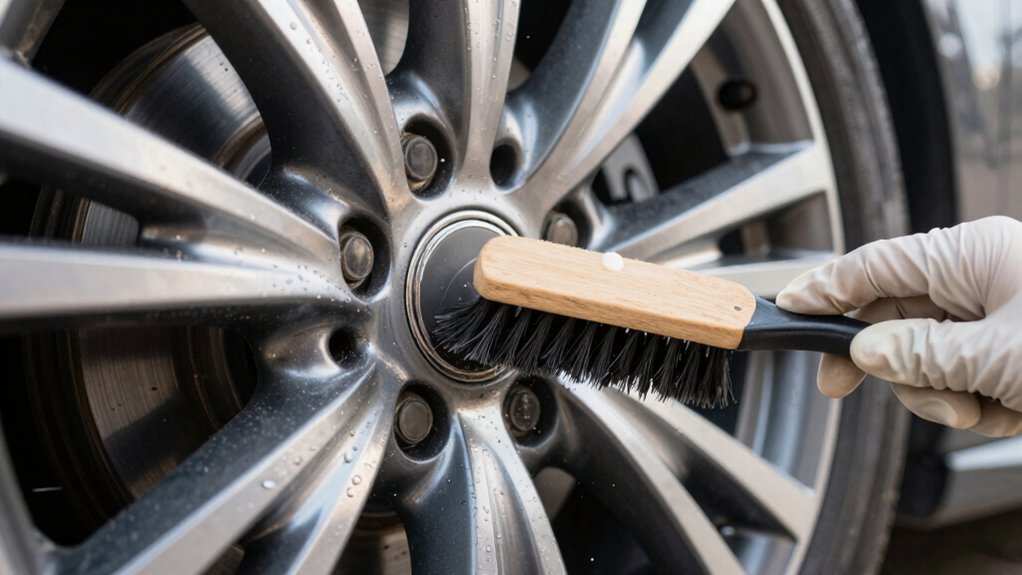
You can cut brake-dust buildup by matching pads and cooling to your driving. Use high-temp inorganic/ceramic wheel coatings and heat-resistant seals. Clean on a schedule based on use. Clean weekly for urban stop-and-go; clean every 2–3 weeks for mixed driving; clean monthly for mostly highway. Quick rinses after hard braking help prevent bonding.
Prefer ceramic or coated systems over semi‑metallic pads if finish preservation matters. Keep going to learn specific coatings, temps, and practices.
Quick Overview
- Clean wheels frequently: Weekly for urban/commute, every 2–3 weeks for mixed driving, and monthly for low-brake highway use.
- Use high-temperature, inorganic/ceramic wheel coatings (not organic waxes) to resist bonded brake particulate and heat.
- Choose low-dust brake pads (ceramic blends); when possible, avoid aggressive semi-metallic compounds.
- Improve cooling and ventilation: Ventilated or slotted rotors and proper airflow reduce rotor temperatures and dust release.
- Quick rinse sprays after heavy braking stops prevent particulate bonding before it etches wheel finishes.
Brake Dust Accumulation Rates
Frequently, brake dust accumulates fastest in high-traffic, stop-and-go locations: traffic lights, junctions, and pedestrian crossings. This is because frequent braking and higher rotor temperatures generate far more particulate matter than steady driving. You’ll notice spike rates near those urban emission sources. LDVs emit 3–8 mg PM₁₀/km and HDVs far more; therefore, local loading varies with fleet mix.
Brake dust dynamics show bimodal mass distributions: 0.5–3.0 μm and 3.0–8.11 μm dominate, with nanoparticles rising under heavy braking and high rotor temperatures. Monitor spots with repeated stops and target inner barrels. Use this quick reference:
| Location | Typical PM₁₀ mg/km | Notes |
|---|---|---|
| Junctions | 8 ± 4 | High stop frequency |
| Lights | 10–20 | Peak accumulation |
| Crossings | 6–12 | Pedestrian stops |
Wheel Cleaning Frequency Guide
Brake dust builds up much faster in stop-and-go spots like lights and junctions. So, set your cleaning frequency to match where and how you drive. You’ll plan schedules based on use, environment, and protective layers to control dust buildup and preserve finishes.
- Urban/commute: Clean weekly. Heavy braking throws fine particulates that embed quickly. Rinse and apply heat-resistant polymer seals rather than wax; polymer seals fail under temperature stress.
- Mixed driving: Clean every 2–3 weeks. Inspect inner barrels and lug areas. Use quick sprays between washes to prevent bonding.
- Highway/low-brake use: Clean monthly. Monitor for spot contamination. Maintain ceramic or polymer coatings for extended protection and easier removal.
Adjust frequency after track days or winter salt exposure.
High-Temperature Brake Compatibility
You’ll need to match wheel materials and coatings to the heat generated by your pads and rotors to prevent discoloration or coating failure. Consider pad composition and rotor temperature limits: ceramic pads cut dust, but some high-friction metallic compounds drive temps that exceed polymer sealant ratings.
Address this with high-temp coatings and improved cooling/ventilation; vented rotors, slots, and airflow can keep surfaces within safe thermal margins.
Material Heat Resistance
Several wheel protectants and coatings are rated for high temperatures, so check manufacturer specs to ensure compatibility with the heat generated by your brakes; especially if you track the car or tow heavy loads. You’ll evaluate substrates and application methods: choose coatings formulated for a high temp structure that resist breakdown at repeated thermal cycles.
Look for thermal stability ratings (°C), glass transition data, and adhesion after heat exposure. Confirm formulations include heat resilient seals around lug wells and spoke junctions to prevent micro-creep and dust ingress. During selection, prioritize inorganic or ceramic-rich chemistries over organics for sustained performance.
Apply to clean, dry surfaces per instructions, and verify cure schedules. Inadequate curing reduces thermal resistance and shortens protective life under braking heat.
Pad Composition Effects
How do pad materials behave under repeated high-temperature cycles, and what does that mean for wheel protection? You’ll find pad composition dictates how much dust is generated, how adhesive that dust is, and how it changes with heat.
Ceramic pads stay dimensionally stable; they produce finer, less abrasive particles that aid brake dust mitigation and reduce chemical aggressiveness on wheel finishes. Semi-metallic pads shed coarser, iron-rich particulates that embed and oxidize, which increases etching risk when hot. Organic/low-metallic blends can thermally break down faster, raising volatile deposits that stick to coatings.
Choose pads rated for sustained high-temperature use to minimize thermally altered debris. Match pad selection with heat-resistant sealants or coatings to improve brake dust mitigation and preserve wheel appearance.
Rotor Temperature Limits
Why does rotor temperature matter? Excessive rotor temperature accelerates pad wear, alters pad composition effectiveness, and increases brake dust generation. You should monitor peak and sustained temperatures during aggressive driving; components often have specified friction and thermal limits. Stay within those limits to prevent glazing, uneven transfer layers, and increased particulate production that’ll coat your wheels.
Select pads with composition matched to expected thermal loads: ceramic for moderate temps, metallic or sintered for higher sustained heat. Ensure proper bedding-in at controlled temperatures so the pad-rotor interface deposits stable transfer films. Use thermal management: vented rotors, correct rotor thickness, and avoid prolonged drag.
If temperatures repeatedly exceed spec, upgrade pads or rotors rather than relying on coatings or frequent cleaning to manage dust.
High-Temp Coatings
Ever wondered whether a wheel sealant will survive the heat your brakes produce? You need high-temp coatings formulated for repeated thermal cycles and rapid heat transfer from calipers and rotors. Choose coatings rated for continuous temperatures above typical rotor temperature limits and peak spikes from track use.
Look for inorganic or ceramic-based chemistries that maintain adhesion and hardness while resisting brake dust bonding. Evaluate wind resistance and particulate-shedding properties: coatings should resist abrasive airborne dust driven by airflow without compromising thermal conductivity. Apply to clean, dry wheels per manufacturer cure schedules; incomplete curing reduces heat tolerance.
Avoid organic waxes or polymers that soften with heat. Inspect coating integrity after high-load sessions and reapply layered ceramic systems when microscopic breakdown appears to maintain protection and durability.
Cooling And Ventilation
Wondering whether your wheels and sealants can cope with repeated high-temperature braking? You need to treat cooling efficiency and ventilation design as core factors. Ensure wheel spoke geometry and vent openings promote airflow to calipers and rotors; that lowers surface temperatures and reduces brake dust baking into sealants.
Choose sealants and coatings rated for elevated substrate temperatures: check thermal stability data and continuous-use limits. Fit vented or cross-drilled rotors and maintain clear airflow paths behind the wheel to sustain convective cooling. Inspect pad and rotor alignment so hot spots don’t develop. If you track or tow, add ducting or upgraded caliper fans where practical.
Regularly monitor temperatures after hard use and reapply heat-resistant protectants as needed to maintain barrier integrity and dust-release performance.
Frequently Asked Questions
Do Ceramic Coatings Damage Clear Coat Over Time?
No, ceramic coatings typically won’t damage your clear coat; they enhance clear coat durability by adding a hard, hydrophobic layer. You’ll want proper surface prep: decontaminate, correct any chips or oxidation, then apply per instructions to avoid trapped solvents or uneven cure.
Avoid cheap DIY mixes and excessive polishing after cure. When applied correctly, ceramic coatings protect and prolong clear coat life rather than degrading it.
Can Wheel Sealants Be Applied in Cold Weather?
Yes, you can apply wheel sealants in cold weather, but you’ll need to follow temperature and surface-dry guidelines. Work in a sheltered, wind-free area above the product’s minimum temp, which is often 40°F/4°C.
Clean and fully dry wheels, including inner barrels. Apply thin, even coats, allow extended cure times, and avoid driving on treated wheels until cured. Cold slows chemical bonding; therefore, expect longer dwell and cure periods for full protection.
Are Wheel Cleaning Tools Safe for Matte Finishes?
Yes, wheel cleaners can be safe for matte finishes if you choose products formulated for matte surfaces and avoid harsh solvents or abrasive brushes. Use clear coat safe, pH-neutral wheel cleaners and soft-bristled or microfiber tools to prevent gloss alteration.
Test products on an inconspicuous area first. Avoid polishing compounds, waxes, and high-speed buffers that can add shine. Rinse and dry thoroughly before applying any matte-specific protectant.
How Do Road Salts Affect Wheel Protectants?
Road salts accelerate corrosion and degrade wheel protectants by stripping hydrophobic layers and causing etching. You should rinse salts off promptly; use heat-resistant, chemical-resistant wheel protectants; and reapply sealants more often in winter.
Choose ceramic or polymer coatings rated for salt exposure. Clean inner barrels thoroughly and dry completely before application. Regular inspections and touch-ups will maintain barrier performance and prevent premature finish damage from prolonged salt exposure.
Can I Apply Protectants Myself or Need a Pro?
You can apply protectants yourself. Professional application isn’t required for many sealants and ceramic sprays. You’ll need proper prep: deep clean, dry, and target inner barrels.
DIY gives control and savings but demands patience, correct products, and curing times. Choose pro service for multi-layer ceramic coatings or if you lack tools or space. Professionals ensure flawless prep, controlled environment, and longer warranty-backed durability.
Assess complexity before deciding.
Conclusion
You’ll cut brake dust buildup by combining routine cleaning, heat-tolerant materials, and compatible pads. Clean wheels on a schedule based on driving style and dust rates. Use high-temp coatings and ceramic or low-metallic pads to reduce deposits. Choose wheels and calipers rated for your rotor temperatures.
Improve cooling with vented rotors and proper airflow. Follow manufacturer limits for pads and rotors, and inspect regularly to keep braking performance and wheel finish intact.