Interior Protectant Matte Vs Gloss
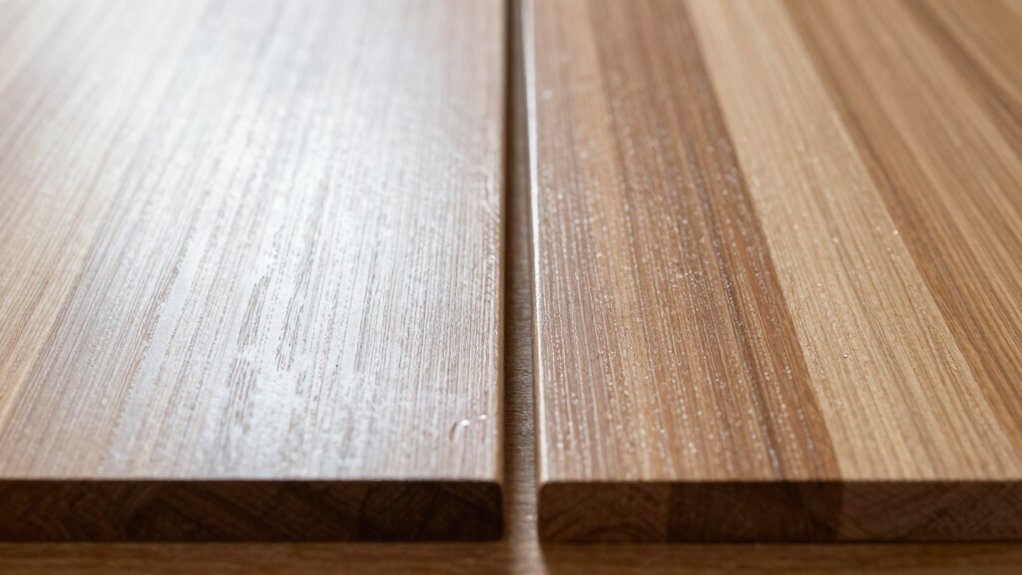
Choose matte when you want low glare and better hiding of minor surface flaws. Choose gloss when you want high reflectivity and richer color depth. Both finishes can give equivalent protection if their formulations meet the same specs and VOC limits.
Expect touch-dry in minutes, handle-safe in a few hours, and full cure in 24–72 hours. Use low-VOC, waterborne systems for better indoor air quality. Keep certification and emissions data handy and learn more about testing and compliance.
Quick Overview
- Matte finish gives a flat, non-reflective look that hides surface imperfections and reduces glare.
- Gloss finish provides a high-shine, mirror-like appearance; however, it highlights flaws and increases reflections.
- Dirt and fingerprints are less visible on matte surfaces, but they are more noticeable on gloss surfaces.
- Both matte and gloss can offer equivalent protection when formulated to the same specifications and VOC limits.
- For indoor use, choose low-VOC formulations and documented emissions testing to protect air quality. This ensures compliance.
Finish Appearance Comparison Table
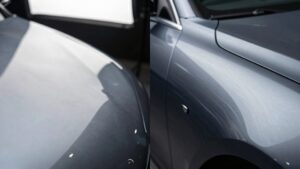
How do matte and gloss interior protectants actually look on your surfaces? You’ll see clear differences: a matte finish gives a flat, velvety, low-reflective surface that hides minor imperfections and reduces glare. A gloss finish produces high-shine reflection, amplifying color and highlighting flaws. Use the table below to compare core traits quickly.
| Feature | Matte Finish | Gloss Finish |
|---|---|---|
| Appearance | Flat, non-reflective, satin | High-shine, mirror-like |
| Dirt Visibility | Less visible | More visible |
| Glare | Reduced | Increased |
| Maintenance | Matte-safe cleaners, gentle | Easier wipe-off, polishable |
Choose matte finish for stealth and glare control. Choose gloss finish for vibrancy and showroom shine, noting both offer equivalent protection when specs match.
Application Drying Times
Wondering how long your interior protectant takes to set? You’ll need to plan for both application drying and final curing times. Matte and gloss formulas often share base chemistry, so initial tack-free times are similar. However, surface texture and film thickness change behavior. You’ll want to control temperature, humidity, and airflow to get consistent results.
Typical timelines are as follows:
- Touch-dry: 10–30 minutes depending on solvent load and ambient conditions.
- Handle-safe: 2–6 hours; avoid abrasion until this stage is reached.
- Full cure: 24–72 hours for maximum chemical resistance and hydrophobic performance.
Measure progress by tack testing and avoid high-contact use until the manufacturer’s curing times are met. Faster processing risks reduced longevity and visible defects.
VOC VOC Limits
You’ll need to check regulatory VOC limits for interior protectants to ensure the product meets local and national standards. Consider indoor air quality impacts and prefer certified low-VOC formulations that reduce off-gassing during and after application.
Verify compliance through standardized testing methods and clear labeling/reporting; this allows you to document legal adherence and customer safety.
Regulatory VOC Limits
Why do regulatory VOC limits matter for interior protectants? You need to comply with regional regulatory VOC limits because they define allowable solvent content, labeling, and application methods for interior protectants.
Regulatory VOC limits directly influence formulation choices you can use for matte or gloss products; they affect drying time, adhesion, and film properties. Manufacturers must substitute high-volatility solvents with low-VOC carriers or reactive chemistries to meet limits without degrading performance.
You’ll see certification, emissions testing, and documentation requirements tied to regulatory VOC limits during procurement and installation. While regulatory VOC limits aim to protect indoor air quality, they also shape product selection, shelf life, and on-vehicle curing behavior. You should evaluate technical data sheets for compliance and predictable finish behavior before specifying a protectant.
Indoor Air Quality
How will interior protectant VOCs affect cabin air quality and occupant health? You need to assess VOC concentrations from protectants because volatile release raises short-term peak levels that drive indoor odor and acute irritation. Measure emissions in µg/m3 over time; compare to occupational and residential guidance to determine acceptable exposure durations.
Use source-control strategies: apply products with documented emission profiles in ventilated spaces, minimize quantity, and allow off-gassing prior to occupancy. Monitor CO2-equivalent ventilation rates and employ activated-carbon filtration to reduce low-molecular-weight organics when needed. Track symptoms—headache, eye or throat irritation—and correlate with measured VOCs to evaluate risk.
Document procedures and emission data for fleet or facility compliance; prioritize interventions when concentrations approach guideline limits.
Low‑VOC Formulations
Reducing VOC emissions from interior protectants directly improves cabin air quality and lowers acute irritation risk. Therefore, specifying low‑VOC formulations is the next step. You will evaluate product labels and technical data sheets for documented low‑VOC content expressed as grams per liter.
Prioritize chemistries that meet or beat regional regulatory limits and list volatile species and odorants. Choose solvent-free or waterborne polymer systems with quantified emissions over time, not just initial concentrations. Ask suppliers for batch certificates showing VOC test methods and aging profiles under expected cabin temperatures.
Balance performance—matte leveling and gloss retention—with VOC constraints; some additives raise VOCs and will require reformulation. Document compliance in procurement records to demonstrate adherence to regulatory limits and indoor air quality goals.
Compliance Testing Methods
When you evaluate VOC compliance for interior protectants, start with standardized test methods and clear regulatory targets so suppliers can demonstrate conformity. You’ll rely on GC-MS headspace analysis, evaporative loss tests, and EPA or EN standardized procedures to quantify emissions against VOC limits.
Design sampling protocols for finished formulations and accelerated ageing to capture real-world volatilization. Use validated labs with traceable calibration, defined detection limits, and documented uncertainty. Compare results to regional VOC limitsal(federal, state, or EU) and to product category thresholds to determine pass/fail status.
Maintain chain-of-custody records and raw-data packages for audits. If results approach limits, reformulate with exempt solvents or lower-VOC carriers and re-run compliance testing before market release.
Labeling And Reporting
Why does accurate labeling matter for VOC limits? You need precise labeling practices to show VOC content, exemptions, and formulation details so inspectors and purchasers can verify compliance. Use standardized units, assay methods, and batch identifiers on technical data sheets and product labels.
For reporting, follow jurisdictional reporting standards: include test dates, lab accreditation, and calculation methods for VOC grams per liter. Maintain traceable records tying labels to compliance test results and production lots. If limits change, update labels and safety data sheets promptly; reissue reports.
Good labeling practices reduce audit risk, speed regulatory reviews, and protect you from fines. Keep reports concise, factual, and readily retrievable for enforcement or customer inquiries.
Frequently Asked Questions
Will Matte Coatings Change Interior Fabric Texture Permanently?
No, matte coatings typically won’t permanently alter fabric texture if applied correctly. You’ll notice a slight change in hand-feel initially; however, the matte texture effect is superficial. You’ll preserve fabric durability when you use formulations designed for textiles and follow manufacturer dilution and drying guidelines.
Avoid solvent-heavy products and aggressive scrubbing; those can weaken fibers and cause lasting damage. Test an inconspicuous area first to confirm compatibility.
Can Gloss Protectants Be Layered Without Stickiness?
Yes, gloss layering can be done without stickiness if you follow proper application and curing. Use thin, even coats and allow full flash/curing times between layers. Select compatible chemical formulations.
Stickiness concerns usually arise from over-application, incompatible solvents, or insufficient cure. Test on an inconspicuous area and follow manufacturer recoat windows. Finish with the recommended topcoat or anti-tack treatment to ensure a smooth, non-sticky glossy surface.
Do Matte Protectants Affect Touchscreen Responsiveness?
No, matte protectants generally don’t reduce touchscreen sensitivity if you use products formulated for touchscreens and check coating compatibility. You’ll want a thin, non-conductive matte film or coating designed for electronics. Thicker or poorly compatible sprays can add microtexture that interferes with capacitive sensing.
Test a small area first; follow manufacturer cure times; and avoid layering incompatible products to preserve responsiveness and tactile feel.
Are Matte Finishes More Prone to Staining Long-Term?
No, matte finishes aren’t inherently more prone to long-term staining if you care for them correctly. You’ll need matte-specific cleaners to avoid altering finish and preventing matte staining. Aggressive cleaners can cause uneven sheen.
Gloss buildup is easier to remove with general cleaners, but gloss shows residues more. Practically, use pH-neutral, matte-safe products, avoid waxy or silicone cleaners, and perform regular gentle maintenance to preserve either finish.
Can Either Finish Be Safely Used on Leather Seats?
Yes, you can safely use either finish on leather seats when products are formulated for leather seat safety and tested for coating compatibility. You’ll choose leather-specific matte or gloss protectants that avoid waxes, solvents, or high pH.
Apply a small hidden-area test; follow manufacturer cure times, and use pH-neutral cleaners. Matte variants need gentler buffing to preserve flat appearance. Gloss tolerates more aggressive polishing without compromising protection.
Conclusion
You’ve seen how matte and gloss interior protectants differ in appearance, application, drying, and VOC behavior. Choose matte for lower sheen, better hide, and fewer surface reflections. Choose gloss when durability, easy cleaning, and higher sheen matter.
Always check VOC limits, compliance testing, and labeling to ensure indoor air safety and regulatory compliance. Opt for certified low VOC formulations and follow manufacturer directions for application and drying to minimize emissions and protect indoor air quality.