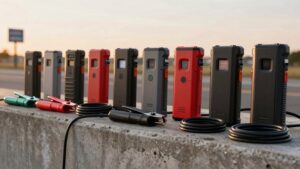
Jump Starting a Car Safely Steps
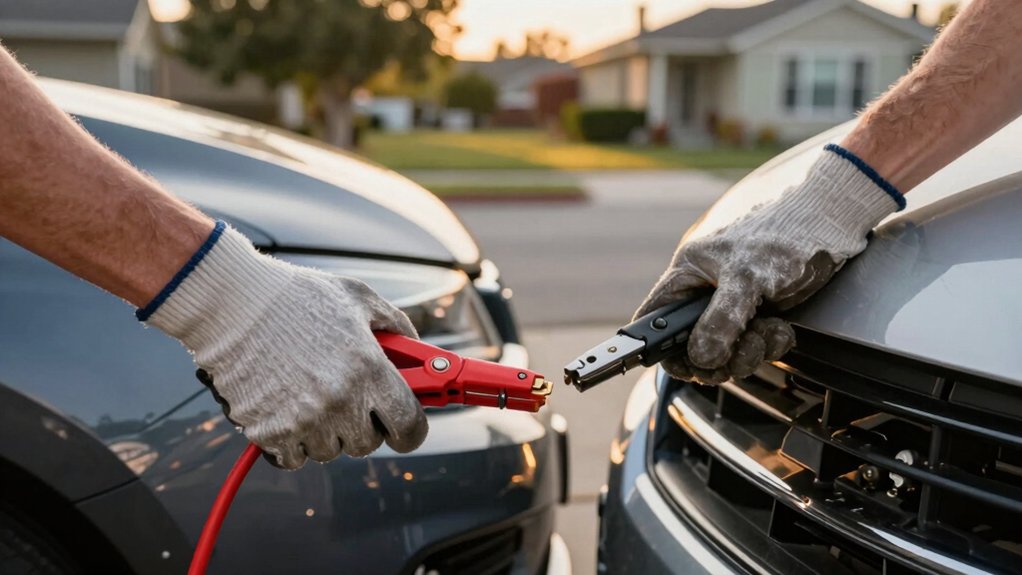
You’ll confirm the dead battery’s resting voltage and polarity. Wear eye protection and nonconductive gloves. Inspect terminals and cables for corrosion or damage. Keep clamps and insulated handles clear of painted surfaces, hot or moving parts, and each other.
Attach red to positive, black to the donor’s negative, then a chassis ground on the dead car. Tighten clamps snugly, route cables flat and apart, and start the donor vehicle. Follow the full procedure to learn safer, step-by-step details.
Quick Overview
- Confirm both batteries are 12V, inspect terminals and cables for corrosion or damage, and wear eye protection.
- Park donor vehicle close; engines off, parking brakes set, and both cars in neutral or park.
- Connect red clamp to donor +, red clamp to dead +; then black clamp to donor − and last black clamp to unpainted chassis ground on dead car.
- Ensure clamps bite clean metal; cable runs clear of moving parts, and red/black cables stay separated.
- Start donor, run a minute; start dead car. Remove clamps in reverse order and recheck clamp tightness after initial run.
Battery Voltage & Polarity Table
Why check voltages and polarity before you jump a car? You verify battery voltage to confirm compatibility and avoid damage. Measure resting volts; a 12V lead-acid at ~12.7V is good; ~10.5V is discharged.
Use the polarity table to identify + and – terminals: misidentifying causes sparks or protection cutouts. Keep clamps secure and remember clamp to battery torque specs from the manual when tightening clamps; don’t overtighten.
| Item | Normal Voltage | Action |
|---|---|---|
| 12V lead-acid | 12.7V full | Jump if >10.5V |
| 24V bank | 24.0V full | Match donor voltage |
| Lithium 12V | 13.6V full | Confirm chemistry |
Follow polarity rules: red to +, black to ground. Wear eye protection.
Clamp-To-Battery Torque Specs
A properly torqued clamp ensures a solid electrical connection without damaging the battery terminal; so tighten clamps to the manufacturer’s specified torque whenever possible. If you don’t have the spec, snug the clamp firmly by hand and give it a quarter-turn with a wrench: enough to prevent movement but not so much it deforms the terminal or strips threads.
- Inspect terminals and clamps for corrosion or damage. Clean and replace parts before applying torque to ensure reliable clamp to battery torque specs.
- After connecting clamps, perform voltage polarity checks to confirm positive-to-positive and negative-to-ground alignment. Incorrect polarity risks sparks and equipment damage.
- Use a torque wrench when available and recheck tightness after the first minute of running the donor vehicle. Secure clamps but avoid overtightening.
Avoid Cables Touching Metal
Before you attach clamps, inspect the cable insulation for cracks or exposed wire and do not use damaged cables. Keep clamps clear of painted surfaces and moving parts. Clamp firmly to terminals or an approved metal ground while avoiding the engine compartment.
Wear nonconductive gloves to maintain solid connections and reduce the chance of accidental contact with metal.
Inspect Cable Insulation
How thoroughly have you checked the jumper cable insulation? Before you begin, inspect the cable for cuts, cracks, melted areas, or exposed wire; confirm insulation integrity along the entire length. Run your hands (wearing gloves) along both cables to feel for soft spots or stiffness indicating internal damage.
If you find any compromise, don’t use the cables; replace them or use a different kit. Ensure insulation covers both clamp leads fully so metal won’t be exposed near battery terminals or body panels. Keep cables routed to avoid contact with sharp edges, hot engine parts, or moving belts. A quick, systematic inspection reduces short and spark risk and keeps you and your vehicle safer during the jump-start.
Keep Clamps Clear
Why should you keep the clamps clear of metal surfaces and each other? You prevent sparks, short circuits, and possible battery damage by keeping clamps separated and off painted or conductive parts. Before connecting, position clamps so they won’t swing into metal or touch one another.
Use insulated handles and hold clamps by the plastic grips; don’t let metal joints contact the engine, hood, or tools. Verify battery polarity and attach clamps in the correct order to avoid reversing polarity: positive to positive, negative to ground as instructed. If a clamp slips, stop and reposition with the engine off.
Wear eye protection and remove jewelry so a stray contact won’t cause burns or ignition. Keep clamps visible and stable until all connections are secure.
Maintain Solid Connections
A secure connection matters: keep cable clamps steady and insulated so they don’t touch metal parts or each other while you work. A slipped clamp can spark, short the system, or damage the battery. You’ll position clamps so insulation covers as much metal as possible. Hold clamps firmly and don’t let them dangle. Use pliers or insulated handles if grip is poor.
Check that clamps bite the terminal cleanly: no corrosion or loose contact. Keep cables routed to avoid crossing metal surfaces and moving parts. Stay focused. Two word discussions like “stay alert” summarize behavior but don’t replace action. Maintain eye protection and avoid jewelry.
Good battery safety means verifying secure, immobile connections before you start either engine.
Avoid Engine Compartments
Where should you keep jumper cables while working under the hood? Keep them coiled and clear of the engine bay, draped away from belts, fans, and hot surfaces so clamps can’t fall onto metal. Position clamps on a clean, flat surface or hang them from the hood hinge where they won’t contact moving parts.
During negative ground handling, attach the final black clamp to a designated chassis ground point; never to a battery post on the dead car to reduce spark risk. Use battery post protection on exposed terminals you’re not connecting to, and cover loose metal clamps temporarily with a rag if you must set them down. Always double-check that cables won’t swing into the engine while anyone starts a vehicle; secure them before cranking.
Use Nonconductive Gloves
After you’ve secured cables away from belts and fans, put on nonconductive gloves before handling clamps so you don’t accidentally touch metal and create a short. Fit gloves snugly and check for tears or contamination; damaged gloves defeat gloves safety.
Use nonconductive gloves rated for electrical work or specifically marked for battery handling. Don’t slip gloves off while clamps are connected; keep them on until all clamps are fully disconnected and stowed.
Avoid jewelry and loose clothing under the gloves to prevent hidden contact points. If gloves become wet, replace them immediately: moisture conducts. While wearing gloves, still keep clamps clear of painted surfaces and moving parts. Treat gloves as one part of a layered safety approach when you jump start a car.
Lay Cables Flat
1. Lay cables flat across the battery area and firewall so they won’t drape over engine parts or touch metal surfaces. When you lay cables, keep them untwisted and free of kinks; this reduces the chance of clamps slipping or arcing.
Position the red and black runs apart to avoid incidental contact, and clip clamps to terminals while holding cable slack so tension won’t pull them loose. Avoid tips like hanging cables on hood hinges or wrapping them around tools; those create conductive paths and pinch points.
Wear eye protection and nonconductive gloves as you route cables. Before starting, double-check that no cable touches moving parts, metal brackets, or exposed hot surfaces. Keep bystanders clear and proceed to starting steps.
Frequently Asked Questions
Can You Jump-Start a Car With a Hybrid Vehicle?
Yes, but you should be cautious. For jump start safety, check the hybrid specific considerations in the owner’s manual first. Many hybrids have separate 12V batteries and sensitive electronics.
Wear eye protection, avoid sparks near the battery, and follow manufacturer steps for locating the correct jump points. If the manual forbids jumps, use a portable jump starter or call roadside assistance to prevent damage to hybrid systems and ensure safe handling.
Will Jump-Starting Damage Sensitive Electronics?
Yes, improper jump-starting can harm car electronics, so you should follow safety precautions. Before connecting cables, turn off all electronics and consult manuals. Make secure, correct clamp connections to avoid voltage spikes.
Start the donor vehicle and let it run; then start the dead car. If you see sparks, smoke, or erratic electronics, stop immediately. When finished, disconnect in the proper order and inspect for damage or error codes.
How Long Should You Let the Donor Car Run After Starting?
Let the donor car run for 2 to 5 minutes before attempting to start the dead vehicle. That donor car duration gives the battery a quick charge. If the first try fails, run the donor for up to 10 to 15 minutes while monitoring for heat or sparks.
For safety timing, avoid prolonged idling near flammable materials. Keep vents open, and watch clamps and cable integrity. Once started, drive the revived car for 15 to 20 minutes to recharge fully.
Can You Jump-Start Through a Dead Alternator?
Yes, you can jump-start a car with a dead alternator, but it’s temporary and carries jump start risks. You’ll connect properly and start the donor; then run briefly to get the dead battery enough charge to crank.
After starting, do not rely on it: drive to charge briefly. Then, get alternator testing and repair ASAP. If the engine dies after removing cables, the alternator isn’t charging and needs immediate service.
Is It Safe to Jump-Start in Heavy Rain?
Yes, it’s risky to jump-start in heavy rain. You should avoid direct water contact with battery terminals and jumper cables because sparks can cause acid spray or explosion.
If you must, park under cover, wear eye protection, remove jewelry, and keep cables dry and clamps secure to clean metal. Don’t let vehicles touch.
Consider using a portable jump starter or calling roadside assistance instead to minimize exposure and hazards in heavy rain.
Conclusion
You’ve got the essentials to jump-start a car safely: check battery voltage and polarity, follow clamp-to-battery torque specs, and keep clamps off metal and engine parts. Inspect cable insulation, lay cables flat to avoid snags, and keep clamps clear and connections solid.
Wear nonconductive gloves and never let cables touch each other or grounded surfaces. Follow these steps methodically; you’ll minimize risk while getting the vehicle started efficiently.