Microfiber Towel Maintenance Checklist
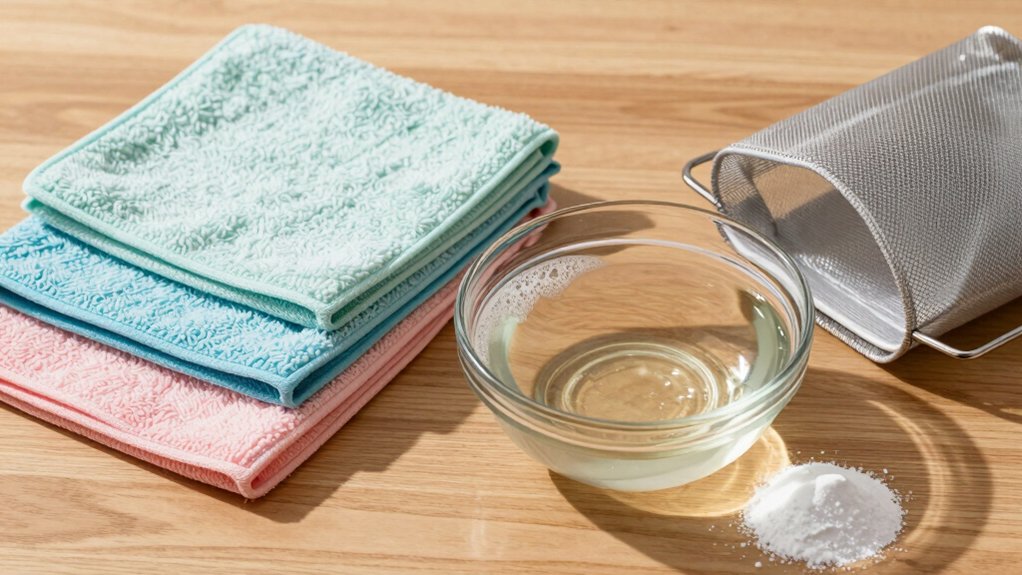
You’ll match towel GSM and pile to the task: 380–400 short/dual for detailing; 700–900 medium for drying; 780–1300 long/coral for heavy absorption. Prioritize yarn fineness, and check fiber density by weighing a known area and inspecting pile compactness.
Wash cold or ≤30°C on gentle cycle. Avoid fabric softener and heat; pre-treat stains with mild detergent. Verify washer temps with a thermometer in a water-filled container. Follow this and you’ll preserve performance and learn practical maintenance steps next.
Quick Overview
- Wash microfiber in cold to warm water (≤30°C) on a gentle cycle to preserve fibers and absorbency.
- Use mild, residue-free detergent and avoid fabric softeners, bleach, or laundry boosters that clog fibers.
- Separate microfiber from lint-producing fabrics and wash like colors together to prevent contamination.
- Air-dry or tumble low; avoid high heat to prevent fiber deformation and loss of pile loft.
- Weigh and inspect towel GSM and pile density periodically to confirm suitability. Replace when performance declines.
Microfiber GSM & Pile Length
Why does GSM matter? You use microfiber GSM to match task load: lower GSM (380–400) for detailing and dual-pile versatility; mid/high (700–900) for plush drying; ultra-high (780–1300) for coral-fleece absorption.
Choose pile length by function: short for residue removal and low friction, long for liquid pickup but expect higher friction and lint risk, dual for multi-tasking.
| GSM Range | Typical Pile Length | Best Use |
|---|---|---|
| 380–400 | Short/dual | Detailing, polish removal |
| 700–900 | Equal/medium | Drying, buffing |
| 780–1300 | Long/coral fleece | Heavy absorption, drying |
Prioritize yarn fineness over GSM alone. Use the short side on sensitive paint; reserve high-pile for towels and drying only.
Fiber Density Quick Checklist
A concise fiber density checklist helps you quickly assess whether a microfiber towel suits a task: measure grams per square meter (GSM) and pile compactness, check yarn fineness and split-fiber construction, and verify air-permeability or packing density where possible.
Use this quick procedure to avoid treating density as an unrelated topic or an irrelevant subject when selecting towels.
- Weigh a known area to confirm GSM; target ranges depend on application (e.g., 300–800 GSM).
- Inspect pile compactness visually and by touch; dense piles resist snagging and hold more liquid.
- Examine yarn fineness under magnification; thinner filaments increase surface area and pickup.
- Test air-permeability or packing density with light/backlight; tighter packing improves durability and lint control.
Apply results to choose the right towel for cleaning, polishing, or drying.
Washing Temperature Limits
Set your machine to 30°C (or lower) as the ideal temperature to protect microfiber’s plastic filaments while still activating detergent. Avoid hot water; temperatures above 40°C can warp fibers, reduce loft, and set some stains. Use cold washes to preserve absorbency and color.
Verify actual water temperature with a washing-machine thermometer and check towel care labels for any maximum-temperature markings before laundering.
Ideal Machine Temperature
How hot should you wash microfiber to keep its performance intact? Set your machine to the ideal temperature range: cold to warm, not exceeding about 30°C. Controlling machine heat preserves the polymer structure and prevents fiber deformation, loss of loft, and reduced absorbency.
Use the gentle/delicate cycle to minimize mechanical stress while maintaining stable temperature control. When you select warm water, confirm the machine’s actual output; many settings run hotter than labeled. Avoid prolonged high-heat exposure during wash cycles and rinse phases to prevent softening of binders and finishes. For heavily soiled loads, rely on longer soak or agitation rather than raising temperature.
Document your washer settings so you consistently apply correct machine heat for microfiber longevity.
Hot Water Risks
Why risk damaging your microfiber with hot water when lower temperatures do the job? Hot water risks include fiber deformation, melting of synthetic filaments, and loss of split-fiber structure that provides absorbency. Exposing polyester/nylon blends above ~30°C accelerates shrinkage and reduces pile height; this degrades performance. Hot cycles also promote chemical bonding of oils and cleaners to fibers, increasing detergent residue that impairs capillary action and can attract dirt.
You should avoid high-heat washes and choose warm or cold settings. Follow detergent dosing carefully and run an extra rinse or vinegar quick-rinse when residue is suspected. For heavily soiled loads, pre-soak in warm water; however, never subject towels to sustained hot-water cycles that compromise microfiber integrity.
Cold Wash Benefits
Curious what cold water does for your microfiber towels? A cold wash reduces thermal stress on synthetic fibers, keeping filament dimensions stable and preventing heat-induced deformation. You’ll preserve fiber absorbency because low temperatures maintain the microstructure that traps liquids and particulates.
Cold cycles also minimize dye bleed and shrinkage risk; thus, weave integrity and surface area stay consistent wash after wash. Set your machine to 30°C or lower and use a mild, residue-free detergent measured precisely. Excess soap clogs capillary channels and reduces performance.
Skip fabric softeners and powders that leave films. Run a gentle cycle with an extra rinse when needed to ensure complete detergent removal. Cold washing is the preferred, technically sound choice for long-term microfiber functionality.
Thermometer Use Tips
You’ll want a reliable thermometer to confirm your machine’s setting actually stays at or below the 30°C (86°F) threshold recommended for microfiber. Use an instant-read probe or waterproof appliance thermometer placed in a load-equivalent container of water to measure real wash temperature. Verify thermometer accuracy against an ice-point or boiling-point calibration before use; a ±0.5°C deviation is acceptable for maintenance checks.
Check temperature consistency by recording readings at cycle start, mid-cycle, and rinse. If readings exceed 30°C, adjust settings or switch to a cold/warm program. Repeat checks after machine maintenance or setting changes. Log results briefly to identify trends that could signal thermostat drift or control failures that jeopardize microfiber integrity.
Temperature Label Reading
How should you read temperature symbols on microfiber care labels to protect fiber integrity? You’ll locate the wash tub icon and numeric value or dots. The number gives the maximum Celsius temperature; dots indicate relative heat (one dot = low, two = moderate). Treat any crossed-out tub as no-machine-wash.
For fabric care, interpret a thermometer symbol similarly for iron limits; however, avoid ironing microfiber regardless. When a label omits numbers, default to 30°C or the lowest dot rating to prevent plastic-fiber deformation. Always cross-check the temperature label against your machine settings before starting a cycle.
If symbols conflict or are missing, choose cold or warm water and a gentle cycle to maintain microfiber performance and dimensional stability.
Temperature For Stains
When dealing with stains, pick the lowest effective temperature rather than assuming hotter is better. Heat can set many stains into microfiber’s plastic fibers. You should follow strict temperature limits; generally keep washes at or below 30°C (86°F) for routine stain removal. Use warm (not hot) water only when cold fails to lift oils or soils. Avoid exceeding the towel’s care label maximum.
Pre-treat with a diluted microfiber detergent and agitate gently. Allow a short soak in warm water if necessary. For protein-based or dye stains, enzymatic or oxygen-based pretreatment at low temperatures improves results without risking fiber deformation. Document the tested temperature that removed the stain to refine future cleaning and maintain microfiber integrity.
Frequently Asked Questions
How Often Should I Replace Microfiber Towels?
You should replace microfiber towels every 6–12 months under normal use, or sooner if performance drops. Establish a replacement rhythm based on frequency: heavy daily use = ~6 months; occasional use = up to 12 months. Track wear by absorbency and fiber integrity.
Implement a color coding strategy to assign towels by task and lifespan. Record purchase or put-into-service dates so you retire and recycle worn towels consistently and efficiently.
Can I Use Microfiber on Wood or Delicate Finishes?
Yes, you can use microfiber on wood and delicate finishes care, but you should proceed cautiously. Use a soft, low-pile microfiber that is clean and lint-free. Slightly dampen it with water or a mild, additive-free cleaner. Test an inconspicuous area first.
Avoid abrasive scrubbing, harsh chemicals, and excess moisture that can swell or strip finishes. Rinse or replace towels when soiled. Air-dry or tumble on low to preserve fiber integrity and finish safety.
Do Microfiber Towels Collect Lint From Other Fabrics?
Yes, do microfiber towels collect lint from other fabrics? They can; however, properly maintained microfiber resists lint transfer.
You’ll reduce lint transfer by washing separately, grouping by weave, avoiding heavy fabrics, and skipping dryer sheets. Use mild, additive-free detergent, cold or warm gentle cycles, and extra rinse.
Air-dry or tumble low, remove promptly, and store in clean containers to preserve fiber charge and minimize lint attraction.
Are Antibacterial Washes Safe for Microfiber Fibers?
Yes, antibacterial washes can be safe if you confirm antibacterial safety and fiber compatibility. You should use mild, fragrance- and additive-free antimicrobial detergents formulated for synthetics. Avoid bleach and fabric softeners, and wash in cold or warm water on a gentle cycle.
Test a small piece first, rinse thoroughly, and avoid high heat drying. Proper selection and handling preserves microfiber absorbency and longevity while reducing microbes.
Can I Dye or Color-Code Microfiber Towels?
Yes, you can dye or color-code microfiber towels, but check dye compatibility and follow color coding guidelines strictly. Use low-temperature fiber-reactive or disperse dyes formulated for synthetic microfibers. Pre-wash towels and test a sample for colorfastness.
Avoid harsh heat and powder detergents during and after dyeing. Label batches, segregate by task, and document dye formulas so you maintain consistent, safe color coding across your towel inventory.
Conclusion
You’ve learned how GSM and pile length affect performance, how fiber density guides use, and why washing temps matter. Stick to manufacturer limits; aim for a machine temp around 30–40°C for routine cleaning. Reserve higher temps only for specific, label-approved stains. Use a thermometer to verify settings, avoid fabric softeners, and don’t overload the washer.
Follow these practical, technical steps, and you’ll maintain microfiber function, longevity, and cleaning efficiency.