Microfiber Towel Types and Uses
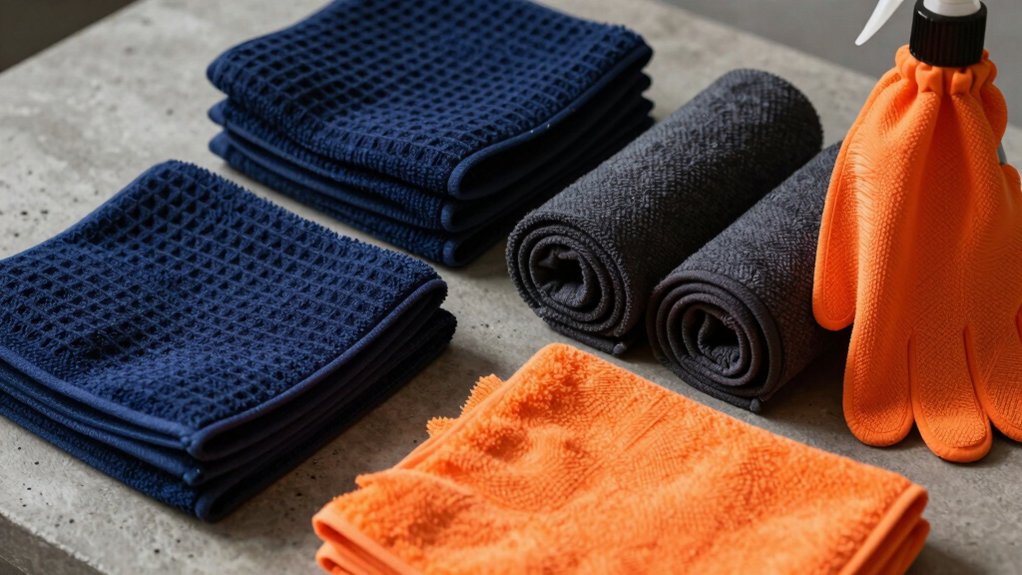
You’ll choose microfiber by GSM, pile and construction to match the task: 200–400 GSM short, low-pile cloths for interiors, wheels and dusting; 300–500 GSM medium-pile for glass, polish and general detailing; 800–1200+ GSM dense, long-pile for heavy drying, ceramic-safe levelling and paint-friendly finishing.
Match pile density to required contact points and absorbency.
Follow care labels for maximum wash/dry temperatures; avoid bleach on polyester/nylon blends.
Continue for specific temp and chemical guidance.
Quick Overview
- GSM indicates thickness and use: 200–400 GSM for light dusting and interiors, 400–800 GSM for glass and general drying, 800+ for heavy drying and paint-safe work.
- Pile density and height determine mechanical action: low-density/short-pile for glass and trim, medium for detailing/coating removal, high-density/long-pile for heavy drying.
- Choose 300–500 GSM for versatile multipurpose performance. Choose 800+ GSM when maximum absorbency and paint safety are required.
- Match wash temperature to care labels and GSM: lightweight 30–40°C, mid-weight 40°C, heavy 40–60°C. Avoid high heat for nylon-rich blends.
- Avoid chlorine bleach and harsh solvents. Use bleach-free disinfectants or approved oxidizers and rinse thoroughly to prevent microfiber degradation.
00 GSM Comparison Chart
Wondering which GSM matches your task? You choose GSM by matching fiber density to application: low GSM for quick, dirty jobs; medium for balanced everyday use; high for safe, absorbent drying and coating work.
Avoid GSM misconceptions. Weight isn’t the only quality metric; fiber construction and finish matter.
| GSM Range | Typical Use |
|---|---|
| 200–400 | Interiors, wheels, light dusting |
| 400–800 | Glass, polishing, general drying |
| 800–1200 | Vehicle drying, ceramic-level safety |
Select 300–500 GSM for versatile performance. Select 800+ GSM when maximum absorbency and paint safety are essential. Check fiber density and weave type (waffle, terry, pile) to ensure the towel matches your material and application.
Pile Density Guide
GSM gives you a quick sense of weight, but pile density tells you how those grams translate to performance on paint, glass, and interior surfaces. You’ll choose pile density by matching fiber mass per area with pile height and openness. That combination controls contact points, absorbency rate, and mechanical action. Don’t confuse density with fiber type; that’s where fiber weave myths mislead you.
- Low-density, short-pile: fast drying, low lint, ideal for glass and delicate trims; aids microfiber maintenance by resisting clogging.
- Medium-density, medium-pile: balanced cut and lift for general detailing, polishing, and coating removal.
- High-density, long-pile: maximum surface area for heavy drying and gentle levelling of waxes and sealants; needs careful rinsing.
Care Label Temperature Limits
Check the care label symbols before laundering so you know the maximum wash temperature and whether high-heat cycles are allowed. Follow recommended drying heat and ironing/steam limits to preserve fiber structure and pile performance. Note explicit bleach or solvent warnings that can damage microfilaments or backing.
These limits dictate which towels you can use for heavy chemical removal versus routine drying and glass work.
Read Care Label Symbols
How hot can you safely launder each microfiber type? Read the care label symbols closely: they’ll dispel care label myths and give exact washing symbol meanings for temperature, bleach, and tumble settings.
You’ll see a tub icon with dots indicating max Celsius: one dot ~30°C, two ~40°C, three ~50°C. Match that to the towel construction. Terry and waffle weaves tolerate mid-range heat; pearly and suede prefer cooler cycles to protect fibers and coatings. Ultra-plush and high-gsm terry may handle slightly higher temps, but check manufacturer guidance.
Symbols for hand wash or gentle cycle signal reduced mechanical action to preserve pile structure. Follow the icons for detergent and bleaching restrictions so microfiber retains absorbency, low-lint behavior, and coating compatibility.
Maximum Wash Temperature
Laundry symbols tell you the maximum wash temperature for each microfiber construction, and you should use them to match heat to material properties rather than guessing. You’ll follow those icons because pile type, blend, and weave respond differently to heat: terry and twist tolerate moderate temperatures; waffle and pearly weaves prefer cooler cycles, and chenille or suede blends often require the lowest settings.
Observing maximum wash recommendations preserves fiber integrity, loft, and absorbency while preventing shrinkage, melting, or bond failure in blended yarns. For application-focused maintenance, sort towels by construction, set machine temperature to the labeled limit, and avoid prolonged exposure to high heat. Respecting temperature limits extends service life and keeps towels performing for drying, polishing, and compound removal.
Recommended Drying Heat
Having matched wash temperatures to each microfiber construction, you now need to set drying heat according to care label limits to protect fiber bonds, pile height, and blend integrity. You’ll follow label guidance: low heat for polyester-rich towels; very low or air dry for high-nylon blends and delicate suede or pearly weaves.
Match drying heat to fabric weight. Heavier 700–1200gsm drying towels tolerate slightly higher temps than 200–400gsm terry or waffle weaves, but don’t exceed labels. Use sensor or timed cycles set to gentle/low to avoid melting fibers, shrinking pile, or fusing blend components.
For mixed-pile or two-pile items, err toward the lowest recommended heat to preserve high-pile loft and low-pile performance for coating work.
Ironing And Steam Limits
When should you ever iron or steam microfiber? You generally shouldn’t apply high heat: Microfiber’s polymer fibers deform above moderate temperatures. Check the care label for ironing limits; most towels list low or no-iron settings. If you must press a wrinkle, use the lowest temperature, a protective cloth, and minimal contact time to avoid fiber melting, loss of pile structure, or reduced absorbency.
Steam cautions are important. Steam saturates fibers and can fuse microfilaments, shrinking weave density and reducing lint-trapping capability. For performance-critical towels (terry, pearly, two-pile, suede), avoid steam or test a corner. Waffle, twist, and chenille constructions are similarly sensitive.
Follow manufacturer temperature recommendations and air-dry when possible to preserve material properties and cleaning function.
Bleach And Chemical Warnings
Why risk damaging microfiber with strong chemicals? You should check bleach compatibility before using oxidizers or high-pH cleaners on any microfiber type. Microfiber’s split polyesters and polyamides degrade with prolonged exposure to sodium hypochlorite and harsh solvents. This degradation reduces loft, absorbency, and electrostatic dirt capture.
For application, reserve bleach-free disinfectants or peracetic acid products approved for delicate textiles. Test a hidden sample, follow manufacturer care labels, and dilute per instructions. Rinse thoroughly after chemical use to remove residues that impair coating removal or glass-safe wiping.
Practice chemical safety: use gloves, eye protection, and adequate ventilation. Segregate towels used with corrosive agents from those for paint, glass, or interior surfaces to avoid cross-contamination and premature microfiber failure.
Temperature Versus Fabric Weight
How hot should you launder different microfiber weights to keep fibers intact and performance consistent? You follow clear temperature guidelines tied to fabric weight correlation: lightweight waffle or suede (200–400gsm) tolerate 30–40°C to preserve weave and minimize shrinkage. Mid-weight terry and pearly weaves (400–700gsm) perform best at 40°C; this balances oil removal and pile integrity. Heavy chenille, twist, and ultra-plush drying towels (700–1200gsm) can withstand 40–60°C for thorough soil release; however, avoid prolonged 60°C cycles.
Always use warm water with mild detergent. Skip bleach and fabric softeners, and choose low-heat tumble or air-dry to maintain loop structure and absorbency. Match wash temperature to gsm to retain loft, lint control, and coating-safe performance.
Frequently Asked Questions
Which Towel Type Is Best for Ceramic Coating Application?
Use a low-pile, tight-weave towel: pearly or suede, for ceramic coating application. Your towel selection should prioritize low lint, tight weave, and smooth material to avoid streaking or dragging coating.
You’ll use suede/pearly for leveling and removing excess coating. Then, a clean suede for final wipe. Always use fresh, dedicated towels per panel. Avoid plush or high-pile types, and replace towels if they pick up contaminants.
How Do I Remove Stubborn Stains From Microfiber?
You wash, pre-treat and launder for effective stain removal and proper microfiber prep. Rinse debris, apply a pH-neutral degreaser or enzyme spotter to stained areas, and gently work fibers with fingers or a soft brush. Then soak for 15–30 minutes.
Machine-wash separately in warm water with mild liquid detergent; do not use bleach, fabric softener or dryer sheets. Air-dry or tumble low. Inspect and repeat for persistent oil or coating residue.
Can Microfiber Damage Paint if Used Incorrectly?
Yes, microfiber can damage paint if you use dirty, abrasive, or inappropriate towels and poor technique. For microfiber safety, always inspect for grit. Use correct pile: low-pile or suede for cutting or polish; plush for drying. Employ proper paint prep: foam wash, contamination removal, and lubrication during compounding.
Use light pressure, straight-line motions, and clean, dedicated towels to avoid marring, swirls, or coating disruption.
Are Branded Towels Significantly Better Than Generic Ones?
Yes, branded vs generic towels can matter. You’ll get consistent fiber blend, tighter weave, controlled GSM and verified edge stitching from reputable brands; this improves durability, lint control and coating compatibility.
Towel branding benefits include tested fiber types (terry, pearly, waffle), accurate pile construction and reliable performance for drying, polishing or coating removal. You’ll pay more, but you’ll reduce paint risk and replace towels less often.
How Long Do Microfiber Towels Typically Last?
You can expect microfiber towels to last 1–5 years depending on use, care, and GSM. Heavy-duty 800–1200gsm drying towels wear faster with frequent abuse. For longevity comparison, higher-GSM and better-knit towels usually outlast cheap generic ones.
Follow tips for washing: use cool/warm water, mild detergent, no fabric softener or bleach, tumble low or air dry. Replace when fibers flatten, lint increases, or absorbency drops.
Conclusion
You now know how GSM, pile density and label symbols determine microfiber towel performance and care. Use the chart and pile guide to match weight and density to tasks: low GSM for light dusting, high GSM for heavy-duty drying and polishing.
Always follow maximum wash and dry temperatures. Avoid high-heat ironing and bleach unless labeled safe. Respect chemical warnings. Match drying heat to fabric weight to keep absorbency and prolong service life.