Microfiber Towel Washing and Care
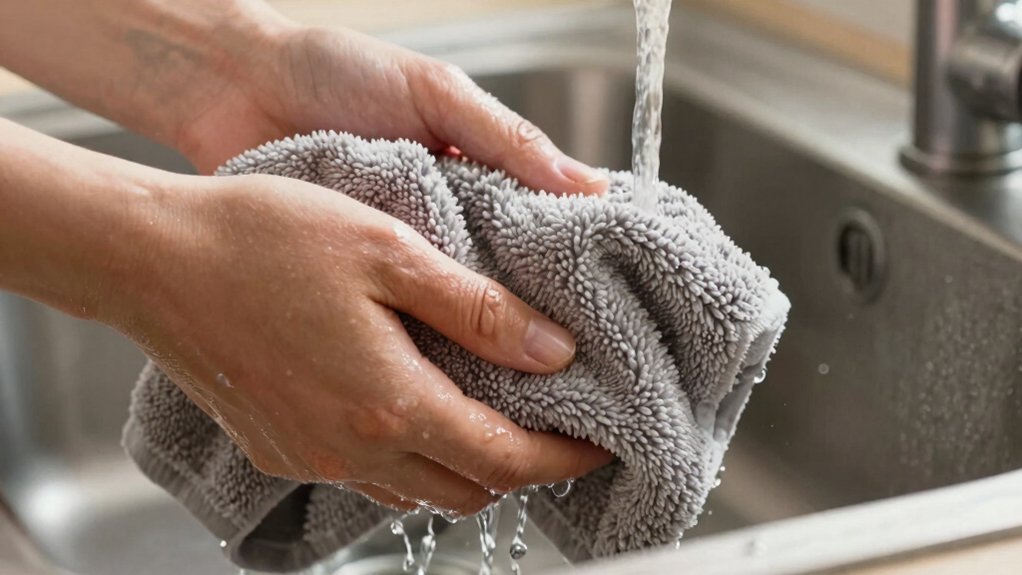
You should wash microfiber separately on cool to warm water (20–40°C) with a clear, low-alkaline liquid detergent. Use a minimal dose to avoid surfactant buildup. Skip powders, fabric softeners, and dryer sheets; they coat fibers and kill absorbency. Air-dry or tumble low; avoid high heat.
For softener contamination, run a warm wash with 1 cup white vinegar. Then rinse thoroughly. Follow care by GSM and task to maximize life and performance. You’ll learn practical restoration and selection tips next.
Quick Overview
- Wash microfibers separately from lint-producing fabrics to prevent clogging and reduce contamination.
- Use cool to warm water (20–40°C) and a clear, low-alkaline liquid detergent in minimal dose.
- Never use fabric softener or dryer sheets; they coat fibers and destroy absorbency.
- For softener residue, prewash warm with clear detergent. Then run a vinegar rinse (1–2 tbsp) and extra rinse.
- Air-dry or tumble low; avoid high heat to protect fiber integrity and drying performance.
Fiber GSM Comparison
If you’re choosing towels for a specific task, match GSM to purpose: Lower GSM (200–300) gives quick-drying, lightweight performance for interiors and dirty jobs. Medium (300–400) balances absorbency and versatility for general washing. High and very high GSM (400–1200+) increase plushness and water capacity for polishing, glass work, and large-vehicle drying; however, they take longer to dry and can cost more.
You’ll select by fiber GSM and towel density to meet task and vehicle size: Low GSM for grit and electronics, medium for all-purpose, and high for paint-safe polishing and glass. Check fiber density specs; higher fibers per sq in raise retention but slow drying. Match towel density to use: Quality can trump raw GSM.
| GSM Range | Typical Use |
|---|---|
| 200–300 | Dirty jobs |
| 300–400 | All-purpose |
| 400–800 | Polish/glass |
| 800+ | Large vehicles |
Laundry Temperature & Detergent Guide
Wondering which temperature and detergent combo gives the best cleaning without damaging microfiber? Use cool to warm laundry temperature: Cool (~20–30°C) for light soil, warm (~30–40°C) for heavy oil or grease. Avoid hot water that degrades fibers. For detergent choices, pick a clear, additive-free liquid with minimal enzymes and no powder residues.
- Measure: Use 1–2 teaspoons (light loads) or 1–2 tablespoons (very dirty) of liquid detergent; overdosing traps residue.
- Composition: Choose fragrance-free, low-alkaline formulas. If odors persist, add 1 tablespoon white vinegar in rinse (not detergent).
- Cycle alignment: Run gentle/delicate cycles, rinse thoroughly, and skip detergent entirely for lightly soiled hand washes to preserve microfiber performance.
Avoid Fabric Softener Residues
Fabric softeners leave a hydrophobic coating that reduces microfiber absorbency and grit-capturing performance; so you shouldn’t use them. You’ll spot residue as a waxy film, reduced absorbency, or streaking after rinses. You should switch to clear, additive-free liquid detergents or a measured teaspoon of specialized microfiber cleaner.
For stubborn buildup, run a hot-water wash with 1 cup white vinegar (if the care label allows) followed by multiple cool rinses. Avoid repeated high-heat cycles that can lock residues into fibers.
Why Fabric Softeners Harm
Because fabric softeners leave a thin, waxy coating on fibers, they clog the microscopic channels that give microfiber its superior absorption and cleaning power. You’ll notice reduced pickup and slower drying because the coating interferes with the unwinding process during mechanical agitation. This prevents fibers from separating and creating capillary action.
Treat softener use as an unrelated topic to proper microfiber maintenance: it’s not an optional freshness step but a performance-degrading contaminant. Avoid liquid softeners and dryer sheets entirely; residues persist through multiple washes and bind oils and dirt to the fiber surface.
To maintain capacity and longevity, use measured, additive-free detergent and periodic vinegar rinses instead of softening agents. That keeps channels clear and restores intended absorbency and cleaning efficiency.
Identifying Softener Residue
How can you tell if your microfiber towel has softener residue? Inspect the towel visually and tactically: Softener residue often leaves a dull sheen, sticky patches, or a greasy film that repels water. Perform a water-drop test; place a small droplet. If it beads, fibers are coated.
Check absorbency by timing a standardized 10 mL spill; extended wicking time indicates contamination. Smell can hint at fragrance carriers from fabric softener, but absence of scent doesn’t rule out residue. For laboratory confirmation, use a pH strip on a rinse sample: Unusually high surfactant readings suggest build-up.
When identifying residue, document location, severity, and prior wash settings to trace source. These diagnostics help you decide targeted rewash or soak remediation.
Proper Detergent Choices
Detergent choice determines whether your microfiber stays effective or gets coated with residues that repel water and reduce absorbency. You’ll use a clear, fragrance-free, additive-free liquid detergent at minimal dose (1–2 teaspoons per load) to avoid surfactant buildup. Avoid powders and products with optical brighteners or softening agents. For colored towels, select color safe dye options that won’t leach additives; test one towel first.
Skip detergent when hand-rinsing lightly soiled pieces. Don’t use fabric softener or dryer sheets: they deposit hydrophobic films. If odor persists, follow manufacturer-approved odor removers rather than repeated strong detergents. After cleaning, dry thoroughly and use mold prevention storage: store only fully dry towels in sealed, ventilated containers to prevent microbial growth and preserve hydrophilicity.
Vinegar Rinse Alternative
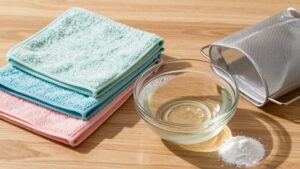
Want a simple, proven way to strip fabric-softener residues from microfiber? You’ll use a white vinegar rinse as a targeted, low-cost neutralizer: add 1–2 tablespoons of distilled white vinegar to the final rinse cycle to break down silicone and lubricants that clog microfiber. Run an extra rinse to ensure no acid remains.
Misconceptions clarified: vinegar won’t degrade microfiber when used diluted and rinsed thoroughly. It won’t remove the towel’s electrostatic cleaning ability. Vinegar is one of several eco friendly alternatives to chemical solvents that are safe, biodegradable, and inexpensive. Apply to machine or hand-wash processes, then air- or low-heat dry.
Don’t combine vinegar with bleach or detergent in the same cycle; sequence matters for effectiveness and safety.
Hot Water Avoidance Tips
Hot water damages microfiber by opening fiber cuticles and driving residual fabric-softener oils deeper into the pile. Therefore, avoid washing or rinsing microfiber above warm temperatures unless you’re presoak-treating heavily soiled items. You’ll limit oil entrapment by following avoidance tips: use cool or warm cycles, not hot; separate microfiber from cotton; and run shorter spin times to reduce mechanical stress.
Select low-sudsing, additive-free detergent choices and measure precisely to prevent build-up. If residues persist, perform a targeted vinegar rinse (1 tablespoon per load) in cool water to emulsify and flush oils without further damaging fibers. Inspect towels after rinse cycles. Repeat vinegar rinse rather than raising water temperature. Document any persistent hydrophobic patches for later restoration steps.
Restoring Affected Towels
How do you strip fabric-softener residues from microfiber without harming the pile? Start by isolating affected towels; do not mix with clean loads. Prewash using a high-rinse cycle with warm water and 1–2 tablespoons of clear, additive-free detergent to break oily coatings.
Then run a dedicated wash with 1 cup white vinegar (no detergent) on a gentle cycle to neutralize residues and aid odor remediation. Follow with two hot rinse cycles to flush particulates; avoid mechanical agitation that mats fibers. If residue persists, soak in a solution of 1:10 sodium carbonate (washing soda) to water for 30 minutes.
Then rewash. Air-dry or tumble on low. These restoration techniques restore absorbency and tactile loft without chemical softeners or fabric damage.
Frequently Asked Questions
Can I Wash Microfiber Towels With Cotton Rags Occasionally?
You shouldn’t wash microfiber with cotton rags occasionally. Can microfiber and cotton rag compatibility mix? Technically you can, but it risks lint transfer, reduced cleaning efficiency, and fiber damage.
You’ll preserve performance by separating by weave and color. Use minimal fragrance-free detergent, gentle cycle, cool/warm water, and low-heat drying or air-dry. For care nuances, pre-soak heavily soiled items and avoid fabric softeners, bleach, or high heat.
How Often Should I Replace Microfiber Towels?
You should replace microfiber towels every 1–3 years depending on use and wear. Establish a replacement schedule based on lifespan factors: frequency of use, soil levels, washing regimen, and visible fiber degradation.
Inspect for reduced absorbency, torn edges, or persistent odors. Retire towels once performance drops noticeably. For heavy professional use, replace closer to annually; light household use can last up to three years with proper care and minimal damage.
Can I Iron Microfiber Towels if Wrinkled?
No, you shouldn’t iron microfiber towels. You can prevent wrinkles by air-drying flat or hanging immediately after rinsing. Use low-heat tumble briefly only if necessary. High heat or steam melts synthetic fibers, reduces absorbency, and creates permanent damage.
If you must smooth them, shake and gently stretch while damp, then let them finish drying. For wrinkle prevention, avoid overpacking the dryer, and skip fabric softeners that coat fibers.
Do Microfiber Towels Attract Pet Hair More Than Other Fabrics?
Yes, do microfiber towels attract pet hair more than other fabrics? You’ll find they grab pet hair readily because microfiber’s fine fibers create static cling and high surface area; this increases lint attraction.
For best results, launder separately, use minimal detergent, avoid fabric softener, and air-dry or tumble low. Pre-shaking and presoaking heavily soiled pieces reduces embedded hair. Storing towels enclosed prevents further hair pickup.
Can I Bleach Microfiber Towels to Disinfect Them?
Don’t bleach microfiber towels; it damages fibers and reduces absorbency and electrostatic cleaning ability. For bleach safety, avoid chlorine: it breaks down the split fibers and voids performance claims.
Sanitation myths saying bleach is the only disinfectant aren’t accurate: hot water, proper detergent, a 24–48 hour presoaking with microfiber detergent, or appropriate disinfectants specified for microfiber provide sanitation without fiber degradation. Follow manufacturer guidance for safe disinfection.
Conclusion
You’ll maintain microfiber performance by washing towels separately with warm (not hot) water and a low-residue, phosphate-free detergent. Skip detergents with built-in softeners and never use liquid fabric softener or dryer sheets; they coat fibers and reduce absorbency and electrostatic pickup.
If residue appears, run a hot-water detergent-only wash or a white-vinegar rinse, then rewash. Air-dry or tumble on low. Regularly check GSM and inspect fibers to catch and correct buildup early.