Paint Correction Test Spot Method
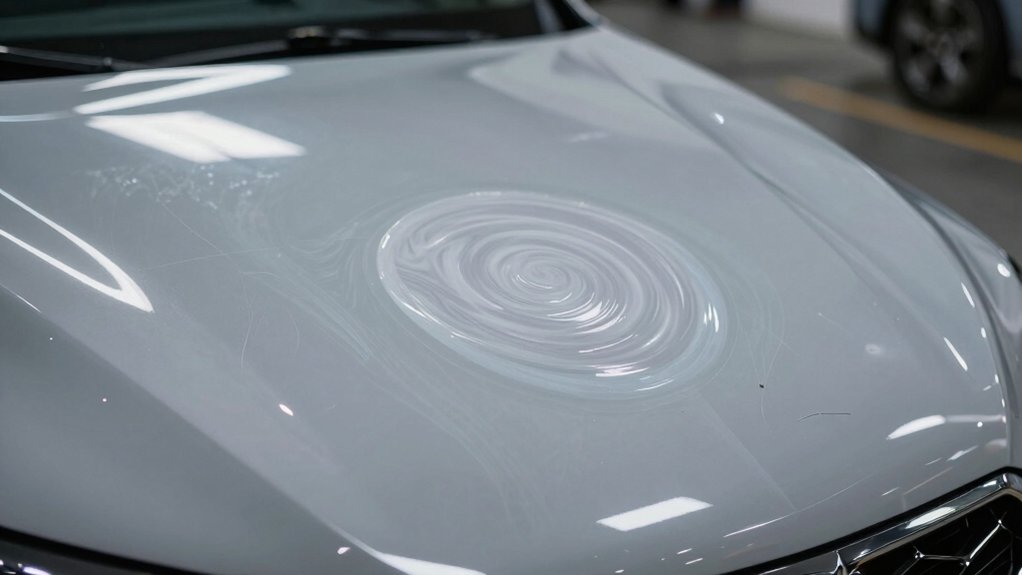
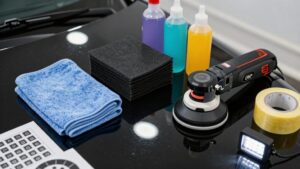
You’ll run controlled, documented test spots to find the smallest area that still shows results. Tape off comparisons and log every variable. Start with low speed and light pressure; increase RPM before pressure and use short passes while monitoring heat. Match pad aggressiveness to abrasive grit and paint hardness. Record open/curing times and wipe solvent-free between passes to avoid residue.
Change one variable at a time and keep consistent inspection lighting. Continue for step-by-step pairing, timings, and safety.
Quick Overview
- Use small, medium, and large taped test spots to evaluate uniformity, holograms, and contour behavior under consistent inspection lighting.
- Change only one variable per spot (pad, compound, speed, pressure, or dwell) to isolate cause-and-effect results.
- Start with low RPM and light pressure. Increase speed before pressure and monitor pad/paint temperature to avoid heat damage.
- Log pad type, compound grit, speed, pressure, dwell/open time, paint system, and visual outcome for repeatable corrective plans.
- Inspect with clean microfiber and solvent-free wipes after each pass. Note residue, haze, and cure timing before final evaluation.
Spot Size Comparison Chart
A clear, standardized spot-size chart helps you choose the right test area for evaluating paint correction. Larger spots (about 18–24 inches square) show overall uniformity and reveal subtle holograms or polishing gradients. Medium spots (12–18 inches) balance visibility with panel coverage for most hoods and trunk lids. Small spots (6–12 inches) let you isolate and experiment with aggressive combos or hard-to-reach contours without risking large-scale damage. Select the smallest size that still lets you visually compare taped-off and corrected areas under inspection lighting.
You’ll note the facts lack authoritative dimensions; therefore, you’ll treat spot size standards as recommended starting points within a rigorous test spot methodology.
| Spot Size | Typical Use | Inspection Goal |
|---|---|---|
| Large | Full-panel assessment | Uniformity, holograms |
| Medium | General testing | Coverage vs visibility |
| Small | Targeted trials | Aggression, contours |
Pad Speed & Pressure Guide
Moving from spot size selection to how you run the machine, pad speed and applied pressure determine cut rate, heat buildup, and finish quality. You’ll control two variables: pad speed and pressure guidance. Start low: medium speed for soft paint; higher for hard paint. Then increase only if defects persist. Use short passes, monitor pad temperature, and let the polish show work. Record each setting and result.
Begin at lowest effective pad speed and light pressure. Increase speed before pressure to limit heat buildup. Use steady, even pressure guidance, not abrupt changes. Pause to cool if pad or paint gets hot. Compare results and adjust one variable at a time.
You’ll produce repeatable, safe correction by methodically testing and logging outcomes.
Corrective Compound Compatibility List
When you compile a corrective compound compatibility list, compare abrasive grits and note which paint systems they suit, so you can predict cut versus finish. Record solvent profiles, residue tendencies, curing times, and recommended pad pairings to prevent contamination or staining.
Use the list to select one variable at a time during test spots, so you can isolate reactions and refine the final process.
Abrasive Grit Comparison
How finely should you match abrasive grit to paint condition and pad choice? You’ll compare abrasive grit ranges against defect severity and pad aggressiveness. You will map coarse grits to deep scratches with firm cutting pads, medium grits to moderate swirls with hybrid pads, and fine grits to light holograms with finishing pads.
Record grit size, compound brand, pad type, speed, and pressure for each test spot. Note paint system response: some clear coats polish quickly; others resist and need coarser grit or multiple stages. Change only one variable per spot so you isolate compatibility.
After each pass, inspect under consistent lighting, wipe clean, and document haze or remaining defects. Use the log to build a reliable compound–pad matrix.
Paint System Compatibility
After you’ve matched abrasive grit and pad aggressiveness to defects, you’ll need a corrective compound compatibility list that tells you which compounds and pads reliably work with specific paint systems. You’ll catalog OEM and aftermarket bases, clearcoat thickness ranges, and known responses to abrasives.
For each paint system, note recommended compounds, pad types, RPM windows, and pass counts. Record observed outcomes: cut level, finish clarity, and any haze. Always include surface hardness readings or subjective soft/hard classification so you can correlate aggression to substrate resistance.
Structure entries so you can quickly select a starting combo and a fallback. Update the list after each test spot. This methodical approach reduces guesswork and protects finish integrity while streamlining repeatable correction plans.
Solvent And Residue Concerns
Why should you care about solvents and residues? You must control solvent residue because it alters polish behavior, leaves haze, and can mask true defect removal during compatibility testing. Inspect the test spot after each pass with clean microfiber and solvent-free wipe to detect lingering films. Log product combinations and note any tackiness, whitening, or reduced cutting; these are signs of incompatible carrier solvents or additives.
If residue appears, solvent-blend strength and evaporation rate are likely culprits. Switch to a neutral compound or allow extended flash time before buffing. Include residue observations in your corrective compound compatibility list so you’ll repeat only proven mixes. This methodical recording prevents false positives and protects clear coat from build-up or chemical interaction.
Pad And Compound Pairing
Start with a concise matrix of pad and compound combinations you’ll test so you can quickly identify which pairings deliver the desired cut and finish on your specific paint. Create columns for pad selection (cutting, polishing, finishing), compound grade (heavy, medium, light), speed, pressure, and result notes.
For each cell, record defect removal, surface texture, and any haze needing follow-up. Test one variable at a time: keep pad type constant while changing compound; then swap pads while holding compound steady. Measure cure timing for products that require dwell before buffing; however, do not conflate that with the separate curing effects topic.
Use consistent passes and lighting. Document results immediately, and compile a corrective compound compatibility list to guide full-panel correction.
Curing Time Effects
You’ve already mapped pad and compound pairings; now account for how long each corrective product needs to sit before wiping or buffing. Cure time affects both cutting effectiveness and final clarity. You’ll document manufacturer-recommended curing time for every compound and note any deviations observed on your paint.
Measure open time by observing residue tack, smear patterns, and optical clarity after specified intervals. Record ambient conditions—temperature and humidity—and how they influence drying efficiency. Use consistent panel sections to compare results and log whether extended dwell increases cut or simply adds haze.
If a compound cures too quickly on soft paint, shorten passes or reduce heat. If it never breaks down, switch to a different chemistry. Build a compatibility list linking pad, compound, and ideal dwell.
Frequently Asked Questions
How Long Should I Wait Between Test Passes for Accurate Results?
You should wait about 10–15 minutes between test passes so compounds and polishes fully cool and haze settles. This will let you assess true correction. During that test spot timing window, wipe with a clean microfiber and inspect under proper lighting. Document results immediately.
Record product, pad, speed, pressure, and observations in your result documentation. If paint’s soft or compound leaves residue, extend timing and repeat until consistent, reliable reads emerge.
Can Test Spots Damage Clear Coat Depth Over Time?
Yes, repeated test spots can reduce clear coat depth over time if you’re abrasive or aggressive. When testing depth, keep passes minimal and use least-aggressive combos first to limit material removal.
Monitor environmental impact, such as UV and contaminants, that accelerate degradation. Change only one variable per test, document depth loss, and stop when removal approaches safe limits. You’ll preserve clear coat integrity by testing methodically and conservatively.
Should I Record Ambient Temperature and Humidity for Each Test?
Yes, you should record ambient temperature and humidity for each test. You’ll log ambient humidity and note surface volatility because both influence polish drying, pad behavior, and defect visibility.
Be methodical: record values before starting, during, and after passes. Link results to specific product/pad/speed combos, and repeat tests under varied conditions. That data helps you isolate variables and predict how corrections perform under different environmental stresses.
How Do I Document Results for Client Warranties or Records?
You document results by creating a structured report that records test spot methodology. Document measurements, ambient conditions, and photos before/after. Then note gloss retention readings, product/pad/speed used, and any adjustments. Save that report to warranty records, include date/time and technician signature, and attach client communications (estimates, approvals, follow-ups).
Keep files digital and backed up so you can quickly retrieve warranty evidence and demonstrate repeatable procedure adherence.
Can Test Spots Be Blended Into Surrounding Paint Afterward?
Yes, you can blend test spots into surrounding paint if you confirm blend compatibility and color matching first. You’ll feather edges progressively and reduce aggressiveness. Then, refine with lighter polish and appropriate pad.
Inspect under varied light; adjust technique if mismatches or haze appear. Document products, pad types, speeds, and outcomes for warranty records. Repeat until transitions are invisible and finish uniform before sealing with protection.
Conclusion
You’ve now got a clear, methodical approach to paint correction test spots: pick the right spot size, match pad speed and pressure, and pair compounds to abrasives and paint type. Watch solvents and residue, note curing times, and log results precisely.
Use that log to refine pad/compound combos and grit choices for each paint system. Repeat controlled tests until you reliably predict outcomes; then standardize the best settings for consistent, repeatable corrections.