Pump Sprayer Vs Trigger Sprayer Difference
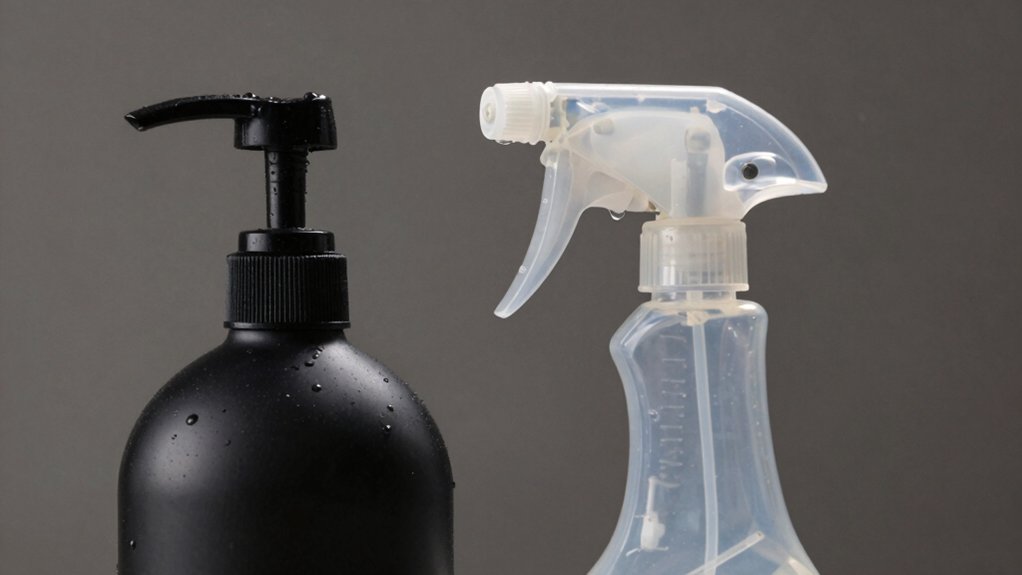
You’ll pick a trigger sprayer when you need precise, low-volume dosing and hand-held control. Its intermittent low-pressure strokes deliver measured milliliter doses and fine mist nozzles.
Choose a pump sprayer (diaphragm or centrifugal) for sustained higher flow and broader coverage. Pumps run continuous higher pressure, larger nozzles, and match application rate needs.
Material and seal compatibility with acids, solvents, bleach, or oils dictates selection and maintenance. The next sections explain specifics and trade-offs.
Quick Overview
- Trigger sprayers deliver small, controlled doses per squeeze, ideal for precise, spot treatments and low-volume tasks.
- Pump sprayers provide continuous, higher flow rates for covering larger areas and longer run times without repeated squeezing.
- Choose triggers for dose-sensitive chemicals and pumps when required GPM dictates nozzle size and pressure.
- Material compatibility (HDPE, PP, Viton, stainless) must match the chemical; bleach, acids, ammonia, and solvents have different requirements.
- Rinse, label, and dedicate equipment by chemistry. Incorrect materials or pressure can cause leaks, degradation, or unsafe sprays.
Pump vs Trigger Flow Rates
How much liquid you need per pass determines whether a trigger or pump sprayer fits your job: Trigger sprayers deliver controlled, small doses (typically 0.22–1.5 ml per squeeze, with high‑output variants around 3.5 ml). Pump systems produce continuous flows measured in GPM (from 1–5 GPM for 12‑V diaphragm units; up to 3–100+ GPM for large diaphragm or centrifugal pumps).
Choose triggers for precise, dose‑sensitive tasks and pumps for area coverage and high‑volume applications.
| Parameter | Typical Range |
|---|---|
| Trigger standard | 0.22–1.5 ml/squeeze |
| Trigger high‑output | ~3.5 ml/squeeze |
| 12V diaphragm pump | 1–5 GPM |
| Large/centrifugal pump | 3–100+ GPM |
You’ll select by required dosing, coverage rate, and fatigue. Don’t treat nozzle size or pressure as an irrelevant topic or go off topic here.
Nozzle Size & Pressure Limits
After matching flow rates to your task, you’ll need to size nozzles and set operating pressure to control droplet size, spray angle, and deposition. You’ll pick smaller orifices for fine misting and larger ones for coarse droplets. Nozzle compatibility with threads and materials matters to avoid leaks or mismatches. Know each sprayer’s pressure limits: trigger heads operate at low intermittent pressures; pump tanks sustain higher continuous pressures after pressurization.
Exceeding limits reduces life, changes droplet spectrum, and risks seal failure.
- Verify nozzle compatibility (thread size, seal type) before swapping tips.
- Match operating pressure to desired VMD (volume median diameter).
- Stay within manufacturer pressure limits to preserve performance.
- Use larger nozzles when pressure is marginal to maintain coverage.
Chemical Compatibility List
You’ll need a clear chemical compatibility list to match sprayer types to common reagents: an acid compatibility guide, solvent resistance chart, and notes on bleach/chlorine, ammonia/alkali, and oil-based chemicals.
Check materials (PET, HDPE, seals, and pump components) against each chemical class to avoid degradation or unsafe reactions. Use that matrix to choose trigger or pump designs and to define safe use, dilution, and cleaning procedures.
Acid Compatibility Guide
Why check acid compatibility before choosing a sprayer? You must confirm material resistance to prevent corrosion, leaks, and unsafe reactions. Create a focused chemical compatibility list with two word discussion ideas like “market trends, consumer preferences” to align product selection to user needs and regulatory shifts.
Assess common acids (acetic, citric, hydrochloric, sulfuric) against component materials: PET, HDPE, polypropylene, EPDM, Viton, stainless steel. For each acid, note concentration limits, temperature effects, and contact duration. Prioritize seals and valves; these fail first.
For robust use, choose Viton or stainless wetted parts at higher concentrations; for mild acids, select HDPE or polypropylene. Document testing protocols, inspection intervals, and safe handling procedures to ensure long-term performance and user safety.
Solvent Resistance Chart
How resistant are common sprayer materials to solvents? Which combinations will keep your equipment safe and leak-free? You’ll consult a solvent resistance chart that lists polymers (HDPE, PET, PP), elastomers (EPDM, NBR, Viton), and metal components against solvent classes: aliphatic hydrocarbons, aromatics, ketones, esters, and chlorinated solvents.
Use HDPE or PP for aliphatic resistance; avoid PET with strong ketones. Choose Viton or PTFE seals for aromatic and chlorinated exposure. Select NBR only for light oils and alcohols.
Note compatibility ratings (A: excellent, B: acceptable, C: avoid) and consider temperature and concentration. Don’t treat this as an irrelevant comparison to unrelated topics; it’s a focused tool for preventing swelling, degradation, leaks, and pump failure.
Bleach And Chlorine Use
Following the solvent-resistance guidelines, next assess how bleach and chlorine-based products interact with common sprayer polymers, elastomers, and metals to prevent corrosion, swelling, seal failure, and hazardous reactions. You’ll prioritize bleach compatibility: choose HDPE or polypropylene bodies, PTFE-lined components, and EPDM or Viton seals for short-term exposure.
Avoid natural rubber, PVC, and brass where concentrated sodium hypochlorite is used. Chlorine interaction oxidizes and embrittles these materials, causing leaks and particulate contamination. Stainless steel grades 316 resist pitting better than 304 under chlorinated environments.
Maintain dilution control, rinse systems after use, and replace seals on a scheduled basis. Label equipment for bleach use only and document material service life to mitigate unexpected failures and safety risks.
Ammonia And Alkali Safety
When you’re working with ammonia and strong alkalis, choose materials that resist caustic attack and avoid ones that absorb or soften. HDPE and polypropylene perform well for containers and sprayer bodies. PTFE or glass-lined wetted parts resist chemical attack. EPDM or Kalrez/Viton seals give the best short-term compatibility depending on concentration and temperature.
You should avoid natural rubber, PVC with plasticizers, and cellulose-based wicks that degrade. For trigger versus pump selection, favor trigger sprayers with chemically resistant internal components for intermittent use and small volumes. Select pump sprayers with robust diaphragm or piston materials for larger coverage.
Implement secondary containment, corrosion-resistant fasteners, and routine inspection intervals. Label systems clearly and maintain a written compatibility matrix with two word ideas, two word ideas for procurement.
Oil-Based Chemical Handling
Why choose specific materials for oil-based chemicals? You must select pump and trigger components resistant to hydrocarbons, esters, and heavy oils to prevent swelling, degradation, or seal failure. Use HDPE, fluoropolymers, or nitrile-compatible elastomers for wetted parts; avoid PVC and natural rubber.
For pump sprayers, prioritize pump efficiency: choose diaphragms and valves sized for viscous fluids and tanks with proper venting to maintain stable pressure. For trigger sprayers, focus on trigger ergonomics and material compatibility to reduce user fatigue while ensuring chemical resistance in pistons and springs.
Test seals, tubing, and nozzle materials against your formulation at operational temperature. Implement routine inspection and replace wear-prone components to maintain performance and avoid contamination or leak hazards.
Pesticide And Herbicide Notes
How should you choose sprayer materials for pesticides and herbicides to ensure chemical compatibility and safe application? You’ll select materials based on solvent type, pH, and active ingredient reactivity. Prefer HDPE or chemical-resistant fluoropolymers for acidic or solvent formulations; use stainless steel fittings where corrosion risk exists. Consult manufacturer compatibility charts and label restrictions. Never assume universal resistance.
For pump vs trigger decisions, consider required flow rates and application pattern: pumps deliver consistent continuous flow for broad-area herbicide work, while triggers give controlled intermittent dosing for spot pesticide applications. Check seals, gaskets, and nozzle materials—EPDM, Viton, or PTFE—matched to the chemistry. Rinse and decontaminate sprayers between chemistries and document compatibility per product safety data sheets.
Frequently Asked Questions
Can I Convert a Trigger Sprayer Into a Pump Sprayer?
Yes, you can convert a trigger sprayer into a pump sprayer in limited cases; however, it’s rarely practical. You’ll need a compatible pressure vessel or retrofit pump head, matched thread size and sprayer compatibility, airtight seals, and check valves to hold pressure.
You’ll also need materials rated for the liquid and safety valves. Modding risks leaks, reduced performance, and safety issues. Therefore, using a purpose-built pump sprayer is usually preferable.
Which Sprayer Is Better for Aerosol-Free Indoor Use?
For aerosol-free indoor use, a trigger sprayer is generally better. You’ll get on-demand, low-pressure droplets that reduce airborne drift and buildup. You won’t need pre-pressurization.
Trigger sprayer nozzles adjust for stream, mist, or foam so you can control coverage and minimize inhalable particles. Use appropriate dilutions and ventilation. For large areas, you might prefer a pump sprayer; however, expect higher dispersion and more product use.
How Do Storage Temperatures Affect Sprayer Performance?
Storage temperatures directly affect sprayer performance. Low temps reduce pressure and viscosity, causing weak spray or clogging. High temps increase vapor pressure, leakage, and premature actuator failure. You’ll need to consider material compatibility: seal swelling or embrittlement alters sealing and pump action.
Maintain temperature stability within manufacturer ranges to preserve nozzle calibration, foam quality, and valve function. Store in moderate, stable conditions and test before use after extreme exposure.
Are Replacement Parts Universally Compatible Across Brands?
No. Are replacement parts universally compatible? You’ll find limited universal compatibility; interchangeable components exist but aren’t guaranteed.
Manufacturers vary thread sizes, valve geometries, and seal materials. Therefore, replacement nozzles, pistons, and gaskets may not fit or perform. You should verify thread dimensions, seal types, and pressure ratings before substituting parts.
When possible, use OEM components or confirmed cross-reference charts to ensure safe and effective interchangeability.
Can Either Sprayer Be Child-Safe Locked or Tamper-Proof?
Yes, you can fit child-safe locks or tamper-proof features to both; however, subtopic relevance matters. Mechanisms differ. Trigger sprayers often use twist-locks, clip pins, or sealed trigger guards. Pump sprayers use pressure-relief valves, keyed caps, or tamper-evident seals.
Don’t make an irrelevant comparison between actuation style and locking integrity. Choose materials, threading standards, and seal types to meet safety specs and regulatory requirements for your application.
Conclusion
You’ll choose a pump sprayer when you need higher volumes and sustained pressure for larger jobs. Pick a trigger sprayer for lower flow, precision dosing, and spot treatments. Match nozzle size and pressure limits to the fluid’s viscosity and application rate. Always check chemical compatibility: acids, alkalis, solvents, oils, bleach, and pesticides differ in material resistance.
Follow manufacturer guidance and PPE requirements to prevent corrosion, leaks, spray pattern failure, and safety hazards.