Remove Pet Hair From Car Seats
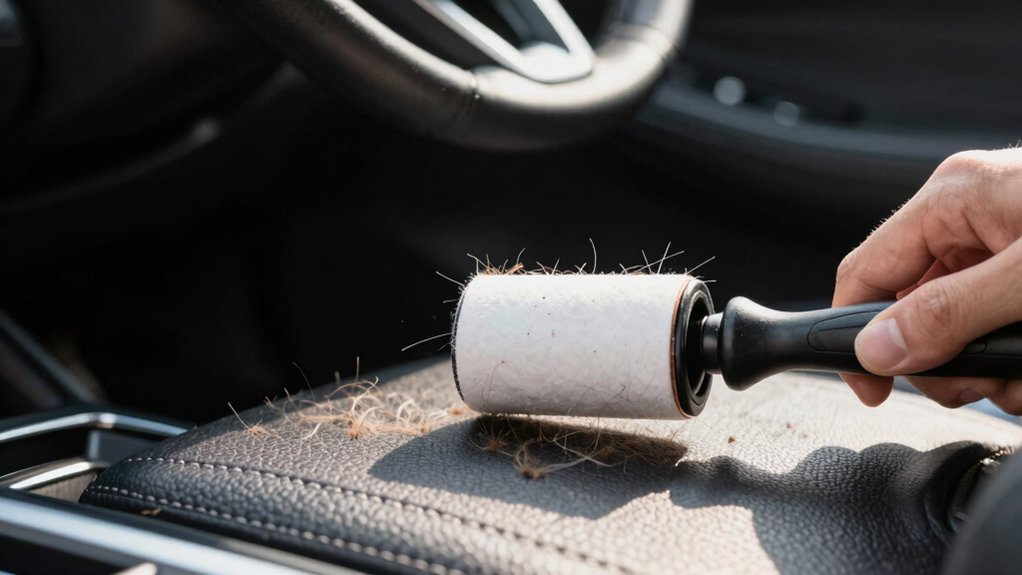
You can remove most pet hair fast by following a systematic sequence: pre-treat with a fabric-softener spray or a quick brush to loosen fibers. Aggregate loose hair with a rubber glove or microfiber brush (small for seams, large for flat areas). Then vacuum with a brush or turbo tool, and finish with a lint roller for stray strands.
For embedded fur, use a stiff-bristled brush or shop vac and repeat until the nap lifts. Keep going to see detailed tool choices and timing.
Quick Overview
- Start with a quick brush or rubber-gloved sweep to gather surface hair into removable clumps.
- Use a lint roller or adhesive tape for fast touch-ups on upholstery and seams.
- Vacuum thoroughly with a high-suction cordless or shop vac; use crevice tools and multiple passes.
- Pre-treat and loosen embedded hair with fabric-softener spray or a microfiber brush before vacuuming.
- Finish with a dense-nap brush (match size to area) or squeegee for stubborn strands. Then, re-vacuum.
Pet Hair Pickup Speed
How fast can you get pet hair out of your car? You’ll measure speed pickup by method and prep. Quick touch-ups (lint roller, rubber glove) take seconds per section. Expect minutes for full seat cleaning. Cordless vacuums (Dreame Z20/Z30) clear seats and carpets in one charge with 2-pass patterns; the Z30’s 310 AW finishes stubborn areas faster. A shop vac with a rubber nozzle removes embedded fur in a thorough session after brushing. Pre-treat and blow out crevices to cut total time.
| Method | Typical Time | Best Use |
|---|---|---|
| Glove/Lint roller | Seconds–minutes | Surface touch-ups |
| Cordless vac | 15–45 mins | Full seat/car cleanup |
| Shop vac + brush | 30–90 mins | Embedded pet hair |
Microfiber Brush Size Guide
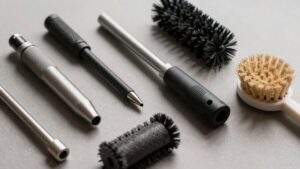
After you’ve picked a cleanup method and estimated time, choose the right microfiber brush size to match the job: small (2–3 in/5–8 cm) heads give you precision in seams and crevices. Medium (4–6 in/10–15 cm) heads balance coverage and control for seat surfaces. Large (7–10 in/18–25 cm) heads move quickly across flat areas like bench seats or floor mats.
Choose microfiber fabric with dense nap for electrostatic lift. Evaluate brush bristle size: finer bristles access woven fibers; stiffer bristles agitate embedded hair. Match head size to section and pressure to material to avoid abrasion. Maintain multiple sizes and replace heads when nap compresses. Your systematic selection speeds removal and reduces repeats.
- Small: satisfy precision.
- Medium: restore order.
- Large: reclaim space.
Stain-Removal for Embedded Hair
First, identify whether the hair is short, wiry, or fine so you can match tactics to fiber behavior. Then choose targeted tools: rubber gloves or squeegee for surface clumps, lint rollers or a soft-bristled vacuum attachment for embedded strands. Use a fabric-softener spray to loosen stubborn fibers before vacuuming with a specialist nozzle.
Finish by treating any remaining fabric residue with an appropriate cleaner and blotting to prevent reattachment.
Identify Hair Type
Which type of pet hair you are dealing with will dictate the stain-removal method you choose, so inspect the hair’s color, coarseness, length, and how deeply it’s embedded in the fabric. You need to identify type quickly: fine undercoat, medium guard hairs, or coarse topcoat.
Note texture differences. Fine hairs cling via static and weave into nap, while coarse hairs resist tack and form surface piles. Measure embed depth by running your fingernail across the fiber pile; shallow hairs lift with light friction, while deep ones require fiber relaxation.
Document color contrast against upholstery to anticipate staining risk. Record findings before treatment so you can select solvent strength and agitation level appropriate to hair morphology and embedment.
Choose Proper Tools
How will you match tools to the hair you’re treating? Assess density, fiber length, and embedding depth, then select tool types accordingly. Start with coarse removal tools (vacuum with rubber-bristle nozzle, shop-vac with Fur-Eel) to extract bulk and reduce surface friction.
Next, use medium-contact tools (squeegee brush, rubber pet-hair removal brush) to aggregate remaining strands into piles. For tightly embedded fibers, use adhesive tools (lint roller or Velcro curler) in short passes to lift residual filaments. Integrate a fabric-softener spray just before final passes to relax fibers and ease extraction.
Plan a defined cleaning sequence: pre-vacuum, aggregate, lift with adhesive, then final vacuum. Follow this order to minimize fiber re-embedding and optimize efficiency.
Loosen Embedded Strands
When hair embeds into upholstery fibers, you’ll need targeted treatments that relax the fabric and break the bond holding strands in place. Start by applying a mild wetting agent: a 2–3 tsp fabric-softener solution in water. Use light, even misting to avoid saturation; let it dwell for 30–60 seconds to soften fibers.
Then, follow with a rubber-bristle nozzle or squeegee stroke to mobilize loosened hair before lifting with an adhesive tool or vacuum. After agitation, work methodically across panels in overlapping passes to loosen embedded strands without abrading fibers. Blot excess solution with a microfiber to minimize fabric residue removal issues.
If residue remains, rinse the microfiber and repeat light misting, dwell, and agitation until strands release. Finish with a final dry blot to prevent spotting.
Vacuum With Attachments
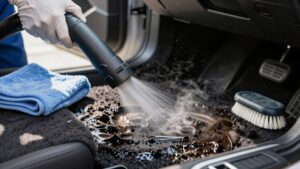
Want the deepest clean for embedded pet hair? Use vacuum attachments systematically. Start with a crevice tool to reach seams. Then switch to a motorized brush for dense fabric. Attachments with rubber bristles dislodge hair without damaging fibers; move slowly against nap in overlapping passes.
If you used a light fabric softener spray earlier to loosen strands, vacuum immediately to capture loosened fibres and moisture. For seat edges and under bolts, use a thin nozzle and steady suction to avoid scattering. Empty the canister or replace the bag mid-session if airflow drops. Inspect tool heads for clogged hair; clear regularly to maintain suction.
Finish with a wide upholstery head for a uniform pass and visual confirmation of removal.
Treat Fabric Residue
Why does residue from embedded pet hair hold stains and odors so stubbornly? You’ll treat fabric residue by isolating affected zones, testing solutions, and applying controlled agitation.
First, blot visible soiling; don’t rub. Mix a mild enzymatic cleaner or diluted fabric softener solution in a spray bottle (2–3 tsp per cup water) for protein- and oil-based residues. Lightly mist the area, let dwell 3–5 minutes, then agitate with a soft nylon brush or RubberGloves fingertips sweeping in one direction to lift loosened fibers. Dabbing with a microfibre towel transfers residue for residue removal; repeat until transfer stops.
Finish by vacuuming with a specialist nozzle to extract loosened particulates and moisture. Dry thoroughly to prevent re-soiling and odor rebinding.
Frequently Asked Questions
Can Rubber Gloves Scratch Leather Seats?
No, rubber gloves won’t normally scratch a leather finish if you use them correctly. You’ll apply light, even pressure and sweep in one direction to lift loose hair without abrasive dragging.
Avoid gloves with textured or gritty surfaces and don’t scrub hard over cracked or worn areas. Test a small hidden spot first. After dehairing, wipe with a damp cloth and apply a leather conditioner to preserve the finish.
Are Seat Covers Machine-Washable?
Yes, many specialist pet seat covers are machine-washable. You’ll follow manufacturer instructions for water temperature, cycle type, and fastener closure to protect materials and stitching.
Machine washing supports regular pet hair prevention and lets you maintain recommended cleaning frequency: weekly or after messy trips. Use mild detergent; avoid fabric softener on waterproof layers. Tumble-dry low or air-dry to preserve waterproofing and fit.
Will Fabric Softener Damage Upholstery?
No, fabric softener won’t usually damage upholstery if you dilute it properly and test first. Fabric softener can aid upholstery safety by loosening embedded pet hair without harming fibers.
Mix 2–3 teaspoons per cup of water, spray lightly on a hidden patch, wait five minutes, blot, and check for color change or stiffness. If safe, wipe and vacuum; avoid excess saturation and repeated use on delicate or non-fabric surfaces.
How Often Should I Deep-Clean Car Seats?
You should deep clean car seats every 3–6 months, adjusting for usage and shedding levels. For heavy pet travel or visible pet hair reduction needs, clean monthly and perform targeted vacuuming or rubber-glove/squeegee passes weekly.
Deep cleaning frequency depends on fabric type, exposure to dirt, and allergy concerns. Use pre-vacuuming, fabric-softener spray treatments, specialist nozzles, and seat covers to optimize results and extend intervals between full deep cleans.
Can Pet Hair Trigger Car Airbag Sensors?
No, pet hair alone won’t usually trigger airbag sensors. However, it can interfere with sensor performance if it accumulates around sensors or wiring. You should inspect under seat creases and sensor housings for dense fur. Vacuum or remove buildup, and avoid obstructing sensor vents or connectors.
Regular cleaning and seat covers reduce contamination risk. If you suspect sensor faults after heavy soiling, have a qualified technician diagnose and test the system.
Conclusion
You’ve now got a clear, methodical plan to remove pet hair from car seats. Start by identifying hair type and loosening embedded strands with a microfiber brush sized to the job. Choose tools that match fabric and hair density. Then vacuum using targeted attachments.
For stubborn residues, apply a focused stain-removal technique. Work systematically from broad strokes to detail cleanup to restore fabric integrity and minimize repeat buildup. This method is efficient, repeatable, and protective of your upholstery.