Rust Prevention Basics for Car Underbody
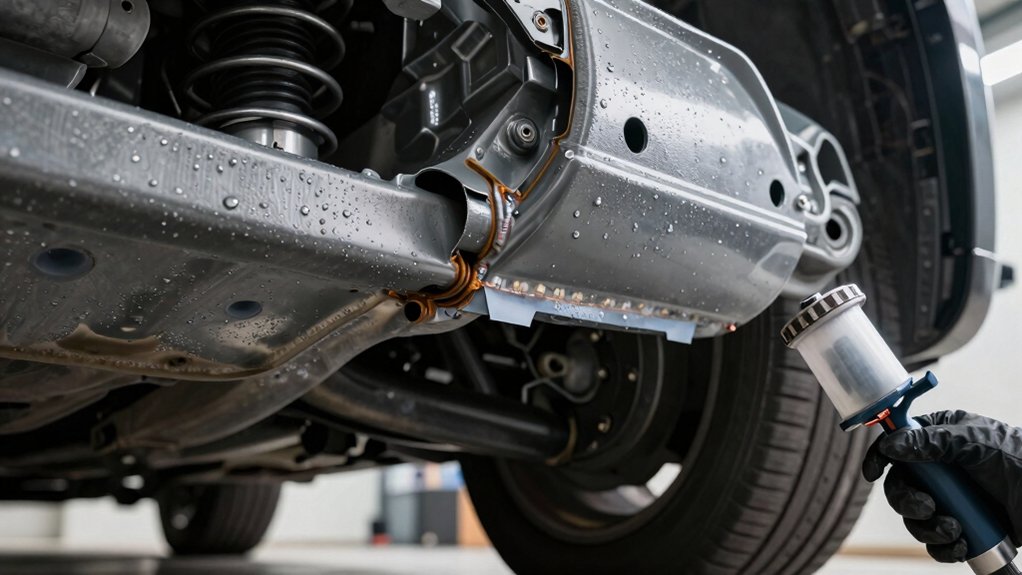
You should limit salt contact, wash and dry the undercarriage regularly, and inspect seams, welds, and cavities often. Map your route exposure and increase wash cadence in coastal or Salt Belt areas.
Choose coatings by component: wax for seams, rubberized for stone-prone panels, and epoxy/urethane for structural parts. Use penetrating oils for crevices.
Schedule visual checks every few weeks. Schedule seasonal/professional inspections annually or semiannually in high exposure. Conduct post-winter follow-ups to catch corrosion early. Continue for step-by-step procedures and schedules.
Quick Overview
- Regularly wash the undercarriage, especially after driving on salted roads or coastal routes, to remove chloride deposits.
- Inspect seams, welds, fasteners, and cavities every few weeks. Inspect them seasonally for early corrosion signs.
- Apply appropriate underbody coatings (wax, rubberized, or epoxy) based on part, adhesion needs, and exposure.
- Use penetrating oil inhibitors in crevices and topcoat with a physical barrier; reapply annually or after heavy exposure.
- Schedule professional inspections yearly, or every 6 months in high-salt regions. Document treatments and damage.
Salt Exposure Map
When you drive in Salt Belt states or along the coast, road salt and salty air accelerate underbody corrosion. Map your routes and service schedule to match local exposure patterns. You assess salt exposure by location, seasonal salt-use, and route dynamics. Salt Belt and coastal zones demand more frequent washing and inspections.
Compare coastal vs inland risks: coastal zones see airborne chloride deposition. Inland Salt Belt roads have heavy de-icing residue. Use route selection to avoid plowed edges and standing slush. Adjust maintenance cadence: underbody washes biweekly in high exposure, monthly in moderate. Monitor PennDOT and local salt schedules to predict peak exposure. Plan hot-water washes after storms to remove entrenched deposits and prevent accelerated oxidation.
| Factor | Recommendation |
|---|---|
| Region | Map risk zones |
| Season | Time washes to salt use |
| Route | Avoid edges |
| Method | Hot-water underwash |
| Cadence | Biweekly–monthly |
Recommended Underbody Coatings
Why choose one underbody coating over another? You’ll weigh adhesion, flexibility, longevity, and chemical resistance to match vehicle use and environment. Choose systems that pair a durable underbody coating with a compatible rust inhibitor for both barrier and chemical protection.
- Wax-based coatings: flexible, self-healing, good for seams; reapply annually.
- Rubberized undercoats: excellent impact resistance and waterproofing for stone-prone areas.
- Epoxy/urethane coatings: hard, long-lasting barrier for structural components; requires clean, primed metal.
- Penetrating oil inhibitors: treat crevices and active corrosion; then topcoat with a physical barrier.
Apply after thorough cleaning and repair. Follow manufacturer cure times and safety protocols to ensure optimal corrosion control.
Rust Inspection Interval Guidance
You should inspect the underbody on a regular schedule: perform quick visual checks every few weeks. Perform a more detailed seasonal inspection at each weather transition, and perform a mileage-based service inspection every 6,000–12,000 miles.
Always run a thorough post-winter examination as soon as roads are clear. Immediately recheck after known salt, flood, or off-road exposure. After any high-exposure event, follow a defined after-exposure checklist: wash the undercarriage, dry critical joints, and target-spray inhibitors or touch-up coatings where needed.
Inspection Frequency Recommendations
How often should you inspect your vehicle’s underbody for rust? Inspect visually every month if you drive in salted, coastal, or muddy conditions; otherwise, inspect quarterly. After heavy exposure events, such as road salt, deep water, or off-road use, perform an immediate targeted check.
Use a lift or jack stands to view wheel wells, seams, suspension mounts, and floorpan edges. Document damage and note underbody aesthetics and any changes in coating color options where finishes are applied. Conduct a detailed professional inspection annually, including minor abrasions, pinholes, and undercoating adhesion tests.
If you find active corrosion, increase inspection cadence to monthly until repairs and inhibitor treatments restore protection. Maintain inspection records to track progression and validate preventive treatments.
Seasonal Check Schedule
Building on the inspection frequency guidelines, set a seasonal check schedule aligned with local climate patterns and road treatment practices to catch corrosion risks before they worsen. You’ll inspect at each major seasonal change: pre-winter, mid-winter if you’re in heavy-salt regions, spring thaw, and late summer; adjusting cadence for local de-icing usage.
At each check, verify protective films, undercoating integrity, and fastener tightness. Document areas showing early pitting or coating delamination. Use lift access or ramps to examine seams, drain points, and suspension mounts. Pay attention to undercarriage cosmetics for trapped debris that holds moisture.
Replace or treat compromised coatings immediately and reapply rust inhibitors where mechanical protection is thin. Record findings and corrective actions to inform the next seasonal interval.
Mileage-Based Inspection Intervals
Why inspect by mileage rather than calendar alone? You should schedule corrosion inspection based on usage because exposure accumulates with miles, not months. Set mileage intervals tied to driving conditions: 5,000–10,000-mile checks for high-exposure (salted roads, off-road) and 15,000–20,000-mile checks for normal urban use.
At each interval, perform a systematic underbody assessment: lift vehicle, remove debris, and inspect seams, suspension mounts, and welds for coating failure, pitting, or active rust. Record findings, measurements, and corrective actions to compare trends between intervals. If you haul loads or drive in corrosive environments, shorten intervals by half.
Use mileage intervals alongside seasonal checks to target inspections to actual exposure and to prioritize preventive treatments and repairs efficiently.
Post-Winter Examination Timing
Because winter exposes your underbody to concentrated salt, slush, and road grit, schedule a focused post-winter examination within 2–6 weeks after the final thaw or after your vehicle’s first extended dry spell. Prioritize high-mileage or salt-exposed routes for earlier inspection. Lift the vehicle, remove accumulated deposits, and inspect welds, seams, suspension mounts, brake lines, and fuel-tank areas for coating breaches, pitting, or active corrosion. This way, you can document findings and apply targeted treatments before spring moisture reactivates any latent rust.
For a systematic post-winter inspection, follow a checklist-driven approach: clean problematic zones, use magnification and light to detect micro-pitting, probe suspect coatings, measure cavity-wax integrity, and note locations for prioritized sealing or inhibitor application. Perform an after snow check immediately after heavy salt exposure.
After-Exposure Inspection Steps
After your post-winter examination, set a regular inspection cadence based on recent exposure severity: inspect immediately after heavy salt or slush events. Inspect again within 2–4 weeks following any prolonged wet period. Schedule quarterly checks during the high-corrosion season.
You should perform a systematic walkaround and undercarriage probe: check suspension mounts, seam joints, brake lines, and chassis welds for fresh pitting, blistering, or flaking. Use a flashlight and mirror. Document findings with timestamps and photos for accurate aftercare documentation, and note whether protective coatings remain continuous.
Pay attention to underbody aesthetics only insofar as coating integrity and contamination indicate corrosion risk. Record corrective actions, cleaning, or touch-ups. Set follow-up inspections based on severity scores you assign.
Professional Inspection Frequency
How often should you schedule a professional rust inspection? You should arrange a professional inspection at least once a year and more often if you operate in salty or humid environments; typically every 6 months in winter-prone regions.
During inspections, technicians assess structural members, seams, and suspension mounts for early corrosion and verify previous coatings. If you drive on salted roads, schedule an inspection after the winter season and again mid-year.
Inspections should include targeted cleaning, thickness checks, and evaluation of coating adhesion to determine necessary coating preparation. Promptly address detected breakdowns: remove rust, prepare surfaces to specified profiles, and apply appropriate inhibitors or undercoating.
Regular, interval-based professional inspections minimize repair scope and extend underbody service life.
Frequently Asked Questions
How Often Should I Wash the Undercarriage in Winter Months?
You should wash the undercarriage every 1–2 weeks during winter. That winter wash cadence prevents salt and grime buildup. For undercarriage maintenance, increase frequency after heavy snow, salted roads, or driving through slush.
Use hot water and targeted cleaners to remove deposits. Then dry or reapply protective oils/coatings as needed. Schedule professional inspections monthly if you’re in severe climates to spot early corrosion and treat it promptly.
Can Electronic Rust Prevention Systems Damage Vehicle Electronics?
They generally won’t damage vehicle electronics if installed correctly. However, you should verify compatibility because electrical interference and sensor vulnerability are real risks. You’ll need a professionally grounded unit, proper isolation from CAN and sensor lines, and manufacturer-validated installation procedures.
If installation is sloppy or the device malfunctions, it can introduce noise, upset sensors, or create grounding loops. Have a qualified technician assess vehicle electronics and test systems after fitting.
Is Undercoating Safe for Exhaust and Brake Components?
Yes, is undercoating safe for exhaust and brake components? You should avoid spraying hot exhaust, flexible joints, catalytic converters, brake lines, pads, rotors, and wear surfaces.
Is undercoating appropriate when applied selectively and after masking heat- and friction-sensitive parts? Yes, use high-temperature, manufacturer-approved products near exhaust, and keep coatings off brake friction areas. Inspect and reapply as needed; ensure professional prep so the barrier won’t trap moisture or impair function.
How Do I Remove Trapped Interior Moisture to Prevent Rust?
You remove trapped interior moisture by using targeted removal techniques and sustained moisture mitigation. Start by drying carpets and seats with shop vacs and portable heaters. Then run HVAC on heat with fresh-air mode to purge humidity.
Use desiccant packs or silica gel in storage areas and under seats. Install a ventilating moisture absorber for long-term control. Inspect door seals; replace damaged weatherstripping and treat any wet insulation promptly.
Are DIY Rust Inhibitor Sprays as Effective as Professional Treatments?
DIY rust sprays can help short-term, but they’re not as durable as Pro treatments. Homemade sprays and DIY rust formulas penetrate and neutralize minor corrosion. However, professional coatings and treatments use thicker, engineered barriers and longer-lasting inhibitors applied after surface prep.
You’ll save money with DIY for spot fixes; however, choose professional coatings for structural protection, warranty-backed application, and superior resistance in harsh, salt-prone environments.
Conclusion
You’ve covered the essentials: know your salt exposure, pick an underbody coating rated for your environment, and inspect on a predictable schedule. Use the seasonal, mileage, and post-exposure checkpoints to catch corrosion early. Follow the after-exposure checklist to document damage and take immediate remedial action.
If you’re unsure or detect structural concerns, have a professional inspect at the intervals recommended for your exposure level to protect safety and resale value.