Tire Pressure Check Frequency
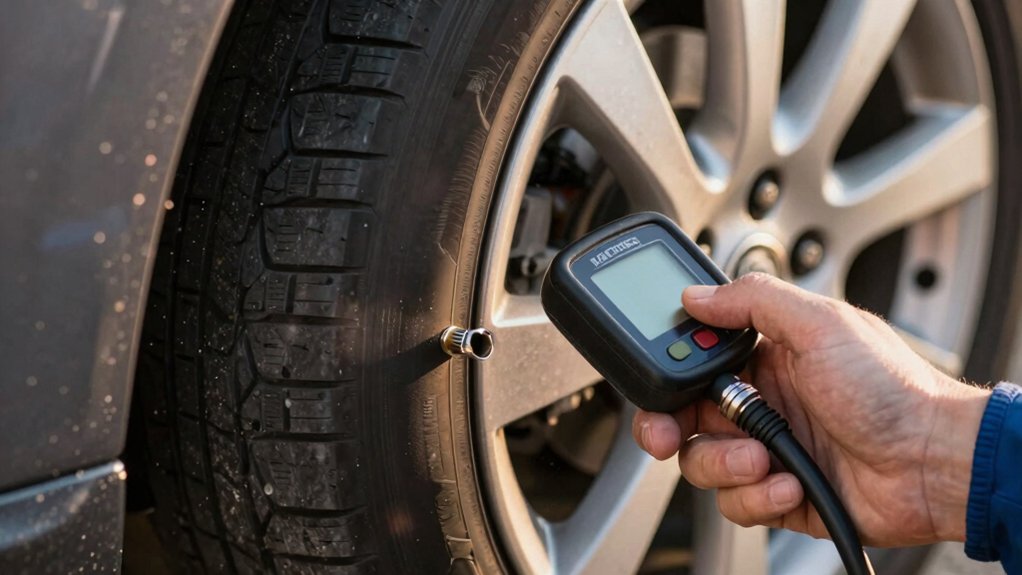
You should check your tire pressure at least once a month and before any long trip. Do it weekly for high-use fleets and every two weeks for trucks or buses.
Take three readings per tire (including the spare) with a calibrated gauge when tires are cold. Note outdoor temperature and adjust to the vehicle’s door-sticker PSI; avoid bleeding air on hot afternoons.
In cold weather, monitor more often for 1–2 PSI drops. More tips follow below.
Quick Overview
- Check tire pressure monthly for typical passenger vehicles, following the vehicle door-sticker recommended PSI.
- For fleets or high-usage vehicles, check weekly and log readings to detect trends and issues.
- Inspect truck and bus tires every two weeks, and verify spare tire pressure each check.
- Take three readings per tire with a calibrated gauge when tires are cold: morning or after three hours parked.
- During temperature extremes, monitor more often and adjust to the door-sticker PSI when tires are cold. Do not base adjustments on hot readings.
Tire Pressure Frequency Chart
Wondering how often you should check your tires? You’ll use a simple frequency chart: monthly for average drivers, biweekly for heavier use, weekly for fleets. That chart helps bust tire pressure myths and reminds you to include sensor calibration in routine checks.
| Vehicle Type | Frequency | Notes |
|---|---|---|
| Passenger car (avg) | Monthly | Check cold; follow door sticker |
| Fleet/high usage | Weekly | Monitor with tire systems |
| Trucks/buses | Every 2 weeks | Follow OEM pressure specs |
You’ll measure cold. Take three readings per tire and verify spare. Increase checks after long trips or when temps drop >10°F. Calibrated gauges and occasional sensor calibration keep readings accurate and prevent underinflation problems.
Monthly PSI Reminder Sticker
How often do you forget to check tire pressure until a light pops on? A Monthly PSI Reminder Sticker solves that by giving you a visible prompt every month so tire maintenance doesn’t slip. Place it on the dash, near the driver door, or on a garage tool chest. Use a durable sticker you can write the next check date on and update after measuring cold pressures.
Treat it as part of routine vehicle care: check all four tires plus the spare at the marked date, compare to the vehicle door sticker or manual, and record readings.
- Put sticker where you’ll see it daily.
- Mark date after each pressure check.
- Replace if worn or unreadable.
Seasonal Temperature Adjustment Notes
You should account for seasonal temperature swings because cold air typically drops tire pressure and hot conditions can cause apparent overinflation. Check pressures when temperatures change by about 10°F. Measure tires cold (preferably in the morning) and avoid adjusting after short daily heat gains.
For seasonal adjustments, follow your vehicle’s recommended PSI. Add only the small, specified load increment when carrying heavy cargo.
Cold Weather Pressure Drop
Why does tire pressure fall in cold weather, and what should you do about it? Cold effects cause the air inside tires to contract, typically dropping 1–2 PSI as temperatures fall; rapid cold snaps can lower pressure more.
You should increase winter monitoring to monthly or every 2–4 weeks. Check when tires are cold, either in the morning or after three hours parked. Use the vehicle door sticker for target PSI. Take three readings per tire for accuracy, and include the spare.
If pressure is low, add air to the recommended pressure; don’t overinflate to compensate for future warming. Record readings so you notice trends. Inspect for leaks if you see persistent loss beyond typical monthly drop.
Hot Weather Overinflation Risk
Cold weather makes tires lose pressure, but hot weather can push it the other way: air expands as temperatures rise, often adding several PSI and risking overinflation. You should monitor tire pressure more often during heatwaves or prolonged warm spells because even a few PSI change alters handling and wear.
Check pressures when tires are cold in the morning before driving. If you measure mid-afternoon, expect readings higher by several PSI and adjust only to the vehicle sticker recommendation. Don’t bleed tires down based on a hot reading; instead, record the value and recheck cooler.
Watch for bulging tread or harsh ride that signal overinflation risk. If you carry heavy loads, follow the manual’s load-adjusted pressures rather than inflating for ambient heat.
Daily Temperature Swings
How often should you account for daily temperature swings when setting tire pressure? You should factor in daily temperature changes whenever you check pressures, because air contracts at night and expands by day. A morning check gives a cold baseline; if temperatures rise substantially during the day, you’ll see a pressure fluctuation of a few PSI.
For routine monthly or biweekly checks, measure tires cold before driving to avoid inflated readings. If you park overnight in a location that gets large daytime heating, recheck before long trips or heavy loading. Use the vehicle sticker target PSI as your reference and adjust only when consistently outside the recommended range.
Record readings and local temps for a week to learn typical daily pressure behavior.
Seasonal PSI Adjustment
Wondering how to adjust tire pressure as the seasons change? You’ll use seasonal psi as a guide: anticipate about 1–2 PSI drop when temperatures fall roughly 10°F and compensate accordingly.
Before cold snaps, check pressures when tires are cold and add enough air to match the sticker or manual recommendation, accounting for the expected temperature adjustment. In spring and summer, expect pressure to rise; release small amounts if needed to avoid overinflation.
For consistent driving or heavy loads, add the manufacturer’s recommended extra 2 PSI, then correct after the season stabilizes. Keep a simple log of readings and outdoor temperatures so you spot trends.
Seasonal temperature adjustment keeps handling predictable and prevents wear without constant overcorrection.
Pressure Check Timing
You already know to account for seasonal shifts, so now focus on timing your pressure checks to match temperature behavior: check tires when they’re cold (before driving or after a 3-hour cool-down). Repeat checks any time outdoor temperatures swing about 10°F since you’ll typically see ~1–2 PSI change per 10°F.
Check monthly as a baseline; increase to every two weeks in sudden cold snaps. Move to weekly for heavy use or prolonged temperature volatility. Take three readings per tire for consistency and record them to spot trends. For short trips after a cold night, recheck midmorning.
Two word discussion ideas about Subtopic not relevant to the Other H2s listed above produce, discussors? will help guide focused checks without overlapping tool recommendations.
Tire Pressure Tools
Want precise tire pressure readings across seasons? You should pick tools that account for temperature swings and give repeatable results. Compare tire gauge reviews to find durable analog gauges for cold mornings and portable digital options for hot afternoons.
Prioritize digital sensor accuracy if you want quick, consistent readings: look for temperature-compensated sensors and clear calibration data. Keep a reliable hand gauge in the glovebox and a digital inflator at home for adjustments.
When temperatures drop, recheck pressures within a few days and add the recommended PSI from your door sticker. Test each gauge against a known standard periodically; store sensors away from extreme heat or cold, and record seasonal readings so you spot persistent variances early.
Frequently Asked Questions
How Often Should Commercial Fleet Tires Be Checked During Deliveries?
You should check commercial fleet tires weekly during deliveries, increasing to every two weeks at minimum for heavy-use routes. You’ll perform frequent inspections as part of fleet maintenance; checking pressures when tires are cold, recording three readings per tire, and inspecting for damage or leaks.
For vehicles in constant daily service, you’ll monitor pressures more often. You should use tire management systems when possible to catch drops quickly and prevent downtime.
Can Tire Pressure Monitoring Systems Replace Manual Checks Entirely?
No, you shouldn’t rely solely on TPMS; tire sensor maintenance still matters and manual checks necessity remains. TPMS gives real-time alerts, but sensors can fail, drift, or miss slow leaks.
You should verify pressures manually monthly, after temperature shifts, and before long trips. Perform sensor diagnostics during service, replace aging sensors, and keep a calibrated gauge handy so you catch issues TPMS might overlook.
Should I Add Air After a Short Drive if Pressure Seems Low?
Yes, do not add air immediately after a short drive. You will get inaccurate readings from warm tires; wait about 3 hours or measure when tires are cold.
Adjustment timing matters: after cooling, check pressure against the door sticker and add air if it is still low.
Consider driving impact. Heavy loads or long trips raise pressure, so recheck when temperatures and load return to normal to avoid overinflation.
How Does Tire Age Affect Recommended Pressure Checks?
You should check older tires more often because tire aging increases risks and affects pressure recommendations. As tires age, rubber hardens and seals degrade; so pressures can drift or leaks form.
Inspect and measure aging tires monthly or biweekly depending on mileage. Check for cracks or bulges and monitor tread wear. Replace tires as recommended: doing so reduces unexpected failures and keeps pressure control reliable.
Do Aftermarket Tire Sensors Need Regular Calibration?
Yes, you should calibrate many aftermarket sensors after installation and periodically. You’ll perform aftermarket calibration to sync sensors with your vehicle’s TPMS; this is especially important after tire rotations, replacements, or battery changes.
Include sensor maintenance in routine checks: verify readings when tires are cold, update sensor IDs in the vehicle, and replace aging batteries. Regular calibration and maintenance prevent false alerts, ensure accuracy, and extend sensor life.
Conclusion
You’ve seen the chart, sticker idea, and seasonal tips: now make checking tires a simple habit. Aim for monthly checks, plus whenever temperatures shift or before long trips.
Check cold tires with a reliable gauge, adjust per the placard, and don’t overinflate on hot days. Keep a sticker on the dash, carry a portable gauge or inflator, and check pressures in the morning after temperature drops.
Small routine checks save fuel, extend tread life, and improve safety.