Towel Folding Methods for Detailing
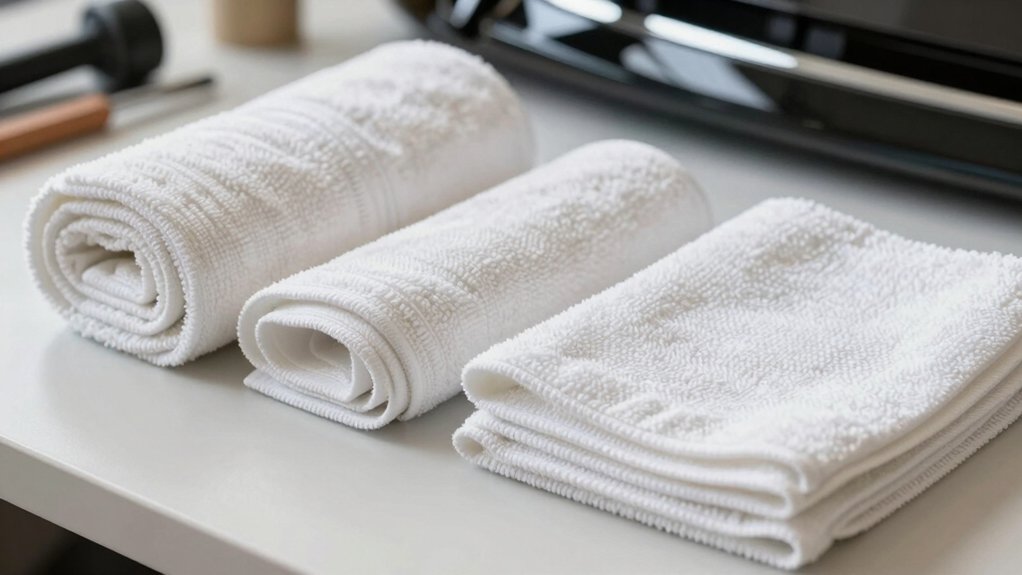
Match towel size, fold count and weave to each task so you get the right surface, pressure and fresh sides every pass.
Use 15–20″ towels folded 1–2 times for mirrors and trim; use 20×31″ folded 2–4 times for full panels.
Large 74–90″+ towels should be halved or quartered for drying.
Prefer microfiber (low lint); launder separately with low heat, no softener, shake between cycles, and store in breathable bins. Keep folds consistent and you’ll get cleaner, faster results. More tips follow.
Quick Overview
- Fold towels into quarters for show-quality polishing, giving eight usable, lint-free sides and controlled pressure.
- Use half- or quarter-folds on large panels to balance absorbency and control during drying.
- Choose towel size to match task: small towels for trim precision, 20×31″ for full panels, large towels for rapid drying.
- Inspect and flip to fresh sides between sections to avoid cross-contamination and preserve finish quality.
- Standardize folds by microfiber weave tolerance and batch code; retire frayed towels and launder without fabric softener.
Towel Sizes & Fold Counts
Start by matching towel size and fold count to the task: Smaller 15–20″ towels folded minimally give precise control for mirrors and trim. Mid-size 20×31″ or 27×35″ towels handle full-panel drying with strategic folds to keep them manageable. Large 74–90″+ drying towels are best quartered or halved to balance absorbency with control.
You’ll select towel sizes and fold counts to maximize usable surfaces, cushion, and pressure distribution. Inspect each side before use to avoid contaminants. Use minimal folds for precision; four-way or four-fold for show-quality finishes; and halves or quarters for large-area drying. Flip to fresh sides between sections to prevent cross-contamination and extend towel life.
| Size | Fold Counts | Best Use |
|---|---|---|
| 15–20″ | 1–2 | Mirrors/trim |
| 20×31″ | 2–4 | Full panels |
| 74–90″+ | 1–2 | Drying/large areas |
Microfiber Weave Tolerance Chart
How closely should your microfiber weave match the task at hand? You’ll use a tolerance chart to select towels by filament density, pile height, and edge finish so microfiber durability and weave stability align with the job. Follow this concise numeric guide:
- Low-tolerance (tight weave) for polish/wax removal: high weave stability, lower absorbency, minimal lint.
- Medium-tolerance (balanced) for general detailing: moderate absorbency, good durability, versatile performance.
- High-tolerance (loftier weave) for rapid drying and heavy contamination pickup: higher absorbency; watch for reduced weave stability under heavy wash cycles.
Record batch codes, inspect for snags, and retire towels when edge fraying or loss of microfiber durability appears. Use the chart to standardize towel selection and minimize finish risk.
Lint-Free Drying Tips
When you dry detailing towels, prioritize microfiber over cotton to cut lint transfer and increase absorbency. Use low heat; avoid fabric softeners. Shake towels after washing to loosen trapped fibers before drying small batches. These steps keep towel faces clean and preserve the eight usable sides you count on when folding.
Choose Microfiber Over Cotton
Choose microfiber towels for drying because they trap water and contaminants without leaving lint or streaks, giving you a safer, faster finish than cotton. You’ll appreciate microfiber superiority when you fold towels into the four-fold technique: they absorb rapidly, resist abrasion, and present eight clean sides for sequential use.
Note cotton drawbacks: low absorbency, lint transfer, and higher scratch risk. Avoid cotton for paint surfaces. Inspect each microfiber panel before use; tactile-check for particles that can cause marring. Use short, controlled strokes and flip to a fresh side as needed to prevent recontamination.
Launder microfiber separately; avoid fabric softeners, and store folded, clean towels in a dust-free bag. These steps ensure consistent, lint-free drying and protect your finish.
Use Low-Heat Drying
Use low heat when drying microfiber towels to remove moisture without baking in residues or distorting fibers. Set your dryer to the lowest effective temperature or use an air-dry/low-heat cycle. Run short intervals while shaking towels between cycles to release trapped lint and restore loft. You’ll prevent fiber fusion that reduces absorbency and increases surface abrasion risk.
Remove towels promptly at cycle end. Separate by pile direction and re-fluff by hand to maintain plushness. For lint free drying, avoid overloading the dryer and use clean dryer chambers: residual lint transfers to towels. If you must line-dry, shake and knead towels once dry to break clumps.
Store fully dry, layered flat or folded in a clean container to preserve softness and performance.
Avoid Fabric Softeners
Why would you ever add fabric softener to microfiber towels for detailing? You shouldn’t. Fabric softeners coat fibers, reduce absorbency, and trap residues that leave streaks or smear contaminants.
To avoid softeners, use a measured detergent and skip additives that compromise lint-free drying. Rinse thoroughly on an extra cycle to remove detergent and particulates. Dry towels on low heat or air-dry; high heat can melt fiber tips and reduce performance. Store clean, fully dry towels in a sealed container to prevent dust pickup.
Routine fabric care extends towel life: wash only with other microfiber, avoid bleach and dryer sheets, and inspect for embedded debris before folding. Follow these steps to preserve absorbency and protect paint during detailing.
Shake Towels After Wash
After washing and avoiding softeners, shake each microfiber towel outdoors or over a trash bin to dislodge trapped lint, threads, and loose particles before drying. A brisk flick or two along all edges and corners releases debris that would otherwise bake into fibers in the dryer or scratch paint during use.
After that post wash step, inspect both sides visually and by touch. Then shake towels again if you feel or see contaminants. Use controlled, short shakes to prevent scattering debris onto clean surfaces. Keep a dedicated area for this task and a small handheld brush for persistent particles. Completing these actions ensures towels enter drying lint-free and reduces the risk of transferring abrasive material onto paint during folding, storage, or later use.
Dry In Small Batches
How should you dry microfiber towels to keep them lint-free and ready for detail work? Dry them in palm sized batches so towels move freely and don’t rub against zippers or rough fabric. Inspect pockets and separate contaminated pieces before loading.
Use low-heat settings and short air dry cycles, pausing to reshuffle batches halfway to prevent clumping. If using a dryer, remove towels promptly at the end of a cycle and spread them flat to finish air drying if any moisture remains. For line drying, hang towels individually or clip edges to avoid folds that trap debris.
Limit each load to palm sized batches for consistent airflow and reduced friction; this preserves pile integrity and minimizes lint transfer to your clean sides.
Store In Breathable Containers
Keeping towels lint-free starts with how you store them: use breathable containers so moisture can escape and trapped lint won’t transfer back onto clean sides. You’ll sort towels by usage and dryness, fold using the four-fold method, then place them into canvas bins or perforated plastic crates. That lets air circulate for consistent moisture control and prevents damp pockets that breed lint and odors.
Label compartments for quick selection and practice regular store care: rotate stock, inspect before next use, and avoid overstacking. If towels feel cool or damp, hang briefly to finish drying. Don’t seal laundered towels in airtight bags; that reintroduces moisture and static. These steps keep each fold ready, minimize contamination, and preserve towel performance.
Frequently Asked Questions
How Often Should I Replace Microfiber Towels for Heavy Clay Use?
You should replace microfiber towels after about 3 to 5 heavy clay uses or immediately if you see visible microfiber wear. Inspect towels before each job: if fibers are frayed, embedded with abrasive particles, stained, or feel rough, retire them.
For safe practice, rotate towels per panel and store clay-only towels separately. Replace sooner in gritty environments. Launder carefully after each session to extend life; do not risk compromised finish.
Can Towels Be Safely Bleach-Sterilized Between Customers?
You shouldn’t rely on bleach to fully sterilize microfiber towels between customers. Bleach safety concerns and sterilization limits mean chlorine can damage fibers, reduce absorbency, and leave residues. If you use bleach, follow manufacturer instructions, dilute properly, rinse thoroughly, and air-dry. Don’t exceed recommended concentrations.
Better: Use hot-water commercial laundry cycles or EPA-approved disinfectants compatible with microfiber to preserve performance and safety.
What’s the Best Folding Method for Glass-Only Detailing?
Use a flat two-fold for glass-only detailing: fold the microfiber in half, then in half again to create a slim rectangle with four clean edges. This folding method gives you a smooth, low-lint surface that’s ideal for streak-free glass work. It lets you rotate to fresh sections quickly and minimizes trapped debris.
Inspect each side before use, and switch sides often to avoid smears and scratches on delicate glass surfaces.
How Do I Store Towels to Prevent Mildew in Humid Climates?
Store towels to prevent mildew by keeping them dry and ventilated: launder, fully air-dry, then fold or roll and place in breathable bins or mesh bags. Use humidity control with silica gel packs or a dehumidifier in storage spaces and avoid sealed plastic.
Check towels before use; rotate stock and re-dry any damp items immediately. Inspect periodically for musty odor: wash and sun-dry if detected to stop mildew early.
Can Microfiber Towels Be Used on Ceramic-Coated Vehicles?
Yes, you can and should use microfiber towels on ceramic coated surfaces. Microfiber compatibility is excellent: the soft, non-abrasive fibers safely remove contaminants, detail sprays, and excess product without harming the coating.
You’ll inspect towels for debris, use clean sides, and employ gentle pressure and correct wiping motions to avoid scratches. Maintain strict laundering and storage practices to preserve towel performance and protect the coating’s hydrophobic properties.
Conclusion
You’ve got the facts and the methods; now put them into practice. Always pick microfiber over cotton. Follow the weave tolerance chart and count folds to match towel sizes for efficient detailing.
Wash and shake towels. Skip fabric softener and dry low in small batches to prevent lint and overheating. Store clean towels in breathable containers. Do this consistently, and your towels will stay lint-free, absorbent, and ready for professional results every time.