
Two Bucket Wash Method Explanation
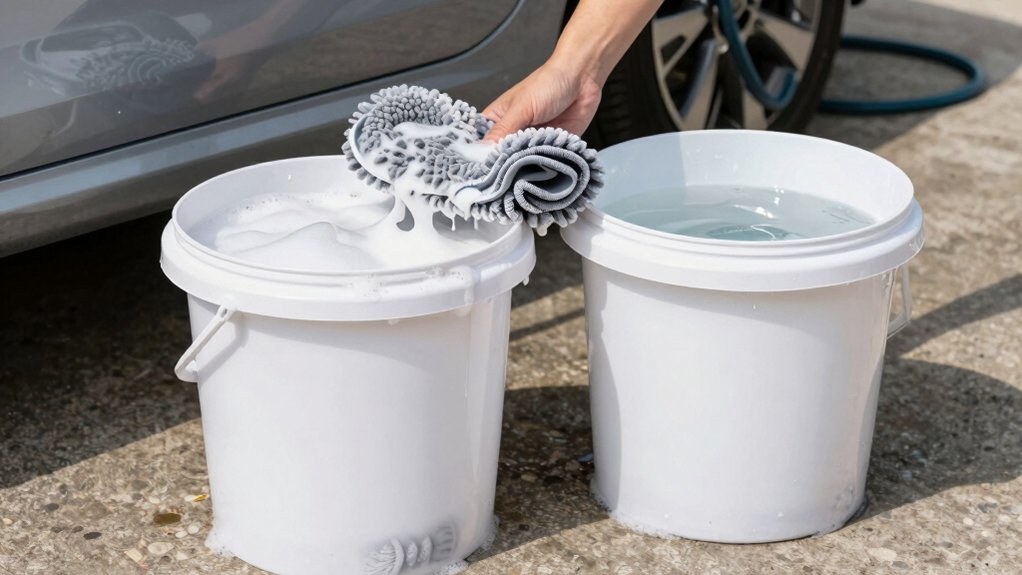
You’ll avoid most paint scratches by using two buckets: one with soap for washing and one with clean water for rinsing, each fitted with a grit guard to trap debris.
Dip and wash small sections; rinse the mitt against the grit guard, wring, then return to the suds. Use 5-gallon buckets for depth; match mitt pile to paint delicacy and change rinse water when cloudy.
Follow these steps and you’ll learn practical setup, spacing, and care tips.
Quick Overview
- Use two 5-gallon buckets: one with soap, one with clean rinse water and a grit guard to trap debris.
- Rinse the dirty mitt in the rinse bucket, agitate against the grit guard, then return to the soap bucket.
- Keep grit guard spacing 1–2 inches above the bucket bottom and 1–1.5 inches clearance for mitt movement.
- Use a microfiber chenille mitt with appropriate pile length (25–35 mm for long-pile; 10–20 mm for short-pile) to trap contaminants.
- Change cloudy rinse water; clean grit guards regularly.
- Wash mitts after use to prevent contamination and fiber breakdown.
Bucket Sizes Comparison
Comparing bucket sizes helps you pick the right balance of volume, portability, and grit-guard effectiveness for the two-bucket method. You’ll weigh bucket size tradeoffs: 5-gallon buckets give rinse water depth and sustained suds, while 3-gallon buckets save space and fit trunks.
Use a 5-gallon pair for full washes with a single mitt. Use 3-gallon pairs with multiple mitts or rinseless techniques. Mixed sets (5+3) balance transport and capacity; label buckets to avoid cross-contamination. Fill 5-gallon buckets 3–4 gallons to limit spillage while keeping depth above the grit guard. Always install grit guards and rinse thoroughly on the guard to trap debris before returning the mitt to soap.
| Type | Best Use |
|---|---|
| 5-gal | Full traditional wash |
| 3-gal | Travel/rinseless |
| Mixed | Flexible setups |
Optimal Grit Guard Spacing
If you chose bucket sizes based on capacity and portability, the next step is to set your grit guards at the right spacing to trap debris effectively without hindering rinsing. You want optimal grit capture while keeping rinse flow efficient. Position guards low enough to let heavy particles settle beneath them but high enough to allow mitt agitation above the grid.
Match guard spacing to your bucket sizes and mitt thickness.
- Place guard 1–2 inches above bucket bottom for heavy sediment.
- Keep 1–1.5 inches clearance between guard and mitt path for rinsing.
- Use taller spacing with deeper 5-gallon buckets to improve settling.
- Reposition if you notice recontamination or restricted water flow.
Measure, test, and adjust until rinse water stays visibly cleaner.
Microfiber Mitt Compatibility
When choosing a microfiber mitt for the two-bucket method, you’ll assess material type, pile length, and construction quality to match your safe detailing techniques. Keep longer, softer piles for delicate paint and shorter, denser piles for heavier contamination. Confirm seams and backing resist repeated wringing against a grit guard.
Also, make sure the mitt is compatible with your bucket size and rinse protocol so you can properly agitate and rinse without trapping debris.
Mitt Material Types
Choosing the right mitt material matters because it directly affects how well you trap and remove dirt without scratching paint. Microfiber chenille mitts are the most compatible with the two-bucket method due to their soft, high-pile fibers that lift contaminants away from the surface while holding soapy lubrication. You should prioritize mitt materials that balance absorption and reduced friction.
Microfiber blends resist trapping hard particles against paint; whereas terry or cotton can create more drag. Consider weave density and fiber softness rather than novelty scrubbing textures that can embed grit. Match mitt choice to wash frequency and contamination level: softer, high-quality microfiber for regular maintenance; denser blends for heavier soils but still rinsed thoroughly in the rinse bucket to avoid recontamination.
Pile Length Differences
How long should the microfiber pile be for your wash mitt to perform best? You want a pile length that balances lift and control: 10–20 mm for denser, short-pile mitts that resist trapping large debris and 25–35 mm for long-pile mitts that gently cradle contaminants.
Short piles give firmer contact and easier rinsing; long piles increase lubrication and reduce pressure per fiber. Match pile length to your technique and vehicle finish. Also consider grit guard spacing: ensure your mitt can fully contact the guard teeth when you rinse so debris settles below the guard rather than reattaching to fibers.
Test mitts with your bucket setup and grit guard spacing to confirm efficient dirt release and minimal recontamination.
Mitt Construction Quality
Pile length affects how a mitt handles contaminants; however, construction quality determines whether those fibers will actually release dirt and resist damage. You should inspect stitching, backing material, and pile attachment to verify mitt durability and consistent fiber release.
Choose double-stitched seams and a reinforced cuff so the mitt won’t delaminate when you wring and rinse against a grit guard. Match microfiber density to your technique: denser weaves trap particles but must still shed during rinsing.
Evaluate grip ergonomics—an adjustable cuff and contoured palm keep the mitt secure during repeated dips and wrings, reducing slippage that causes pressure points. Test compatibility with your rinse-and-wash routine before relying on a mitt for full-detail jobs to ensure longevity and safe performance.
Safe Detailing Techniques
A well-matched microfiber mitt is essential for safe detailing because it directly controls how contaminants are captured, held, and released during each rinse-and-wash cycle. You should choose a mitt with dense, soft fibers that trap grit away from paint rather than dragging it.
Match mitt pile length to the surface and finish: shorter piles for tight panels; longer for textured areas. Inspect the mitt before use, launder it separately, and avoid fabric softeners that reduce effectiveness.
During each panel, work gently with straight strokes. Rinse the mitt thoroughly in your rinse bucket, and wring it before returning to soap to maintain lubrication. These safe practices minimize swirl risk and keep your two-bucket routine consistently aligned with safe detailing principles.
Washing Bucket Compatibility
When you choose buckets and accessories, make sure they work with your microfiber mitt so you don’t compromise dirt capture or rinsing efficiency.
Pick two 5-gallon buckets with compatible grit guards sized to sit flat; mismatched guards let debris bypass and reduce rinsing effectiveness.
Verify bucket lip height accommodates dunking a fully loaded mitt without folding fibers. Choose a rinse bucket with smooth interior surfaces so grit sinks and stays below the guard.
Use a wash bucket that accepts your soap dilution and allows mitt agitation to release contaminants. Avoid accessories that trap fibers or impede rinsing.
This is not an irrelevant discussion or off topic exploration. Compatibility is functional, not cosmetic; it directly impacts dirt isolation and scratch prevention.
Mitt Care Practices
How should you care for your microfiber mitt to keep it compatible with the two-bucket system and prevent paint damage? Rinse the mitt thoroughly in the rinse bucket after each panel, agitate it against the grit guard to dislodge particles, then wring it before returning to the wash bucket. Inspect the mitt for embedded debris and rotate or replace when nap wears or fibers mat.
After the job, soak in warm water with mild detergent, rinse until clear, and air-dry flat or hanging away from heat. Wash mitts separately from other laundry to avoid contamination. Maintain bucket hygiene by changing rinse water when cloudy and cleaning grit guards regularly. Proper mitt care preserves lubrication, prevents cross-contamination, and minimizes scratch risk.
Frequently Asked Questions
Can the Two-Bucket Method Damage Ceramic Coatings?
No, the two bucket method won’t damage ceramic coatings when done correctly. You’ll protect ceramic coatings by using one rinse bucket and one soapy bucket with grit guards, a soft microfiber mitt, and top-to-bottom panel washing.
You’ll rinse and agitate the mitt in the rinse bucket to remove grit. Then, wring it before returning to soap. Done methodically, the two bucket method minimizes swirls and preserves ceramic coatings.
How Often Should Grit Guards Be Cleaned?
Clean grit guards after every wash; you’ll prevent trapped debris from reentering the mitt and protect surfaces. For regular use, remove and rinse the guards thoroughly with clean water and a brush each time you wash.
Deep-clean them monthly with soap and a stiff brush or soak if heavily soiled. Match grit guard maintenance to your wash frequency: wash more often, clean guards more often to maintain effectiveness and reduce contamination.
Can Hot Water Be Used in the Buckets?
Yes, you can use hot water, but be careful: hot water can improve suds and loosen grime. However, it may reduce detergent effectiveness if it exceeds the soap’s recommended temperature and can warp plastic buckets.
Check detergent choice and manufacturer guidelines. Stick to lukewarm for most car soaps. Use hot water only when the soap specifies tolerance, and avoid prolonged heat exposure to seals, rubber, or trim to prevent damage.
Are Mitts Safe for Matte or Textured Finishes?
Yes, mitts are safe for matte finishes when used correctly. You’ll choose a soft, high-quality microfiber mitt and avoid any abrasive cleaners or circular motions. Rinse mitt thoroughly in the rinse bucket to remove grit; wring gently and work panel-by-panel with straight-line strokes. Test a small area first.
Proper mitts safety preserves matte texture and prevents shine alteration or scratches. This keeps textured paint looking uniform and factory-fresh.
Is a Foam Cannon Necessary With This Method?
No, a foam cannon isn’t necessary. You’ll get excellent results with the two-bucket method using proper technique, quality soap, and attention to water temperature to help dissolve grime.
A foam cannon adds thicker pre-soak and lubrication, which can save time and improve dwell; however, it’s optional. Focus on rinsing, grit guards, and correct mitt rinsing. Add a foam cannon only if you want faster coverage and extra lubrication.
Conclusion
You’ve learned how bucket size, Grit Guard spacing, and mitt compatibility work together to keep paint safe while detailing. Pick a large wash bucket and a matched rinse bucket with a properly seated Grit Guard. Then, use a high-quality microfiber mitt whose pile length and construction suit the surface.
Match mitt material to the job and stick to safe washing patterns. Clean and maintain your mitts between uses to preserve performance and prevent contamination.