Undercoating Preparation Steps
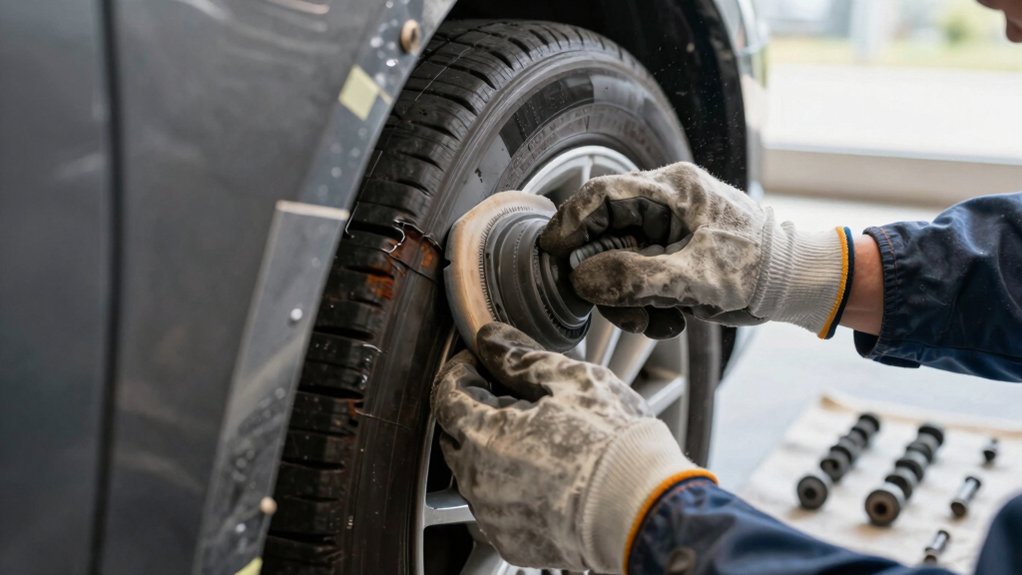
Start by measuring paint and undercoat thickness on every panel with a calibrated gauge so you can compare OEM baselines (typically 100–180 µm) to any repaint zones. Log results to guide removal limits.
Clean surfaces thoroughly. Pick tape widths for contours, seal edges, and use light etch primer on thin OEM areas. Control surface and ambient temps (10–32°C) and humidity; extend cure in cold or accelerate per product data. Follow cure times and masking records for consistent results. More specifics follow.
Quick Overview
- Measure paint and existing undercoat thickness on every panel with a paint thickness gauge to guide safe material removal and coating strategy.
- Clean and dry all surfaces thoroughly, removing dirt, grease, and loose coating before masking or primer application.
- Select tape widths by contour (¼”–½” for seams, ¾”–1″ for wells, 1.5″–2.5″ for large panels) and use low‑residue tape on paint.
- Apply tape carefully to seal edges; verify coverage on seams. Record tape widths used per area for consistency.
- Monitor ambient and surface temperatures (target 50–90°F / 10–32°C) and adjust flash and cure times per product data sheet.
Undercoat Thickness Comparison
Why measure paint thickness before undercoating? You’ll verify substrate durability and decide safe material removal or additional coats. Use a paint thickness gauge (PTG) and log readings across panels for a clear thickness comparison: factory vs repaint influences correction limits and adhesion.
| Panel Type | Typical Total Thickness |
|---|---|
| Factory (modern) | 100–180 µm |
| Repainted panels | 200–400 µm |
| Thin OEM edge cases | 46–63 µm |
Procedure: Measure every panel, note edges, and compare to OEM baseline. If readings exceed 180–200 µm, avoid aggressive sanding or heavy undercoats to prevent cracking or delamination. For thin OEM (
Masking Tape Widths
Which tape width should you pick for each masking task depends on the feature size and desired coverage. Choose narrower tape (1/4″–1/2″) for seams, sensor leads, and tight-radius edges. Use medium widths (3/4″–1″) for wheel wells and chassis seams. Choose wide tape (1.5″–2.5″) or plastic sheeting for large panels and skirt edges.
You’ll select tape based on access, contour, and required protection during undercoating. Use low-residue masking tape for painted surfaces and higher-adhesion grades where grit or vibration may lift edges. Match tape width to minimize overlaps and waste. Wider tape reduces seams on flat panels.
Ensure all surfaces are clean as part of surface prep before applying tape to maximize adhesion and prevent coating bleed.
- Inspect contours, pick tape width.
- Clean surfaces, apply tape.
- Verify seals, adjust as needed.
Cure Time by Temperature
Cure time varies with ambient and surface temperatures, so you should check both before applying undercoating. Keep surface temperatures within manufacturer limits, control humidity, and follow recommended cure times; or use approved accelerated curing methods if needed.
Monitor conditions and extend cure intervals in cold or humid environments to ensure full adhesion and hardness.
Ambient Temperature Effects
Frequently, ambient temperature has a direct impact on undercoating cure time. You should plan application and drying schedules around the expected temperature range. Monitor ambient temperature and surface temperature independently; both influence solvent evaporation, film formation, and tack-free time.
If temperatures are low, extend flash and cure times per product data sheet and avoid forced heat that could trap solvents. If temperatures are high, shorten open time and work in smaller sections to prevent runs. Use calibrated thermometers and record readings before and during application. Adjust spray pressure, coat thickness, and overlap to compensate for temperature-driven viscosity changes.
Schedule final inspection and handling after the manufacturer’s recommended cure window at the measured ambient temperature to ensure adhesion and performance.
Surface Temperature Limits
How cold can the surface be before you risk poor adhesion or extended cure time? You must measure surface temperature and keep it within the coating manufacturer’s specified range: typically 50°F to 90°F (10°C to 32°C). Below the minimum, cure reactions slow; tack increases, and adhesion failures rise. Above the maximum, solvents flash off too rapidly and coating viscosity drops; this causes sag or runs.
Use an infrared thermometer to spot-check multiple locations: frame rails, wheel wells, suspension mounts. If temperatures are marginal, raise ambient heat or allow the vehicle to warm until surface temperature stabilizes in range. Record readings before and during application. Adjust spray technique and pot life based on observed coating viscosity and measured surface temperature to ensure consistent cure and durable adhesion.
Humidity And Cure
Surface temperature affects reaction speed, and ambient humidity similarly alters cure chemistry and tack development. You’ll monitor relative humidity and temperature before and during application: high humidity slows solvent evaporation, increases tack time, and can cause clouding or trapped moisture that reduces surface adhesion.
Low humidity speeds solvent loss, risking skin formation and poor flow. Control the environment; use dehumidifiers, heaters, or ventilated enclosures to keep conditions within manufacturer limits. After application, do not disturb parts until initial set. Record ambient readings and note humidity effects on cure progression.
If humidity spikes, increase drying time and inspect bond integrity before masking removal. For porous or preheated surfaces, verify dryness with a moisture meter to ensure consistent adhesion and predictable cure behavior.
Recommended Cure Times
Why does temperature matter for cure times? Temperature controls chemical reaction rates. You’ll see slower solvent evaporation and polymer crosslinking in cold conditions. At 50°F (10°C), expect tack-free times of 24–48 hours and full cure in 7–14 days.
At 68–77°F (20–25°C), expect tack-free in 6–12 hours and full cure in 48–72 hours. Above 86°F (30°C), tack-free drops to 2–4 hours; full cure in 24–48 hours.
Adjust schedules based on undercoating compatibility. Some formulations require longer at low temperatures. Use consistent ambient and substrate temperatures; avoid drafts and moisture. Validate cure with fingernail test and hardness progression.
Keep application tooling clean and within rated temperature range. Document temperature, humidity, and cure checkpoints before reassembly or load-bearing use.
Accelerated Curing Methods
You’ve seen how ambient and substrate temperatures affect standard cure schedules. To speed things up, controlled heat and humidity adjustments let you shorten tack-free and full-cure times safely. Use accelerated curing only when film thickness, product TDS, and surrounding materials permit.
Raise ambient temperature in a ventilated booth or with infrared lamps; keep substrate 10–20°F above recommended minimum. Monitor with contact thermometers. Avoid hot spots that blister coatings. Reduce relative humidity for moisture-sensitive chemistries or increase it for waterborne systems per manufacturer guidance.
Maintain masking tape widths sufficient to protect adjacent components from heat and solvent migration. Wider tape absorbs more heat and prevents edge lifting. Record time-temperature profiles and perform adhesion tests before returning vehicle to service. Don’t skip manufacturer cure verification.
Cold Weather Precautions
How cold will slow your undercoating? You must account for cure time reduction as temperature drops: at 70°F full cure in 72 hours; at 50°F expect 48–72% longer. Below 40°F, cure can double or stall. Work only above the product minimum temperature; consult TDS.
For winter handling, pre-warm panels and materials in a controlled space to 60–70°F before application. Use electric heaters and insulated cold storage for mixed products and cans, maintaining temperature until use. Avoid applying in condensation-prone conditions; the surface must be dry and >5°F above dew point.
After application, maintain ambient temperature for the recommended initial set time to prevent solvent entrapment. Log temperatures during cure to verify compliance with specifications.
Frequently Asked Questions
Can Undercoating Damage Electronic Sensors or Wiring Harnesses?
Yes, undercoating can damage sensors and wiring if you’re careless. You should prevent undercoating electrical failures by masking sensors, connectors, and exposed harness protection.
Disconnect sensitive modules when possible, secure harnesses away from spray, and avoid clogging ventilation or drainage ports. Use compatible coatings and let surfaces dry fully. Inspect and test all sensors after curing to verify signal integrity and harness protection before returning the vehicle to service.
Do I Need to Remove Factory Rustproofing Before Undercoating?
No: you don’t always have to remove factory rustproofing, but you must verify undercoating compatibility. Test a small area: if the factory layer is waxy or soft or non-adhesive, strip and degrease it. If it’s a hard, paint-like coating, lightly abrade and clean to promote adhesion.
Ensure surfaces are dry and oil-free. Mask sensors and openings, and use a compatible undercoating material recommended by the manufacturer for bonded results.
Can Undercoating Hide Existing Structural Frame Cracks?
No, undercoating won’t hide structural frame cracks reliably. You might mask crack visibility temporarily; however, coatings don’t stop rust progression or restore strength.
You should expose, clean and inspect suspect areas. Remove loose rust and weld or replace damaged sections per structural repair procedures. After proper repair and rust prevention, you can apply undercoating for corrosion control. Document repairs and recheck periodically for concealed deterioration.
Is Undercoating Safe for Vehicles With Catalytic Converters Nearby?
Yes, you can undercoat near catalytic converters, but you must take precautions. You’ll prevent underbody corrosion and add road salt protection while avoiding heat damage by masking converters and exhaust, using heat-resistant products, and keeping coatings at least a few inches away.
You’ll let exhaust cool fully and follow manufacturer temperature limits. Additionally, cure coatings per instructions. Inspect joints and sensors afterward to ensure no trapped heat or contamination occurred.
How Often Should Undercoating Be Reapplied for Coastal Driving?
You should reapply undercoating every 12–18 months for coastal driving to maintain coating durability and corrosion prevention. Inspect annually for chips, flaking, or rust. Touch up damaged areas immediately.
If you frequently drive on salted roads or get heavy salt spray, shorten the interval to 6–12 months. Clean, degrease, and fully dry surfaces before reapplication; follow manufacturer cure times and ensure masked protection for sensitive components.
Conclusion
You’ve followed precise steps to control undercoat thickness, masking widths, and cure times. Now finalize with disciplined checks. Verify ambient and surface temperatures, and confirm humidity stays within limits before sealing.
If you need faster turnaround, use approved accelerated curing methods while monitoring for solvent entrapment. In cold conditions, extend dwell and cure times, and use surface heating within specified limits. Record measurements for each panel to ensure repeatable, certified results.