Upholstery Fabric Types Reference
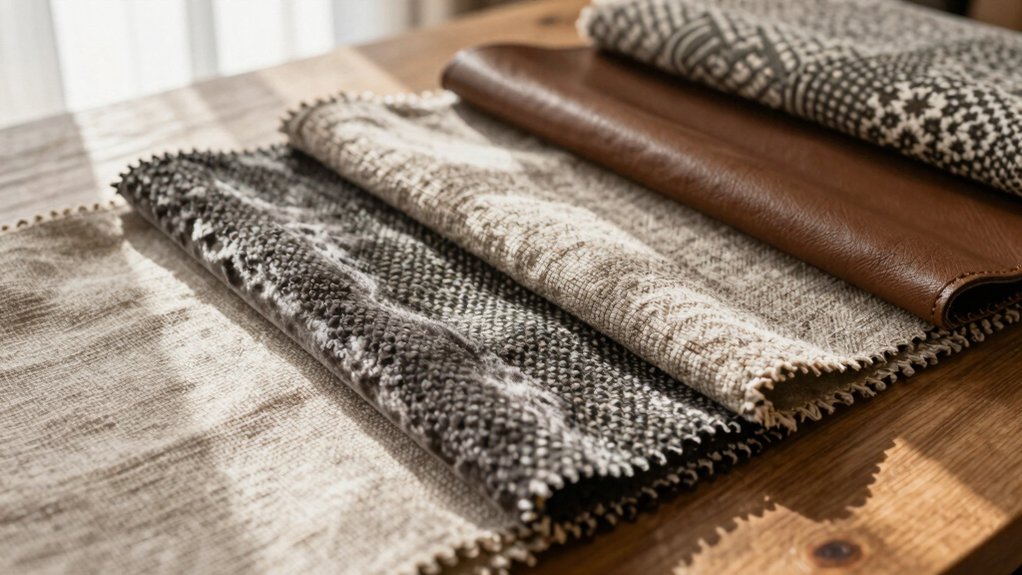
You’ll pick smarter fabrics when you know rub counts, fiber behavior, finishes and care.
Match double-rub ratings to use: delicate for accents, medium for occasional seating, heavy for family or commercial rooms.
Check weave tightness and fiber blends before any stain-resistant finish.
Always test a swatch and follow cure times.
Apply thin, even coats; ventilate and document reapplication intervals.
Keep spills blotted and inspect high-contact areas.
Keep going and you’ll get practical, pro-level steps next.
Quick Overview
- Categorize fabrics by fiber: natural (cotton, linen, wool, silk) versus synthetic (polyester, olefin, acrylic) for performance expectations.
- Match fabric construction: tight weaves and twill/velvet pile resist abrasion better than loose weaves or open weaves.
- Use Wyzenbeek double-rub ratings: Delicate 15,000 to guide suitability by traffic.
- Consider stain-resist compatibility: fluoropolymers for natural fibers, polymer finishes for synthetics. Always test a hidden swatch.
- Plan maintenance and reapplication: follow cure times, monthly high-contact inspections, and immediate blotting for spills.
Fabric Rub Count Chart
Think of the rub count as a fabric’s fitness score: it tells you how many back-and-forth “double rubs” a material can take before wear shows. You use the Wyzenbeek test methodology to gauge fabric wear. Cotton duck scrubs across the sample until visual wear or yarn break appears. That rub number maps to use: delicate for decorative pieces, heavy for family sofas and pet-friendly homes.
Interpreting the chart helps you choose comfort versus longevity. This process avoids overbuilt fabrics that feel stiff.
| Duty | Double Rubs | Use |
|---|---|---|
| Delicate | Drapes, accents | |
| Medium | 9,000–15,000 | Dining chairs, ottomans |
| Heavy | 15,000+ | Everyday sofas, pets |
Abrasion Ratings Quick Checklist
How many double rubs does your upholstery really need? You’ll cut through abrasion myths by matching use to rating: light rooms can use delicate fabrics; family rooms need heavy domestic or heavy duty. Think practically, not buzzwords.
- Choose
- Pick 9,000–15,000 for medium duty: occasional seating.
- Select >15,000 for heavy domestic and commercial wear.
You’ll spot durability myths when a fabric’s grade and rub count conflict. Don’t trust marketing alone. Inspect weave tightness, fiber content, and blend performance; polyester blends and olefin usually outlast plain natural weaves.
Keep this checklist handy when selecting upholstery to ensure performance without overpaying for unnecessary toughness.
Stain-Resistant Treatment Guidelines
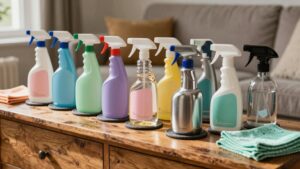
When you pick a stain‑resistant treatment, match product chemistry to the fiber: what works on olefin or polyester can damage silk, rayon, or untreated linen.
Check fabric compatibility with a hidden swatch; follow manufacturer application steps and recommended drying/curing times. Note whether the finish needs periodic reapplication.
With careful prep and routine maintenance, you’ll keep performance fabrics looking fresh without compromising hand or color.
Choosing Appropriate Treatments
Want your upholstery to shrug off spills instead of soaking them in? You’ll pick treatments by matching fabric behavior: choose fluoropolymer or silicone repellents for natural fibers like cotton and linen, and polymer-based finishes for synthetics.
Consider ironing recommendations; some coatings need heat activation at low settings. Others mustn’t be ironed afterward. Prioritize dye bleed prevention on richly dyed wool or cotton blends by testing hidden seams before full application.
Apply in thin, even passes, allow complete cure, then test water beading and hand feel. For high-traffic pieces, select durable, re-treatable options. For delicate silk or velvet, favor professional finishes or reversible, noninvasive protectors.
Keep records of products and dates for future care.
Fabric Compatibility Checks
Which fabrics will actually take a stain-resistant finish without changing look or hand? You’ll test fabric compatibility by considering fiber type, weave density, and finish history: synthetics like polyester, olefin, and acrylic usually accept coatings with minimal hand change.
Natural silks and lightweight linens may darken or stiffen. Check manufacturer specs and small swatch trials to align treatment choice with your durability expectations. Blends can be unpredictable; cotton-polyester mixes often respond well, while rayon blends less so.
You’ll avoid surprises by documenting prior treatments and grading fabric use category before application. Keep testing focused, record visual and tactile changes, and prioritize fabrics rated for the intended traffic to maintain both appearance and performance.
Application Best Practices
A practical starting point is to assess the fabric’s fiber content, weave density, and any existing finishes so you can choose a stain-resistant treatment that preserves look and hand. Synthetics like polyester, olefin, and acrylic usually take coatings cleanly; however, delicate silks and lightweight linens may darken or stiffen. This makes swatch trials and manufacturer specs essential before full-coverage application.
You’ll prep by vacuuming and spot-cleaning. Then, test treatments on hidden swatches for colorfastness testing and hand feel. Apply thin, even coats with low-pressure sprayers or soft brushes, keeping seams and piping visible to avoid buildup. Note recommended fabric grade limits, document results for price comparison, and schedule reapplication intervals based on traffic and manufacturer guidance.
Drying And Curing Times
How long will your stain-resistant treatment take to set and truly bond with the fabric? You’ll find drying times vary by fiber: natural linens and cotton absorb finishes and dry faster, while dense wool and coated synthetics need longer.
Think temperature, humidity, and airflow. Warm, dry air speeds evaporation; high humidity slows it. For true performance, factor curing considerations: some finishes only reach full abrasion and stain resistance after 24–72 hours; sometimes longer for heavy coatings.
Don’t rush seating or light cleaning; allow recommended cure windows from the manufacturer. Test a hidden swatch first so you can confirm drying and final hand feel. That textile-savvy patience preserves appearance and performance without guessing.
Maintenance And Reapplication
Because stain-resistant finishes wear gradually with use and cleaning, you’ll need a simple maintenance plan to keep protection effective and fabric looking its best. Inspect high-contact areas monthly, vacuum gently, and blot spills immediately to prevent set-in stains.
Reapply stain proofing annually or after heavy cleaning, following product directions and fabric grade recommendations: natural fibers like linen and wool often need gentler products than synthetics. Before any treatment, perform colorfast testing in an inconspicuous spot to avoid surprises; document results and drying times. For delicate or high-grade fabrics, schedule professional reapplication to preserve hand and appearance.
Keep records of treatments, dates, and products so you can track performance and choose stronger options if protection fades prematurely.
Safety And Ventilation
Why ventilate well when treating upholstery? You’ll avoid chemical buildup that can dull fibers or trigger allergic reactions. Open windows, run fans, and create cross-breezes so solvent fumes don’t settle into weave or padding. Post clear safety signage if you’re in a shared space. Keep people and pets away until odors dissipate.
Mind ventilation gaps around doors and under cushions; they’re pathways for both fresh air and lingering vapors. Use low-VOC, fabric-safe treatments on delicate silks and wools. Follow label directions for polyesters or treated performance blends. Wear gloves and a mask; limit spray duration, and test a hidden patch.
When you ventilate properly and respect safety cues, you’ll protect fabrics, people, and the room’s long-term scent and integrity.
Frequently Asked Questions
How Do I Choose Fabric for Homes With Shedding Pets?
Pick durable, low-pile fabrics that resist hair cling and stand up to pets. You’ll favor choosing pet friendly textures like tight weaves and leather. Seek stain resistant finishes and easy cleaning patterns that hide fur and stains.
Balance durability vs. comfort by blending performance polyester or olefin with soft cotton. You’ll want machine-washable covers or removable cushions. Avoid delicate velvets or silks that trap hair and need special care.
Can I Mix Leather and Fabric on the Same Sofa?
Yes, you can mix leather and fabric on the same sofa. You’ll enjoy contrast in texture and tailored looks; however, watch mixing leather and fabric on the sofa for durability concerns. Leather handles wear and pets better, while fabrics can stain more easily.
Plan panels where traffic hits. Choose stain-resistant weaves for seats and coordinate color. With thoughtful placement and cleaning routines, you’ll get stylish longevity without sacrificing practicality.
Which Fabrics Soften With Age or Washing?
Cotton and linen are fabrics that soften noticeably; you’ll enjoy the aging texture changes as fibers relax and mellow. Wool also develops a plush, broken-in hand with wear.
Blends with rayon or viscose gain softened drape after washing; however, they need careful care. Even some poly-cotton mixes lighten up a bit. You’ll want to balance that warm, lived-in feel with proper maintenance to preserve color and structure.
Are There Eco-Friendly or Organic Upholstery Fabric Options?
Yes, you can choose eco friendly upholstery and organic fabric options that still feel luxurious. Look for organic cotton, hemp, linen, and certified wool, plus recycled polyester or upcycled leather alternatives.
You’ll want GOTS, OEKO-TEX, or Global Recycled Standard labels; low-impact dyes; and water-saving processes. You’ll get breathable, durable textiles with natural patinas, thoughtful finishes, and a smaller environmental footprint without sacrificing performance or style.
How Does Fabric Color Affect Room Temperature?
Darker upholstery absorbs more heat, so you’ll feel warmer because color impacts heat absorption directly. Lighter hues reflect sunlight, keeping fabrics cooler and reducing heat transfer to your skin.
You’ll notice how color influences perceived coolness too: pale linens and whites read breezy and refreshing, while deep velvets and leathers feel cozy and warm. Choose shades based on sun exposure, room use, and the tactile warmth you want to convey.
Conclusion
You’ve got the fabric facts and treatment tips. Now trust your touch. Match rub counts to use, pick stain-resist finishes that suit fiber chemistry, and test small swatches before committing.
Apply evenly, keep ventilation strong, and respect drying and cure windows so coatings bond right. Maintain with gentle, fiber-safe methods and reapply when wear patterns appear. Do this, and your upholstery will stay beautiful, durable, and true to its textile character.