
Water Based Vs Solvent Based Tire Dressing
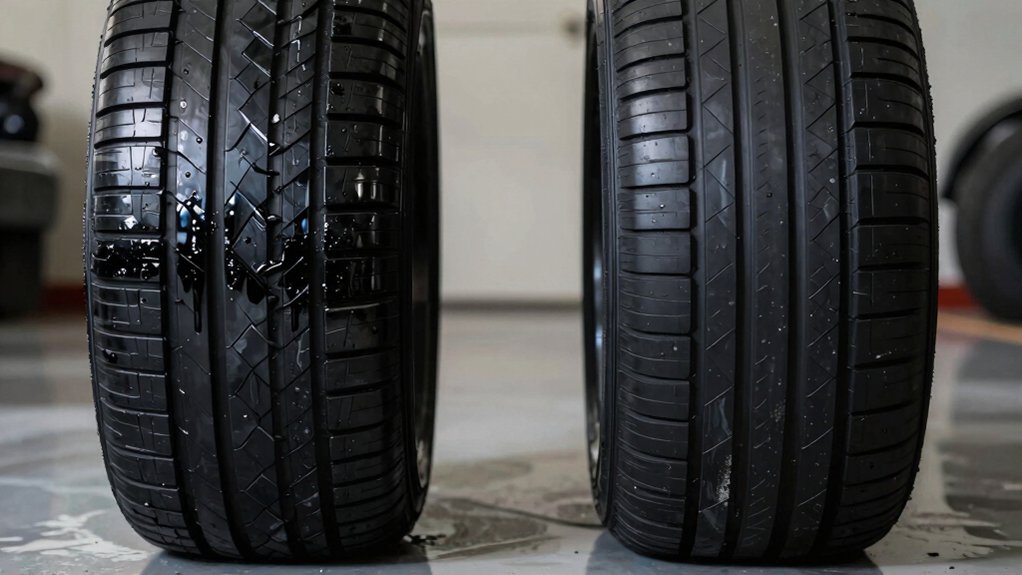
You should pick water-based dressings for safe, everyday use: they give satin to semi-gloss sheens, attract less dust, and are kinder to rubber while curing in 50–85°F. They last moderately (about 1–2 weeks).
Use solvent-based only when you need high-gloss and longer durability (3–4 weeks) and can apply thinly in controlled temps (40–95°F). Check pH (aim ~7–9) to avoid rubber damage. Read on for detailed testing and storage tips.
Quick Overview
- Water-based dressings penetrate rubber for a satin/semi-gloss look, reduce sling, and are safer for frequent use. Solvent-based dressings give higher immediate gloss and longer-lasting shine; however, they sit on the surface and can sling more.
- For daily-driven tires, choose water-based; for show cars or harsh conditions, choose solvent-based applied thinly. Apply water-based at 50–85°F and solvent-based at 40–95°F. Avoid extremes and let tires cool before dressing.
- Prefer neutral-to-slightly-alkaline pH (≈7–9) and patch-test products to prevent rubber swelling, softening, or additive loss.
Gloss & Longevity Comparison
How glossy do you want your tires to look, and how long do you expect that finish to last? You’ll choose between water-based satin/semi-gloss that soaks in and minimizes sling, and solvent-based high-gloss that sits on the surface for showroom shine.
Consider gloss longevity: solvent gives superior immediate aesthetics and longer durability (3–4 weeks); however, it can attract dust and age rubber. Water-based delivers moderate gloss longevity (1–2 weeks), lower dust attraction, and safer regular use.
Match finish to use—daily drivers favor water-based. Show or harsh-condition vehicles favor solvent, applied thinly. Assess durability aesthetics trade-offs and reapplication cadence to balance appearance with tire health.
| Variant | Typical Duration |
|---|---|
| Water-Based | 1–2 weeks |
| Solvent-Based | 3–4 weeks |
Application Temperature Range
Wondering what temperature you should apply tire dressing at? You should target an optimal application temperature to ensure proper film formation and adhesion while preserving storage stability of leftover product. Water-based and solvent-based systems differ:
- Apply water-based dressings between 50–85°F (10–29°C) to prevent emulsions breaking or slow cure.
- Apply solvent-based dressings between 40–95°F (4–35°C) to allow solvents to evaporate efficiently without over-rapid flash-off.
- Avoid sub-freezing or >95°F for both types; extreme heat or cold compromises uniformity and shortens shelf life.
Allow tires to cool after driving. Surface heat alters spread and appearance. Store products within manufacturer temperature ranges to maintain storage stability and predictable application performance.
pH Compatibility With Rubber
You should check tire dressing pH because rubber responds differently across the acidic–alkaline spectrum. Extremes cause chemical attack or physical swelling. Acidic formulations can accelerate rubber degradation and surface embrittlement. Highly alkaline products may cause swelling, softening, or binder breakdown.
For routine use, pick near-neutral formulas and verify with simple pH strips or a handheld meter to prevent long-term damage.
pH Range Effects
Because tire rubber compounds can react differently across a pH spectrum, you should consider the alkalinity or acidity of a dressing when evaluating long‑term compatibility. You’ll assess pH interaction and rubber compatibility by checking formulation data: neutral to slightly alkaline (pH 7–9) generally minimizes polymer chain hydrolysis and filler leaching; while extremes increase risk.
Water‑based dressings usually report near‑neutral pH due to buffers and surfactants. Solvent‑based products lack aqueous pH but may include acidic or basic additives that affect rubber on contact. For routine maintenance, choose products with documented neutral pH or proven lab compatibility tests.
When in doubt, perform a controlled patch test and monitor for softening, tackiness, or surface bloom over several weeks.
Acidic Damage Risks
How acidic can a tire dressing be before it starts attacking rubber compounds? You should aim for neutral to mildly acidic pH (about 5.5–7.5) to avoid measurable acidic damage. Strong acids hydrolyze rubber additives and accelerate ozone and UV-induced chain scission. Prolonged contact below pH 4 increases risk. Check product specifications for pH and avoid formulations with free acid catalysts or aggressive low-pH stabilizers.
Water-based dressings generally control pH with buffers and surfactants, improving rubber compatibility. Some solvent-based concentrates may carry acidic contaminants if not purified. For routine maintenance, choose a buffered, near-neutral dressing. Rinse spills promptly and perform a compatibility spot test on an inconspicuous sidewall area before widespread application.
Alkaline Swelling Concerns
Alkalinity poses a real risk to tire rubber because strong bases penetrate and swell elastomers, disrupting polymer networks and leaching curatives and plasticizers. You should keep dressings near-neutral to prevent dimensional changes, softening, or surface tack that accelerates ozone and mechanical damage. You’ll evaluate pH compatibility with rubber by checking formulation labels or contacting manufacturers for measured pH and compatibility data.
Alkaline swelling is concentration- and time-dependent. Weakly alkaline, dilute systems may be tolerable short-term; however, repeated exposure increases extraction of low-molecular additives and reduces cure density. In practice, choose dressings validated for rubber compatibility and avoid alkaline cleaners or buffers on sidewalls. If you suspect swelling or tack, stop use, rinse, and document product batch for supplier remediation and testing.
Neutral Formulation Benefits
Why should you favor neutral pH tire dressings? You’ll protect rubber chemistry by avoiding extremes that can swell, harden, or leach additives. A neutral formulation (around pH 6.5–7.5) maintains polymer stability, preserves plasticizers and antiozonants, and minimizes microcracking from repeated use. That’s especially important when you apply dressings frequently.
Neutral products reduce cumulative stress compared with alkaline or acidic alternatives. You’ll also lower surface reactivity that can accelerate UV depletion or silicone-related deterioration in solvent systems. From a regulatory and operational standpoint, neutral water-based dressings typically present lower environmental impact than VOC-rich solvent counterparts. This simplifies storage, transport, and disposal.
Select neutral formulations to maximize tire longevity, predictable appearance, and safer handling without sacrificing performance.
pH Testing Methods
Want to verify that a tire dressing won’t harm rubber over time? Use controlled pH testing to assess compatibility. You’ll prepare a 1:10 dilution of the dressing in deionized water and measure initial pH with a calibrated meter. Then expose standardized rubber coupons for fixed intervals (24, 72, 168 hours) at ambient temperature.
Record pH drift and inspect coupons for swelling, tack, color change, or embrittlement. Compare results to control samples soaked in neutral buffer. Note that silicone fluids themselves are chemically inert; large pH deviations usually indicate additives or contaminants.
Avoid treating pH results as conclusive in isolation: subtopic irrelevance occurs when you ignore formulation chemistry or aging tests. Exclude unrelated considerations like VOC content when interpreting pH compatibility with rubber.
Frequently Asked Questions
Do Solvent-Based Dressings Harm Wheel Finish or Paint?
Yes, solvent-based dressings can harm wheel finish and paint. You’ll see solvent impact as softening or swelling of clearcoats, paint dulling, or lifting of delicate finishes if overspray contacts rims.
For wheel finish care, avoid spraying; apply sparingly with a sponge and wipe immediate overspray. Use water-based alternatives for routine maintenance. Test any product on a hidden area and follow manufacturer recommendations to minimize chemical damage.
Are Water-Based Dressings Biodegradable and Safe for Runoff?
Yes, water-based dressings are generally biodegradable and safe for runoff. You’ll find fewer biodegradability concerns compared with solvent-based formulas because water carriers and natural oils break down more readily.
For runoff safety, you should avoid heavy over-application; rinse areas to minimize residue entering drains. Choose high-quality, labeled biodegradable products and follow local disposal guidelines to further reduce environmental impact and ensure regulatory compliance.
Can Dressings Affect Tire Traction in Wet Conditions?
Yes, dressings can reduce wet traction if misused. You’ll monitor water runtime and traction impact: thick or oily layers lengthen water runtime on the tread, creating a slip film that lowers grip.
Water-based, properly applied, minimizes this risk; solvent-based or overapplied products increase it. You’ll apply thin, controlled coats, avoid tread grooves, and wipe excess to maintain optimal wet traction while preserving tire appearance and protection.
How Do Dressings Interact With Tire Pressure Monitoring Sensors?
Tire dressings don’t interact directly with internal tire sensor electronics, so you won’t get tire sensor interference when you apply them externally. You should avoid saturating valve-stem areas and pressure sensor compatibility issues by keeping dressings off valve cores, TPMS caps, and mounting hardware.
If you spray, mask sensors and stems, wipe excess, and use water-based products to reduce solvent migration that could degrade rubber seals affecting long-term sensor sealing.
Are Solvent-Based Products Flammable During Storage or Transport?
Yes, solvent-based products can be flammable during solvent storage and transport. You should treat them as hazardous liquids. Keep containers tightly sealed and store them in cool, well-ventilated areas away from ignition sources. Follow flammability safety regulations: GHS labeling, shipping classifications, and local VOC limits.
Use grounded transfer equipment, appropriate PPE, and approved spill containment. Inspect for leaks and consult the product SDS for specific flash point and transport guidelines.
Conclusion
You’ll choose water- or solvent-based tire dressing based on trade-offs: solvent formulas give higher initial gloss and quicker drying. Water-based ones offer safer temperature flexibility and lower VOCs.
Check pH: keep formulations near neutral to avoid rubber swelling (high pH) or surface etching (low pH). Use a pH meter or litmus strips to verify.
For routine use, opt for neutral, water-based products for balanced longevity, safety, and predictable tire performance.