Water Spots on Car Paint Causes and Prevention
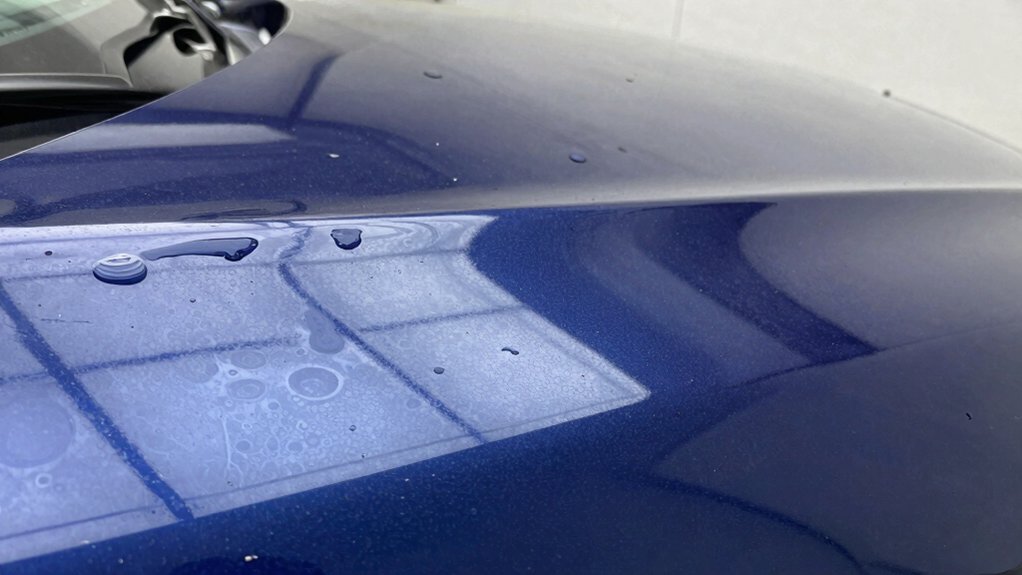
Water spots form when mineral-rich water dries on your paint, leaving calcium, magnesium, or silica deposits that can etch clear coat over time. Test your water hardness (ppm) and use DI/RO rinses or blot-dry after washing to prevent buildup.
Clean organic grime with alkaline cleaners first. Then, use short-dwell acidic spot removers on cool panels for mineral etch. Rinse thoroughly and protect with wax, sealant, or coating. Continue for steps to treat existing spots.
Quick Overview
- Water spots form when minerals (Ca/Mg) or dissolved solids in water dry on paint and leave visible deposits or etching.
- Hard water (≥61 ppm; especially >181 ppm) greatly increases spotting and clear coat etching risk.
- Rinse with deionized/RO water or use a spot-free rinse to prevent mineral residues after washing.
- Remove organic grime first with an alkaline or neutral cleaner. Then, treat mineral spots with appropriate acidic removers briefly.
- Test cleaners on an inconspicuous area; use short dwell times; rinse with DI water; and protect paint with wax, sealant, or coating.
Mineral Deposit Hardness Chart
How hard are the minerals that make water spots, and why does that matter for removal? You need to know mineral deposit hardness because matching remover hardness prevents paint etch. Typical deposits run about 3 to 5 on Mohs (calcite, dolomite, magnesite); silica or quartz can reach 7 or higher, requiring professional attention. You should test with simple tools (penny, knife) to estimate hardness before choosing chemicals or abrasives.
| Deposit Type | Mohs Range | Removal Approach |
|---|---|---|
| Ca/Mg carbonates | 3 to 4.5 | Acid dissolve, 3 to 5H polish |
| Silica/quartz | 7 or higher | Pro abrasive (9H or higher), avoid DIY |
For effective water spot removal, always pick a method that is harder than the deposit but softer than paint to avoid further damage.
Water Hardness Ppm Thresholds
Why does parts-per-million (ppm) matter when you’re trying to prevent water spots? You need ppm thresholds because water hardness determines how quickly mineral deposits form and etch paint. Use a hardness chart to understand risk levels and choose treatment.
0–17 ppm: negligible, deionized/RO quality, safe for rinsing
18–60 ppm: low, minimal spotting, rinse and dry promptly
61–120 ppm: moderate, expect visible mineral deposits without protection
121–180 ppm: hard, frequent spots; use filtered water or coatings
181+ ppm: very hard, high etching risk; avoid tap rinses, employ DI/RO and barriers
Match your wash routine to local water hardness and ppm thresholds to prevent damage.
Spot Removal Chemical pH
When you’re choosing a spot remover, check the pH: it tells you whether a product is acidic, alkaline, or neutral and how aggressively it will act on mineral deposits. Acidic removers dissolve etching but can be harsh on clear coat. Alkaline cleaners lift organic grime, and neutral pH options offer a safer, gentler compromise for routine use.
Aim for products formulated to stay within a safe range for automotive paint and follow label dwell-time instructions to avoid damage.
pH Scale Basics
Curious about what makes a spot-removal product safe for your paint? You need to understand pH: a 0–14 scale that tells you whether a chemical is acidic, neutral, or alkaline.
Neutral (around pH 7) is mild. Low pH removes mineral deposits but can harm clear coat if too strong. High pH cleaners rely on soap alkalinity to loosen organic grime and some minerals; however, extreme alkalinity risks dulling or lifting paint films.
You’ll choose a product whose pH matches the spot type: mildly acidic for mineral interactions that have started etching, and mildly alkaline for greasy or organic residues. Always test on an inconspicuous area, follow dwell-time limits, and rinse thoroughly to protect finishes.
Acidic Spot Removers
How do acidic spot removers work, and when should you reach for one? You use acidic spot removers to dissolve mineral etching from hard-water deposits that resist neutral cleaners. They contain mild acids that chemically break calcium and magnesium films without aggressive abrasion.
Apply on cool panels, short dwell times, and rinse thoroughly to prevent clear-coat damage. Follow water hardness rules: stronger deposits from very hard water need controlled acid strength and repeat light applications rather than a single heavy dose.
Test on an inconspicuous area first; avoid high spots on unprotected or heat-warped paint. After treatment, neutralize residue, rinse with deionized water, and immediately protect the area with wax, sealant, or ceramic coating to limit recurrence.
Alkaline Cleaners Role
Acid-based spot removers break down mineral etching, but alkaline cleaners play a different and complementary role: they lift organic grime, road films, and oily residues that can trap minerals against the clear coat and interfere with subsequent acid treatments.
You should use an alkaline pre-clean to remove oils and loosen embedded organic contaminants before applying acidic spot removal. Choose products labeled for automotive paint, follow dilution guidance, and test a hidden area first. Monitor spot removal chemical pH; alkaline cleaners typically range pH 9 to 12, and rinse thoroughly to avoid residue that could raise surface alkalinity.
Work in shade, cool panels, and use soft microfibers or foam to avoid abrasion. Correct sequencing maximizes effectiveness and reduces the need for aggressive acidic etching.
Neutral pH Options
Why choose neutral-pH spot removers? You get effective cleaning without risking paint softening or stripping protective layers. Neutral pH options target fresh mineral deposits and light films by using surfactants and chelators that lift contaminants rather than chemically etch them.
Use them as a first-line treatment on clear coat and coatings; they’re safe to test on a small panel and won’t accelerate degradation when panels are warm. Consult a mineral deposit hardness chart to gauge whether a mild neutral product will suffice or if a stronger approach is needed.
Apply with lubrication, agitate gently, rinse thoroughly, and dry immediately. Reserve stronger acids or mechanical correction only after neutral options fail to remove bonded mineral spots.
Safe pH For Paint
Wondering what pH range is safe to use on your car’s clear coat? Stick to mild, near-neutral cleaners: pH 4.5–9.0 is generally safe for modern clear coats when used briefly and rinsed thoroughly. Strong acids (below pH 3) or strong alkalis (above pH 11) can soften or etch clear coats; this is especially true on heat-stressed panels or where mineral buildup has weakened the finish.
When removing water spots, choose products formulated for automotive paint and follow contact-time limits on the label. Cross-reference spot severity with a mineral deposit hardness chart to decide if a chemical step is justified or if mechanical correction is safer. When in doubt, test a small hidden area and rinse promptly to protect your paint.
pH Testing Methods
How should you check the pH of a spot-removal product before applying it to your clear coat? Use pH testing strips or a digital pH meter on a diluted sample; follow manufacturer dilution ratios. Test on a non-visible panel patch first to confirm safe interaction with existing protection. Record readings: aim for near-neutral to mildly acidic for mineral etch removal without attacking clear coat. Avoid strong acids or bases.
Consider local water hardness: harder water may require different product strength and thorough rinsing. After testing, neutralize and rinse the test spot. Then inspect for discoloration or softening. Repeat if you change product concentration or encounter different water hardness. Keep notes so you standardize safe, effective spot treatments.
Frequently Asked Questions
Can Ceramic Coatings Fully Prevent Water Spots Long-Term?
No, ceramic coatings don’t fully prevent water spots long-term. You’ll get excellent ceramic protection that greatly aids water spot prevention by creating a hydrophobic, slick surface that reduces mineral bonding and eases cleaning. However, hard water, heat cycles, and neglect can still cause etching over time.
You should still rinse with filtered water, dry promptly, and reapply or top up protection periodically to maintain effectiveness and avoid permanent spots.
Will Rainwater Always Cause Etching on My Paint?
No, rainwater won’t always cause etching. You’ll avoid rainwater etching when runoff is light, paint is protected, and you remove deposits promptly.
Hard, mineral-rich rain or repeated exposure on unprotected, hot panels raises etching risk. For reliable water spots prevention, keep a protective layer (ceramic coating, sealant, PPF); rinse or dry after storms; park in shade; and act quickly if spots form to prevent permanent damage.
How Do Sprinkler Patterns Affect Spot Risk on Parked Cars?
Sprinkler patterns change spot risk because overlapping arcs and long dwell time deposit more mineral-rich droplets on your paint, increasing water spots and paint etching. If sprinklers spray fine mist or linger, you will get concentrated residues that dry and bond.
Park in lanes outside spray, under trees, or shield with a cover. Move the car during irrigation cycles, rinse with filtered water quickly, and dry to prevent permanent etching.
Can Tap Water Spots Return After Waxing or Coating?
Yes, water spot recurrence can happen after waxing or coating if minerals already etched the clear coat or if protection is compromised.
You’ll get much better wash versus wax protection from ceramic coatings or paint film; these resist bonding and let minerals sheet off. Still, always dry with a towel or blower and use filtered rinses. Immediate removal of fresh spots prevents long-term etching even under a strong coating.
Is Mobile Detailing With Unfiltered Water Risky for New Paint?
Yes, you should avoid mobile detailing that uses unfiltered water on new paint. You’ll risk mineral deposits and early etching, especially if panels are hot. Polishing myths won’t protect fresh clear coat from hard-water damage. Use deionized or filtered rinses, dry immediately, and demand pre-treatment steps.
Water hardness advantages apply only when you control rinse quality; otherwise, insist on filtered water, blowers, or a rinse-free, low-mineral process to safeguard paint.
Conclusion
You’ll prevent and remove water spots by understanding hardness, pH, and safe treatments. Test your water and paint with simple strips. Then choose the right chemistry: acidic removers for mineral etching, alkaline cleaners for organic buildup, and neutral options for regular maintenance.
Always stay within safe pH ranges for paint, rinse thoroughly, and dry promptly. With consistent testing and the appropriate product, you’ll protect your finish and minimize future spotting.