Wheel Brush Types and When to Use
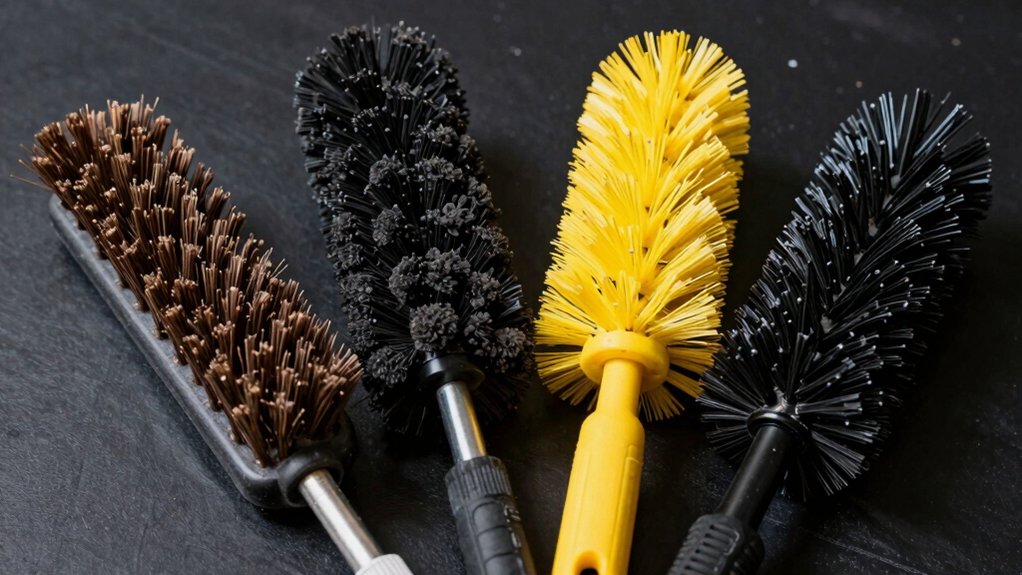
Pick a wheel brush based on rim material, finish, and task: Use 3–4″ soft or microfiber wheels for precision on alloy or coated rims. Use 6–8″ medium nylon for general cleaning. Use 6–10″ stiffer or wire knots for heavy rust or bare steel.
Prefer nylon or synthetic filaments and stainless/brass cores to resist chemicals and heat; avoid steel cores on sensitive finishes. Match stiffness to grime, and limit RPM to prevent heat. You’ll find more specific tips next.
Quick Overview
- Choose wheel diameter to match motor power and contact area: 3–4″ for precision; 6–8″ for general use; 10″ for stationary tools.
- Match bristle stiffness to the task: soft for delicate finishes; medium for general prep; stiff or wired for heavy rust/scale.
- Use synthetic filaments (nylon/microfiber) for chemical resistance and consistent wear. Natural bristles are for gentle cleaning on delicate surfaces.
- Select core material to prevent damage: stainless or brass cores for sensitive alloys; plain steel or knotted cores for bare, tolerant steel.
- Monitor chemical and temperature limits: lower RPMs and compatible cleaners to avoid filament deformation or core corrosion.
Diameter vs. Bristle Stiffness Chart
Wondering how brush diameter and bristle stiffness affect performance? You choose diameter for motor capacity and contact area: smaller diameters suit precision. 6–8″ are workhorses; 10″ stays on stationary gear. Match stiffness to task: soft for irregular surfaces, medium for general prep, stiff for descaling and weld slag.
Pay attention to trim length: keep depth of contact to about 10% of trim to protect brush life. Consider material: wire brushes cut faster but risk finishes; microfiber and nylon protect sensitive coatings. Check alloy compatibility before using steel brushes on mixed metals. Consider steel alternatives when surface scratching or galvanic risk exists. Use right RPM ranges for deburring, descaling, or finishing.
| Size | Typical Use |
|---|---|
| 3–4″ | Precision |
| 6–8″ | Industrial |
Picks for Alloy Vs Steel
How should you choose brushes when working on alloy wheels versus steel rims? You’ll pick softer, non-abrasive options for alloys to protect finish and harder, more aggressive brushes for steel to remove rust and scale. Consider alloy vs steel differences and prioritize brush material compatibility with the substrate.
For alloy: Use microfiber or soft nylon detailing brushes to avoid scratches and preserve coatings. Focus on flexible, non-abrasive filaments.
For painted or chromed steel: Choose durable nylon or abrasive-nylon for grime, balancing cut with finish protection.
For bare steel: Opt for crimped or twisted knot wire wheels for efficient rust/scale removal. Use stringer bead knots for tight welds and heavy deposits.
Match aggressiveness to finish. Test in an inconspicuous spot first.
Brush Material Compatibility
When you pick a brush, match the bristle material to the job: synthetic bristles resist wear and chemicals while natural bristles are gentler on delicate finishes.
Check metal core reactivity and chemical resistance ratings to avoid corrosion or finish reactions. Also, confirm temperature performance limits so brushes won’t deform or lose stiffness under heat from heavy use or nearby brakes.
Synthetic Bristle Durability
Why choose synthetic bristles for wheel work? You get consistent synthetic durability that stands up to solvents, wheel cleaners, and repeated mechanical flex.
Synthetic fibers resist swelling, shedding, and chemical breakdown; so you’ll replace brushes less often. Focus on bristle resilience: denser, heat-stabilized filaments spring back after heavy agitation, maintaining shape and cleaning profile.
That means predictable contact pressure across spokes, lips, and barrels without the sensitivity issues natural fibers have. Match filament stiffness to the rim finish: soft nylon for coated or polished surfaces, stiffer polypropylene or abrasive nylon for tougher grime.
Inspect tips for fraying and check cores for loosening. Replace when bristles no longer recover. Proper selection gives efficient cleaning with minimal finish risk.
Natural Bristle Sensitivity
Synthetic bristles hold up well to chemicals and repeated use, but natural bristles behave differently and demand more careful matching to wheel finishes and cleaners. You’ll need to respect natural bristle sensitivity: they absorb water and cleaners, swell, and soften, which reduces scrubbing force and risks bristle deformation on aggressive surfaces.
Match natural brushes to gentle cleaners and non-abrasive finishes like polished or matte paints where scratch risk is low. Expect durability tradeoffs versus synthetics; natural heads wear faster and need replacement sooner, especially with frequent wet use. Store them dry, rinse gently after each use, and rotate brushes to extend life.
Use natural bristles for light contamination and finish protection, not heavy rust or weld scale removal.
Metal Core Reactivity
How will the brush’s metal core interact with your wheel finish and cleaning chemicals? You need to contemplate metal core composition and predictable reactivity patterns so you don’t pit or stain alloy, chrome, or painted rims.
Match wheel brush types to substrate: stainless or brass cores reduce galvanic reaction on sensitive finishes; plain steel cores can rust and transfer contaminants under acidic cleaners. Check material compatibility with both the bristle type and core. Knotted wire and crimped wire wheels often use steel cores for aggressive work; use them only on tolerant surfaces.
For detailing, choose microfiber or nylon brushes with inert cores to avoid electrochemical damage. Inspect cores after use and rinse thoroughly to prevent corrosion-induced staining.
Chemical Resistance Ratings
Which brushes will hold up when you spray a degreaser or a wheel cleaner? You’ll match brush materials to chemical resistance ratings: stainless steel cores and nylon filaments resist most water-based cleaners. Brass or carbon steel cores can corrode with acidic or alkaline detergents.
Check manufacturer charts for solvent compatibility and dwell time limits. Consider bristle stiffness alongside chemistry; stiffer wire tolerates harsher cleaners but can expose underlying metal if coatings fail. Softer nylon tolerates solvents but may swell or soften with strong solvents.
For mixed-material wheels, use non-reactive microfiber or nylon to avoid finish damage. Test a small area and rinse thoroughly. Record products and concentrations that proved safe so you can repeat results reliably.
Temperature Performance Limits
Wondering how high heat affects your wheel brushes? You’ll need to match brush materials to operating temperature limits. Crimped and twisted steel wires tolerate higher temps for brief contact, while stringer bead knots handle impact heat better during welding cleanup.
Nylon, microfiber, and non‑abrasive filaments have much lower temperature limits and will deform or melt if exposed to hot metal or poor heat dissipation. Always account for contact duration, surface temperature, and motor-driven friction; intermittent brushing raises local heat faster. Improve heat dissipation by using lower RPMs, pulsed passes, coolant, or air blasting between passes.
Inspect brushes for discoloration, softening, or odor: signs you’ve exceeded limits. Choose materials that match your thermal exposure to avoid failure and finish damage.
Frequently Asked Questions
Can Wire Wheel Brushes Damage Tire Rubber Edges?
Yes, a wire wheel can cause tire edge damage if it contacts rubber. You should avoid hard, twisted, or stringer bead wire wheels near tire sidewalls and edges; aggressive bristles cut and abrade.
Use soft nylon or microfiber detailing brushes and guard the bead when cleaning rims. Work slowly, keep bristles on metal only, and wear protective covers to prevent accidental contact and costly tire repairs.
How Do Brush Speeds Affect Finish Quality?
Brush speed effects are direct: higher RPMs increase aggressiveness and heat, risking burn marks, glazing, or finish loss. Lower speeds give controlled material removal and smoother finish quality. You’ll want faster speeds for heavy rust or weld scale with sturdy brushes. However, slow down for delicate finishes or microfiber/nylon tools.
Always test in an inconspicuous spot. Adjust speed incrementally and monitor temperature and surface texture to protect the finish.
Can Brushes Be Used on Painted Bicycle Rims?
Yes, you can use brushes on painted bicycle rims, but choose wheel brush types carefully to avoid damage. For painted finishes, stick to microfiber or soft-bristled detailing brushes and nylon/non‑abrasive filaments. They clean brake dust and grime without scratching.
Avoid crimped, twisted, or stringer bead wire brushes; they are too aggressive. Test a small area first, use gentle pressure and appropriate cleaning solution, and rinse thoroughly to protect the paint.
What PPE Is Required for Wire Brush Use?
You need eye, face, hand, and respiratory protection. For PPE selection, follow brush safety standards: wear safety goggles or a full face shield, cut-resistant gloves, and hearing protection for power brushes. Additionally, use an N95 or respirator for dust and fumes.
Use long sleeves, aprons, and steel-toe footwear for heavy work. Inspect brushes before use, secure workpieces, and follow RPM limits and manufacturer safety guidelines to reduce kickback and flying debris.
How Do Brush Storage Conditions Affect Lifespan?
You’ll extend brush life by storing them at stable storage temperature and using humidity control to prevent corrosion or filament degradation. Keep brushes clean, dry, and separated by tool compatibility to avoid contamination or deformation.
Rotate stock (first-in, first-out) and inspect before use so rotation speed and balance aren’t compromised by warped or clogged bristles. Proper racks and sealed containers cut downtime and maintain consistent performance.
Conclusion
You’ve now got the quick essentials to match wheel brush types to the job. Use stiffer, smaller-diameter brushes on steel for aggressive cleaning. Use softer, larger-diameter or natural bristle brushes on alloys to avoid marring.
Match brush material and core to the chemicals and temperatures you’ll face, and favor synthetic bristles for durability. Always check compatibility charts and resistance ratings first; this ensures you pick the safest, most effective brush every time.