Wheel Finish Compatibility Reference
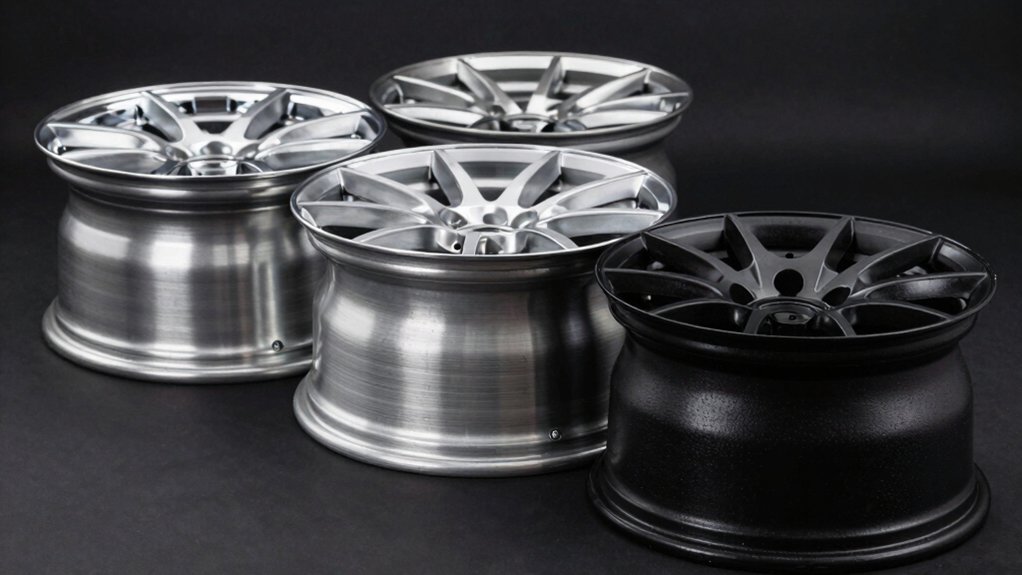
You’ll use a single reference mapping finish codes (0,1,3,6,7,8,9) to side coverage, offsets, and disc-shape clearance, plus corrosion ratings, finish thickness, and application notes. It specifies inset/outset coverage, limit-disk tolerances for shallow calipers, and required clear coats for brushed/buffed surfaces.
It also covers torque, bolt-pattern, and hub seating limits. It also covers maintenance: pH-neutral cleaning, brake-dust removal, polishing limits, and spot-repair procedures. Consult the full spec to learn specific limits and test criteria.
Quick Overview
- Match finish codes (0,1,3,8,9) to mounting side, inset/outset, and offset to ensure correct coverage and clearance.
- Choose finishes (powder, paint, PVD, clear coat) by documented corrosion resistance and expected environmental exposure.
- Verify disc shape and limit disk (T–W) for caliper clearance before selecting offset-dependent finishes.
- Follow manufacturer torque, hub bore, and stud tolerances with star-pattern tightening; re-torque after 50–100 km.
- Maintain finishes with pH-neutral washing, non-acidic brake-dust removers, protective sealants, and inspection for coating breaches.
Finish Compatibility Matrix
How do finish codes map to application and mounting position? You’ll use finish codes to verify finish compatibility with mounting position (inset vs. outset) and disc shape impact on clearance. Apply the correct 6th-digit code to part numbers; codes 0, 1, 2, 3, 7, 8, 9 indicate side coverage and offset-specific treatments.
Confirm Limit Disk and disc shape (T–W) for caliper clearance when shallow discs are required. Reference technical data for offset-dependent finishes and verify whether both sides receive coating. Use clear coat on brushed, buff, and composite finishes for corrosion resistance. Below is a concise finish/coverage mapping for quick checks.
| Code | Coverage | Note |
|---|---|---|
| 0 | Both sides | Inset/outset dependent |
| 1 | Outside only | Visibility focus |
| 3 | Both sides | Premium option |
| 8 | Offset variant | Check offset data |
Bolt Pattern & Torque
Why does bolt pattern matter? You must match bolt pattern to hub geometry to ensure proper seating, load distribution, and absence of eccentric loading. Mismatched patterns cause stress concentrations and possible fastener failure.
- Specify: Confirm studs, PCD, and centre bore tolerances to manufacturer limits before installation.
- Torque sequence: Follow star or crisscross patterns; use calibrated tools and specified torque values to seat the wheel uniformly.
- Torque efficiency: Verify fastener condition, lubrication state, and washer usage. Maintain target torque retention and minimize relaxation.
- Inspection: Re-torque after 50–100 km and periodically. Inspect for elongation, corrosion, or distortion that reduce clamp preload.
Adhere to vehicle and wheel OEM specs for safety and longevity.
Finish Care and Cleaning
You should wash wheels daily with a pH-neutral cleaner and soft mitt to remove road grime and prevent corrosive buildup. Use dedicated brake-dust removers and non-acidic agents for rapid brake dust removal; then rinse thoroughly and dry to avoid spotting.
For preserved finishes (clear-coated, PVD, polished, chrome, powder/painted), apply manufacturer-approved protective coatings or sealants. Follow specified polishing procedures and tolerances.
Daily Washing Routine
When should you wash your wheels to preserve their finish? You should perform daily maintenance washing whenever environmental contaminants (road salt, bird droppings, tar) contact the wheel. At minimum, wash once weekly for showroom polish retention.
Use pH-neutral wheel cleaner, a soft non-abrasive brush, and a low-pressure rinse. Rinse temperature should approximate ambient to prevent thermal shock on PVD, clear-coated, and painted surfaces. Apply cleaner and dwell per product spec (usually 1–3 minutes). Agitate gently, then rinse thoroughly.
Dry with a microfiber towel to avoid water spots and remove trapped moisture in lug pockets. Inspect seals and clear coat for micro-abrasions; document defects. If polishing is required, follow manufacturer torque and compound specifications. Avoid abrasive pads on machined, brushed, or chrome finishes.
Brake Dust Removal
Although brake dust can bond quickly to wheel surfaces, you can remove it effectively without harming finishes by using the correct cleaners and techniques for each finish type.
Inspect finish: brushed, polished, chrome, powder-coated, painted, machined, PVD, or clear-coated require different mechanical pressure and solvent compatibility. Use soft-bristled brushes and non-abrasive pads on clear-coated and painted surfaces. Reduce contact time on brushed and machined textures to preserve texture.
For polished, chrome, and bare-polished surfaces, avoid alkaline or acid agents that etch; rinse thoroughly. For powder-coated and PVD, limit agitation and use manufacturer-approved agents.
Work in shaded, cool conditions; flush with low-pressure water and dry with microfiber to prevent staining. Document product, dilution, contact time, and observed finish response as part of finish care.
pH Neutral Cleaners
Brake dust removal procedures highlight the need for cleaners that balance effectiveness with finish safety. Therefore, pH neutral formulations are recommended for routine maintenance of most wheel surfaces. You’ll select pH neutral cleaners to minimize chemical interaction with clear coats, PVD, polished, painted, and powder-coated substrates.
Use diluted solutions per manufacturer concentration limits. Apply with non-abrasive applicators and dwell no longer than specified, which is typically 1–3 minutes. Then rinse thoroughly with low-pressure water. For stubborn deposits, repeat the cycle rather than increase alkalinity or acidity.
Record compatibility checks for specialty finishes and color-matched painted wheels. For finish care, log product batch, dilution ratio, application method, and inspection results to maintain traceability and ensure consistent wheel appearance and long-term protective coating performance.
Wheel Polishing Tips
Polish maintenance preserves finish integrity and appearance by removing contaminants and restoring surface luster without compromising coatings. You’ll choose methods and products based on the wheel’s finish (brushed, composite/buff, polished, chrome, painted, powder-coated, machined, or PVD). Follow specified dwell times, applicator types, and mechanical action limits to prevent coating damage.
Select abrasives and compounds matched to substrate hardness and clearcoat presence; use softer media for clear-coated or painted wheels and firmer for bare-polished or chrome. Use low-speed polishing tools, controlled pressure, and test patches to quantify removal rates. Track polishing techniques and finish history for each wheel set, noting compound grade, pad type, rpm, and contact time.
Rinse residues fully and verify surface temperature before reassembly. Inspect for coating thinning or edge burn.
Protective Coatings Application
A durable protective coating preserves wheel finishes by forming a thin, uniform barrier against corrosion, contaminants, and mechanical wear. You should select and apply coatings based on finish type, substrate hardness, and expected service conditions.
Inspect surface cleanliness; remove oils, salts, and particulates. Use solvent wipe and blow-dry before coating to optimize coating adhesion.
Match coating chemistry to finish: clear coats for brushed, buff, and polished aluminum; PVD-compatible sealants for vacuum-deposited surfaces; epoxy or polyurethane for powder-coated or painted wheels. Apply controlled film thickness per manufacturer spec; cure at specified temperature, and verify adhesion with cross-hatch or pull tests.
Document batch, cure cycle, and measured thickness to quantify finish durability. Recoat only when adhesion tests and visual inspection indicate degradation.
Handling Corrosion Spots
How should you address isolated corrosion spots without compromising the underlying finish? Inspect spot size, depth, and finish type (clear-coated, brushed, polished, chrome, powder or painted). For light surface corrosion on clear-coated or brushed finishes, decontaminate with pH-neutral cleaner, rinse, and dry. Then, abrade gently with 0000 steel wool or 1,000–1,500 grit wet sandpaper under lubrication.
For polished or chrome, limit abrasion. Use metal polish and corrosion inhibitor. Remove salts immediately to prevent wheel discoloration. For penetrative corrosion that exposes base aluminum, neutralize with a corrosion converter; apply compatible primer and recoat with specified clear coat or touch-up paint per manufacturer cure schedule.
Document torque, part code, and repair materials for warranty and traceability when handling corrosion.
Frequently Asked Questions
Do Different Finishes Affect Wheel Weight or Balance?
Yes, finishes impact weight and balance subtly. You’ll find thick coatings (chrome, multiple plating layers, heavy powder coats) add grams that alter weight distribution across the wheel; this potentially shifts the static balance and requires reweighting.
Lightweight finishes (brushed, clear-coated, bare-polished, PVD thin films) add minimal mass. You should specify finish mass tolerances during selection and verify dynamic balance after finishing to meet OEM rotation and vibration specs.
Can Finishes Be Refinished Aftermarket to Match Factory Look?
Yes, you can often refinish wheels aftermarket to achieve aftermarket matching of the factory look. However, refinish compatibility depends on original finish type. Powder-coat, painted, brushed, buff, polished, chrome, and PVD each require specific prep, processes, and clear coats to replicate factory specs.
Provide finish code, substrate, and OEM tolerances to your refinish shop. Verify corrosion resistance, luster, and dimensional tolerances to ensure compliant, repeatable results.
Are Wheel Finishes Safe for Winter Road Salt Exposure?
Yes, many finishes offer winter safety when maintained. You’ll assess finish durability and corrosion resistance: clear-coated, PVD, chrome, and brushed finishes with clear coats resist salt corrosion best. Powder-coated and painted finishes provide good chip and corrosion protection if intact. Bare-polished or unsealed surfaces are vulnerable.
You’ll rinse wheels frequently, avoid prolonged salt exposure, and repair chips quickly to preserve corrosion resistance and maintain long-term finish durability.
Do Finishes Change Tire Mounting or Wheel Repairability?
Yes, finishes can affect mounting and repairability. You’ll find finish durability alters how technicians mount tires; care with thin PVD, polished, or clear-coated rims is needed to avoid scratching or heat damage. Finishes also limit repair methods: chrome and PVD often require specialist rechroming, while powder coat or painted surfaces need controlled refinishing.
Cosmetic impact is significant. Some repairs restore structure but won’t fully match the original finish, affecting appearance though not always safety.
Is PVD Finish Compatible With Brake Heat and Track Use?
Yes, PVD durability is generally high; you’ll get good brake heat tolerance and reasonable track use compatibility when the PVD layer is applied and sealed (acrylic powder) over proper substrate and primer.
You should verify vendor specs for maximum continuous temp, confirm clear-coat integrity, and expect reduced lifespan under extreme repeated thermal cycling. For dedicated track cars, consider inspected or track-rated coatings and periodic checks for delamination or corrosion.
Conclusion
You’ll use this reference to match finishes, set torque, and maintain wheels to spec. Follow bolt pattern and torque values precisely. Wash daily with pH-neutral cleaners, remove brake dust promptly, and polish per finish guidelines.
Apply protective coatings according to cure times and recoat intervals. For corrosion, treat spots immediately with approved inhibitors and reapply protection. Adhering to these steps preserves appearance, prevents damage, and guarantees safety and long-term performance.